

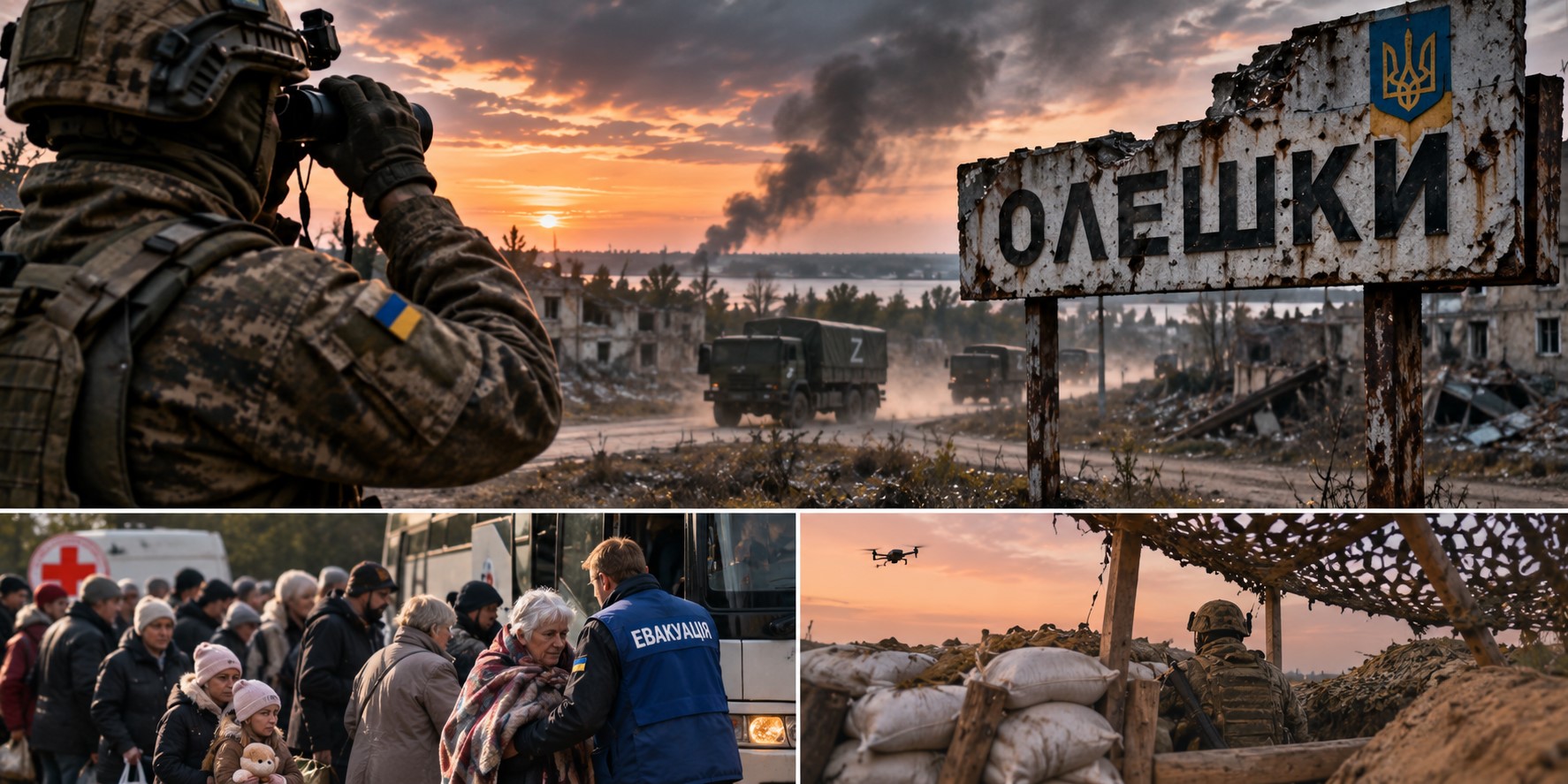
The humanitarian ceasefire in the area of temporarily occupied Oleshky, in Ukraine’s Kherson region, ended on 1 November 2026. During the pause, humanitarian aid was delivered to civilians and an evacuation was carried out for people who had remained under occupation and in near-total isolation for years. However, on 2 November, the General Staff of the Armed Forces of Ukraine reported that Russian forces had used the ceasefire to rotate units, strengthen positions, expand anti-drone protection and increase logistical activity, including the delivery of ammunition.
This report raises an important question: did the humanitarian pause give Russia an opportunity to improve its military position on the left bank of the Dnipro River?
Answering this requires more than emotional assessments. It calls for an examination of the events themselves: what happened in the Oleshky area before the ceasefire, what actions by both sides were reported during it, what independent media have documented, and what risks have emerged since the agreement ended.
1. Why Oleshky Is of Military Significance
Oleshky is located on the left bank of the Dnipro River, opposite Kherson. After Ukrainian forces liberated the right-bank part of the Kherson region in November 2022, the city remained under Russian occupation.
The Dnipro effectively became the dividing line between Ukrainian and Russian forces. Since then, both banks of the river have remained an area of constant military danger.
For Russia, control over Oleshky and the surrounding territory has several military implications:
- maintaining a military presence on the left bank of the Dnipro;
- controlling territory close to Kherson;
- establishing observation and firing positions;
- using roads and settlements to move personnel and supply military units;
- countering Ukrainian military activity on the right bank.
At the same time, the city’s geographical location creates significant constraints on any offensive operations. The Dnipro is not merely a river; it is a major natural obstacle that cannot be crossed without preparation, engineering support, protection and substantial resources.
This is why control over the riverbank, roads, crossing points and surveillance capabilities is important to both sides.
Since 2022, the Oleshky area has repeatedly featured in reports about military activity along the Dnipro, including Ukrainian operations on the left bank. However, the current situation should not automatically be interpreted as evidence of preparations for a large-scale offensive. Such a conclusion would require additional, independently confirmed indicators.
2. What Was Happening Around Oleshky Before the Humanitarian Ceasefire
Throughout 2023–2026, Oleshky remained under Russian control. The city suffered significant destruction and, following the destruction of the Kakhovka Hydroelectric Power Plant in June 2023, was also affected by widespread flooding.
Over time, the situation developed into a humanitarian crisis: disruptions to water, electricity and gas supplies; shortages of food and medicine; dangerous road conditions; and severely restricted opportunities to leave the city.
The military situation made attempts to organise humanitarian assistance extremely difficult. Ukrainian forces were positioned on the opposite bank of the Dnipro, while the Russian army controlled the occupied territory and the approaches to the city.
Under these conditions, civilians were effectively trapped between two military-held banks of the river.
International media reports described not only the humanitarian crisis but also the everyday dangers faced by residents: drone attacks, landmines, damaged homes and restrictions on movement.
In particular, an Associated Press report published on 1 November 2026 described conditions in riverside communities in the Kherson region, where civilians were forced to live amid mine hazards, drone attacks and ongoing shelling. Journalists also reported that, following the end of the ceasefire, residents once again faced the threat of artillery, air strikes, drones and landmines.
This context matters: the humanitarian pause did not take place in a rear area, but in a zone where military activity directly affects whether civilians can move safely.
3. 27 October – 1 November: What the Ceasefire Involved
The ceasefire in the Oleshky area began at 03:00 Kyiv time on 27 October and ended at 22:59 on 1 November.
The arrangement was reached with the mediation of US First Lady Melania Trump. Its purpose was to create conditions for the delivery of humanitarian aid and the evacuation of civilians.
According to Ukraine’s Human Rights Commissioner, Dmytro Lubinets, the parties were expected to observe the agreed ceasefire, allowing a humanitarian operation to take place, designated routes to be cleared of mines and transport to move safely.
What Ukraine Managed to Achieve
During the humanitarian operation:
- humanitarian supplies were delivered to Oleshky;
- arrangements were made for civilians wishing to leave the occupied territory;
- 25 buses with a combined capacity of 750 passengers were prepared for the evacuation;
- medical and specialised transport was used;
- evacuated Ukrainians were transported through Russia and Belarus to Chernihiv region.
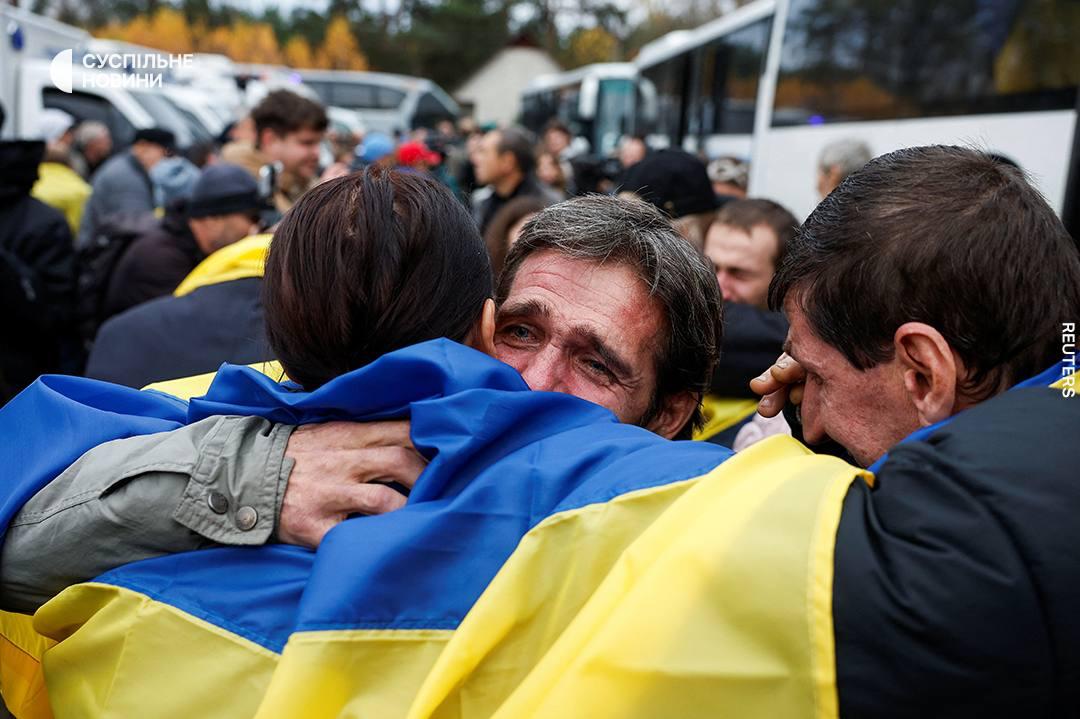
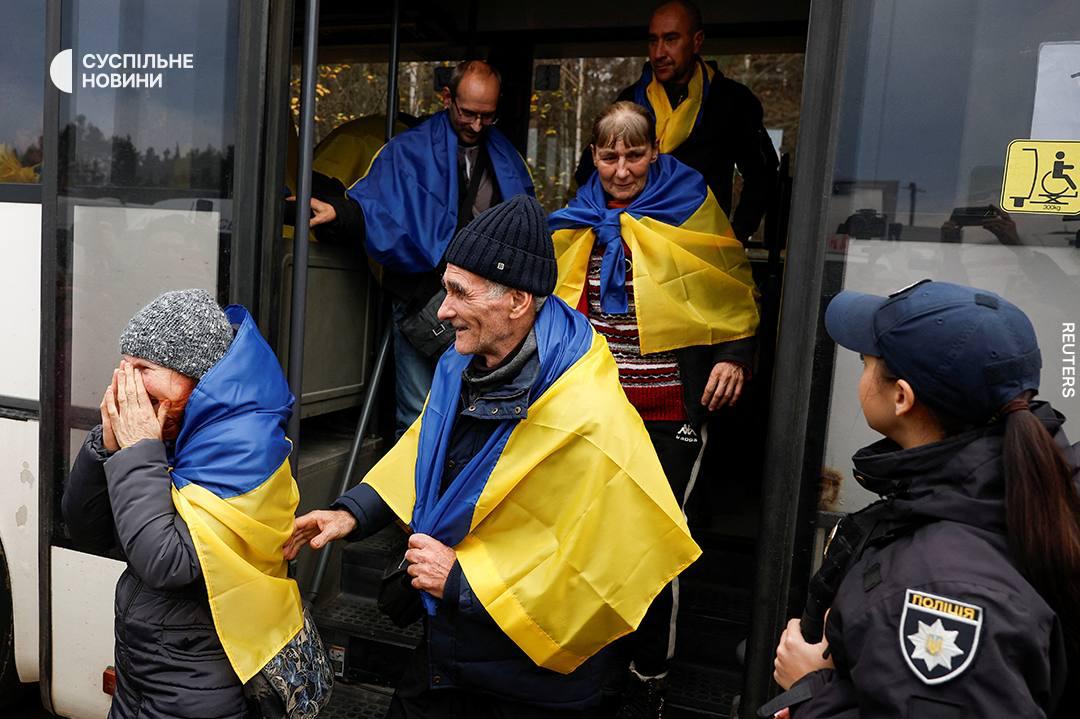
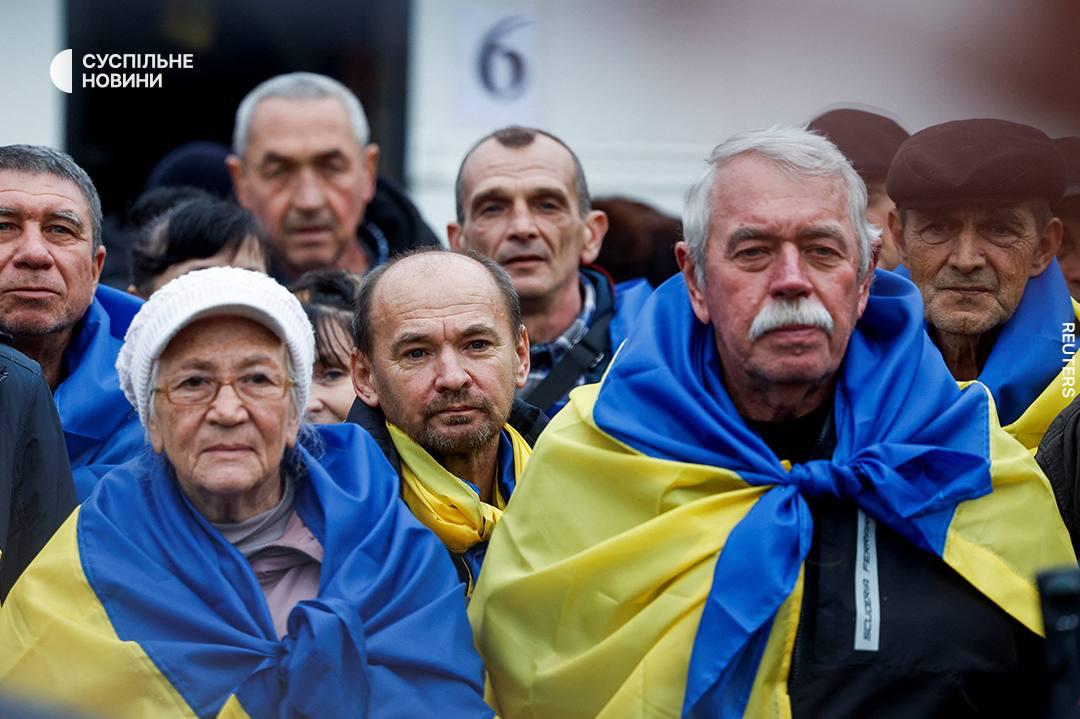
According to the Ukrainian Ombudsman, the oldest evacuee was 94 years old, while the youngest was just over one year old.
The total number of people who left the city should not be confused with the number who returned specifically to Ukrainian-controlled territory. According to Reuters, nearly 800 people were evacuated during the operation, but some residents chose to go to Russia, while others remained in Oleshky.
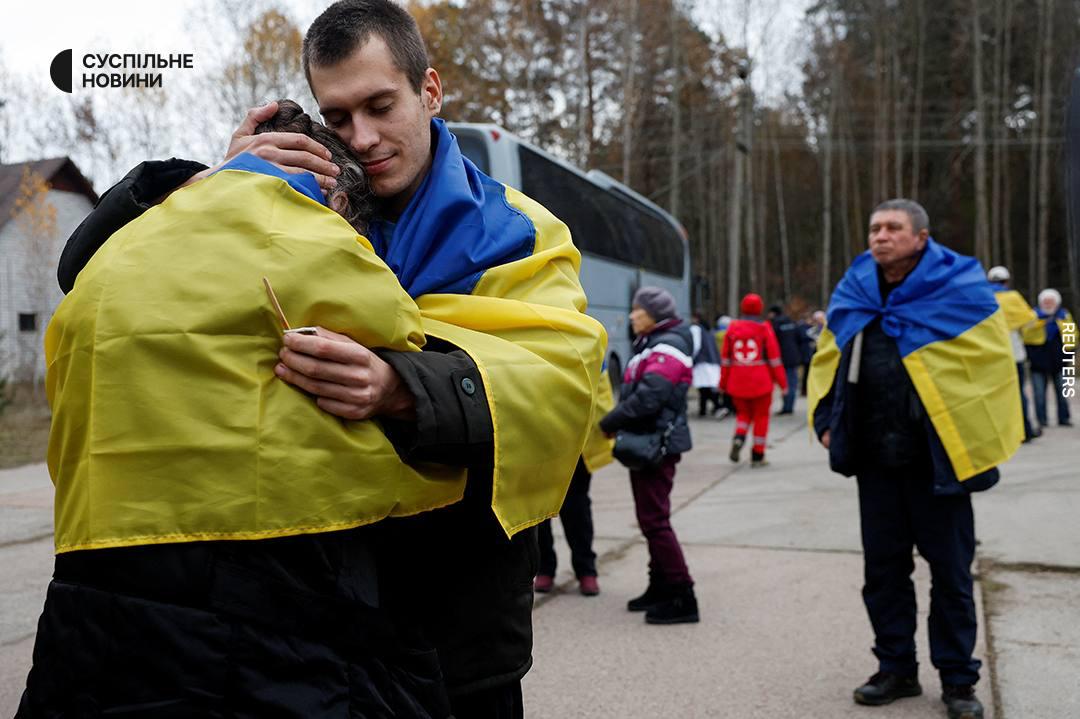
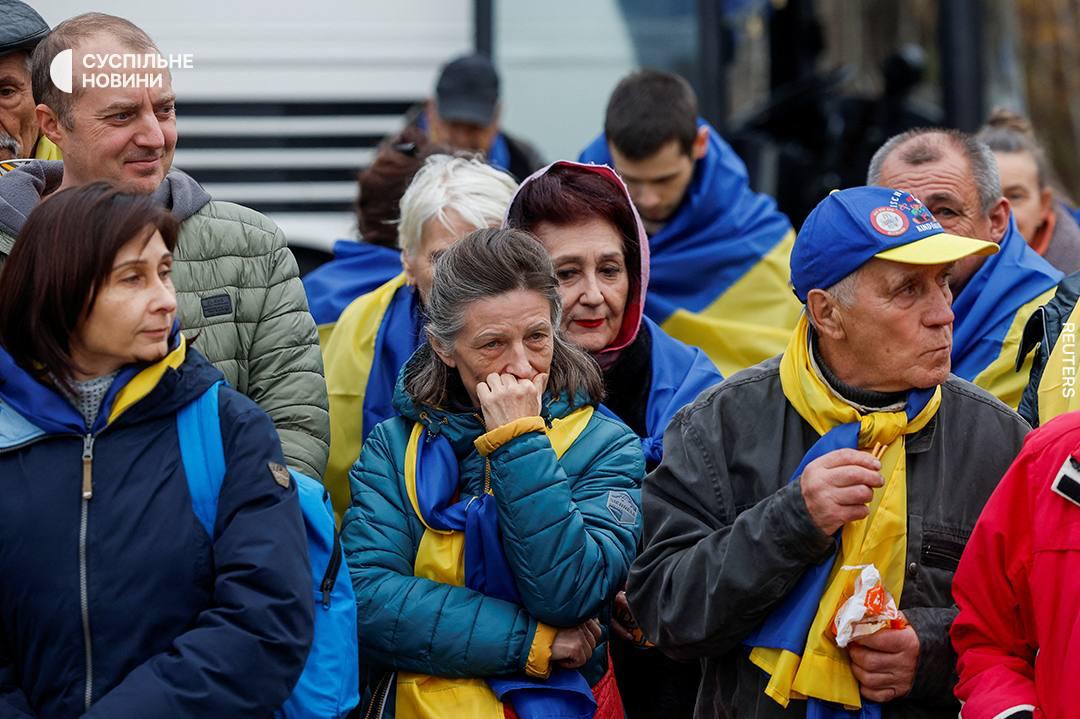
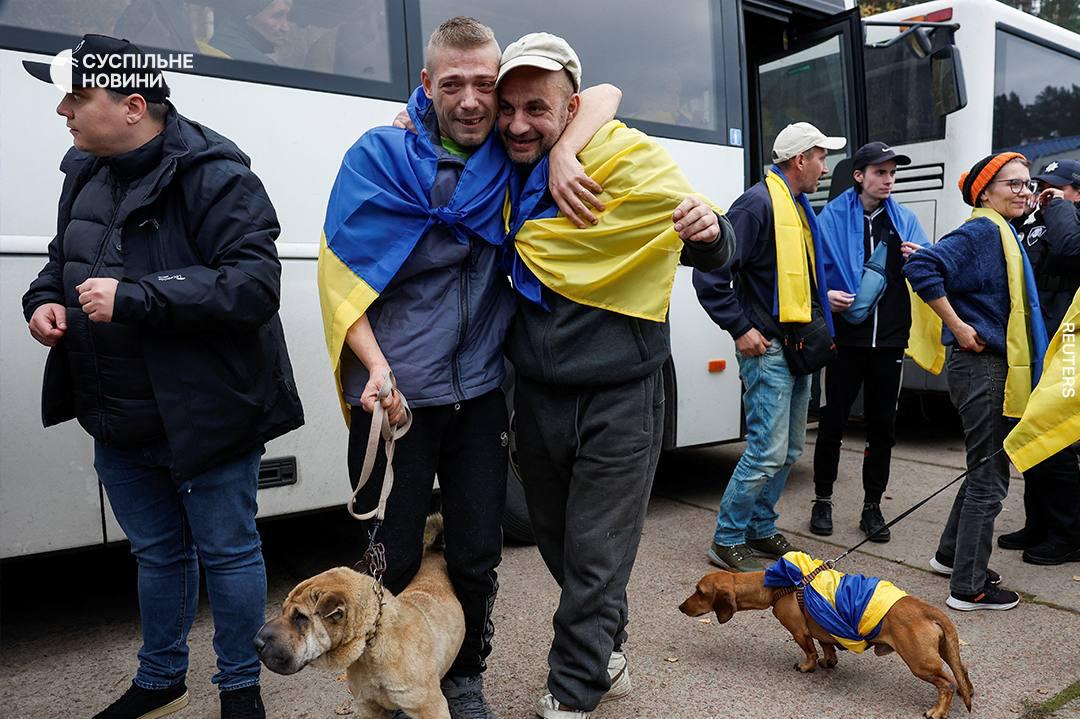
Sources:
- Reuters — Starved residents of Russian-occupied Oleshky return to Ukraine during a rare local ceasefire, 31 October 2026
- Ukrinform — Oldest evacuee from Oleshky is 94, Lubinets says, 31 October 2026
- BBC — Hundreds evacuated from Russian-occupied Oleshky during rare Ukraine ceasefire, 30 October 2026
Ukraine also reported the evacuation of 167 civilians from dangerous settlements in the Ukrainian-controlled part of the Kherson region. Among them were 22 children and 21 people with limited mobility. This was a separate operation and should not be added to the number of people evacuated directly from occupied Oleshky.
Thus, the humanitarian objective of the ceasefire was achieved: people were given an opportunity to leave, and aid was able to reach the city.
4. What Ukraine’s General Staff Reported After the Ceasefire
On 2 November 2026, the General Staff of the Armed Forces of Ukraine published a statement on the outcome of the ceasefire.
It said that Ukrainian units had ensured compliance with the arrangements and had acted within the agreed conditions. As a result, humanitarian supplies reached their intended destination, and civilians who wished to leave Oleshky were able to return to Ukrainian-controlled territory.
At the same time, the General Staff stated that Russian forces had used the humanitarian pause to strengthen their positions.
According to the Ukrainian military command, the following activities were observed during the ceasefire:
- Rotation of Russian units. Personnel were replaced at existing positions.
- Fortification of positions. Russian forces were building up and strengthening defensive lines.
- Expansion of anti-drone protection. Measures to counter Ukrainian drones were increased along roads.
- Expansion of logistical activity. An increase in the movement of supplies was recorded, including the delivery of ammunition.
This is the official assessment of Ukraine’s General Staff. It indicates that the Ukrainian military command views Russia’s actions as an attempt to use the humanitarian pause to improve its military position.
Primary source: General Staff of the Armed Forces of Ukraine — Oleshky: Ukraine’s Defence Forces ensured the ceasefire in the Kherson region, 2 November 2026.
International media outlets, including Reuters and The Kyiv Independent, also reported on these statements.
Sources:
- Reuters — Ukraine says Russia used Oleshky truce to rearm, Moscow assumes Kyiv did same, 2 November 2026
- The Kyiv Independent — Russia exploits ceasefire to mask military movements, General Staff says, 2 November 2026
5. Sky News Footage: What Did Journalists Actually Record?
A report by the British broadcaster Sky News, published on 2 November, attracted particular attention.
Journalists were given access to the drone control centre of Ukraine’s 34th Separate Marine Brigade, from which Ukrainian forces monitored Russian movements before, during and after the humanitarian operation.
The report includes drone footage showing Russian armoured vehicles, the movement of military personnel and the delivery of supplies to buildings in the city.
Dmytro Pulinets, commander of the 34th Marine Brigade, told Sky News that during the ceasefire Russian troops were able to move along roads much more freely than before. According to him, these movements took place both during the day and at night.
The report also includes the Ukrainian military’s assessment of artillery systems being restored, personnel rotations, the movement of reinforcements, equipment and fuel, as well as increased aerial reconnaissance activity.
However, an important clarification must also be taken into account.
Following the release of the footage, Ukraine’s Human Rights Commissioner, Dmytro Lubinets, said that some of the military vehicles shown had been used to clear mines from designated routes under Ukrainian supervision. According to him, this equipment carried the appropriate Red Cross markings, and the arrangements prohibited the introduction or movement of military equipment during the ceasefire.
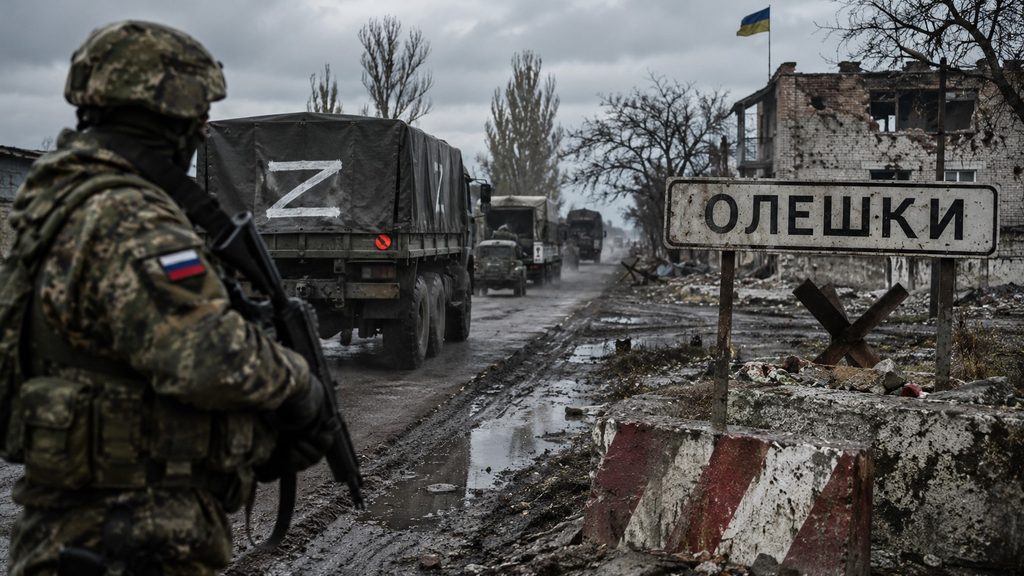
Lubinets stressed that the footage could be interpreted in different ways and did not draw definitive conclusions about every individual scene.
This clarification is essential. It does not invalidate the General Staff’s separate report about unit rotations, fortified positions and ammunition deliveries. However, it means that not every vehicle shown in the footage should automatically be described as a combat reinforcement.
Sources:
- Sky News — Video report on Russian movements in Oleshky during the humanitarian ceasefire
- The Kyiv Independent — Russia exploits ceasefire to mask military movements, General Staff says
- Ukrainska Pravda — Sky News films Russians bringing armour and infantry into Oleshky under cover of ceasefire
6. Russia’s Response
Following the statement by Ukraine’s General Staff, Kremlin spokesperson Dmitry Peskov said that he had no specific information about the Russian military’s actions during the ceasefire.
At the same time, he suggested that Ukrainian forces might also have used the pause to regroup, describing this as standard practice in such situations.
This response does not confirm that Ukrainian forces carried out any regrouping or troop movements. Peskov explicitly stated that he did not have specific information.
It is also important to note that Ukraine’s Ombudsman, Dmytro Lubinets, had reported that the parties fulfilled their humanitarian commitments during the ceasefire.
Therefore, two aspects need to be distinguished:
- Humanitarian: the parties made it possible for the operation and evacuation to take place.
- Military: after the ceasefire ended, Ukraine’s military command reported observing actions by Russian units aimed at strengthening their positions.
7. What Does the Strengthening of Russian Positions Mean?
From a military perspective, each of the activities reported by the General Staff has a specific significance.
Unit Rotation
Rotation allows soldiers who have spent an extended period at their positions to be replaced by fresh personnel.
This affects combat readiness: personnel can rest, recover, replenish supplies and continue carrying out their assignments.
Rotation alone does not indicate preparations for an offensive. It can be part of routine efforts to maintain defensive capability. However, in a frontline area, the scale and nature of such rotations are relevant to assessing the enemy’s possible next steps.
Fortification of Positions
Strengthening defensive positions may include building shelters, engineering obstacles, firing positions and protected areas for personnel and equipment.
For Russian forces in the Oleshky area, this could make it easier to hold the territory they occupy and reduce their vulnerability to Ukrainian strikes.
Anti-Drone Protection
The expansion of anti-drone measures along roads is particularly important in this part of the frontline.
Unmanned aerial vehicles have become one of the main tools for surveillance, fire correction and attacks against equipment and personnel.
Anti-drone nets and other protective measures can make it more difficult for Ukrainian FPV and reconnaissance drones to operate, reduce losses during vehicle movements and help ensure more stable supply routes.
They do not make roads completely safe, but they can increase their capacity to support military logistics.
Ammunition Deliveries and Logistical Expansion
Logistics is one of the fundamental requirements for sustaining military operations.
The delivery of ammunition, fuel, food, communications equipment and other supplies allows military units to maintain combat readiness.
If the Ukrainian side is observing increased logistical activity, this indicates that Russian units are attempting to establish more reliable supply arrangements in the area.
Taken together, these measures suggest that Russian forces are seeking to consolidate their positions and reduce their vulnerability to Ukrainian weapons.
However, they do not prove that a decision has already been made to launch a large-scale offensive from the Oleshky area.
8. What Is Happening Since the Ceasefire Ended?
Following the end of the ceasefire, the security situation in the region became more dangerous again.
On 2 November, Ukrainian authorities reported new Russian attacks in Kherson.
According to the city’s military administration, at around 08:00 a Russian drone struck a car in the Korabelnyi district of the city. A 62-year-old woman and a 73-year-old man were injured.
A drone strike on a medical facility in central Kherson was also reported. According to preliminary information, no one was injured, but the building was damaged.
Reuters reported that Russian forces had attacked 16 settlements in the Ukrainian-controlled part of the Kherson region in the 24 hours leading up to the morning of 2 November.
These reports indicate that attacks intensified again after the local ceasefire ended. However, they do not establish that every one of these strikes was directly connected to the events in Oleshky.
Sources:
- Ukrinform — Russian drone attacks civilian car in Kherson, leaving two injured, 2 November 2026
- Reuters — Ukraine says Russia used Oleshky truce to rearm, Moscow assumes Kyiv did same, 2 November 2026
- Euronews — Russia resumes attacks on Ukraine’s Kherson region after truce ends, Kyiv says, 2 November 2026
9. Is Russia Preparing a New Offensive in the Kherson Region?
This is one of the main questions following the humanitarian operation.
At present, there are confirmed reports of Russian unit rotations, fortified positions, expanded anti-drone protection and increased logistical activity.
However, publicly available sources do not provide sufficient grounds to claim that Russia is already preparing a large-scale offensive against Kherson specifically from Oleshky.
Such a conclusion would require confirmation of additional indicators, including:
- the concentration of substantial assault forces;
- the accumulation of armoured vehicles and engineering equipment for crossing the Dnipro;
- the construction or preparation of crossing points;
- the deployment of additional artillery systems;
- the preparation of command posts and reliable supply arrangements for offensive units;
- systematic activity indicating preparations for a specific offensive operation.
So far, the information made public is more consistent with the strengthening of defensive positions and the provision of logistical support to Russian forces on the left bank.
This does not mean that the threat is absent. It means that assessments of the military situation must be based on specific indicators rather than assumptions.
10. Possible Scenarios for Further Developments
The following is an analytical assessment of possible scenarios based on information available as of 2 November 2026. It is not an official forecast by Ukraine’s General Staff, nor does it suggest that any specific military decisions have already been made.
Scenario 1. Strengthening Defences and Continued Positional Warfare
Likelihood: the scenario best supported by the available information.
Russian forces continue to fortify their positions on the left bank of the Dnipro, expand anti-drone protection, maintain logistical support and use artillery and drones to put pressure on Ukrainian positions and riverside settlements.
In this case, Oleshky will remain part of Russia’s defensive system on the left bank.
For civilians, this would mean continued danger, restricted movement and the risk of further destruction.
Scenario 2. Increased Shelling and Drone Attacks
Likelihood: a real possibility, given the attacks already reported after the ceasefire ended.
Following the end of the ceasefire, Russian forces may intensify strikes against Kherson and nearby settlements.
FPV drones, reconnaissance drones, artillery and aerial weapons pose a particular danger.
The expansion of anti-drone protection along Russian routes may be linked to efforts to secure the movement of Russian units and equipment amid active Ukrainian drone operations.
Under this scenario, the main risk to civilians would be an increase in attacks on transport, infrastructure and facilities near the Dnipro.
Scenario 3. Further Local Humanitarian Agreements
Likelihood: possible, but dependent on the political will of the parties and security conditions.
Ukraine’s Ombudsman, Dmytro Lubinets, said that he was considering the possibility of further humanitarian arrangements in cooperation with Russia’s Human Rights Commissioner, Yana Lantratova.
The Russian side also stated its intention to organise regular deliveries of aid to those who remained in Oleshky.
If such arrangements are implemented, they could enable further deliveries of food and medicine, as well as the evacuation of people who were unable to leave during the first operation.
However, every new humanitarian pause would require clear monitoring arrangements, verification of movements and guarantees that it would not create additional military advantages for either side.
Scenario 4. An Attempt to Expand Military Activity Along the Dnipro
Likelihood: not currently confirmed, but cannot be entirely ruled out.
If Russia continues to build up its forces, surveillance capabilities and logistical capacity, this could create conditions for more active operations in certain parts of the left bank.
However, crossing the Dnipro or launching a large-scale offensive towards Kherson would require substantially more resources and preparation than routine unit rotations or the fortification of positions.
At present, there is insufficient publicly available evidence that such an operation is already being prepared.
It would therefore be premature to describe a new offensive as inevitable.
11. What Ukraine Should Monitor After the Ceasefire
Following the humanitarian operation, it is important not only to assess its results but also to continue monitoring the military situation.
Particular attention should be paid to the following indicators:
- Movement of Russian units. Whether rotations continue and whether additional forces or equipment appear.
- Logistical activity. Whether vehicle movements and deliveries of ammunition, fuel and equipment increase.
- Engineering works. Whether the construction of positions, shelters and defensive structures continues.
- Anti-drone infrastructure. Whether protective nets and other measures along roads are expanded.
- Artillery and drone activity. Whether the intensity of attacks on Kherson and nearby communities changes.
- The condition of civilian infrastructure. Whether damage to homes, hospitals, transport facilities and other civilian infrastructure increases.
The situation of the people who remain in Oleshky is equally important. The evacuation of part of the population does not mean that the humanitarian crisis has ended.
The city will continue to need assistance, while civilians need protection, medical support and the opportunity to leave the occupied territory safely.
Conclusion: The Humanitarian Pause Saved Lives, but It Did Not Change the Military Reality
The humanitarian operation in Oleshky demonstrated that even under extremely difficult conditions, it is possible to negotiate a temporary ceasefire to save civilian lives.
Ukraine ensured compliance with the agreed ceasefire, the delivery of aid and the organisation of the evacuation. Hundreds of people were able to leave a territory where they had spent years living under occupation, in isolation and in constant danger.
However, after the ceasefire ended, Ukraine’s General Staff reported that Russia had used the pause to strengthen its military positions. Reuters and The Kyiv Independent reported these claims, while Sky News published video footage that subsequently prompted additional explanations from Ukraine’s Ombudsman.
The main conclusion, therefore, is not that humanitarian ceasefires are unnecessary. On the contrary, they may be the only opportunity to save people trapped by war.
But such arrangements must be accompanied by effective monitoring, clear restrictions on military activity and independent verification of reported violations.
Russia used the pause to strengthen its positions — this is how Ukraine’s General Staff has assessed the events. And even though specific footage requires additional clarification, the broader military risk remains evident: the end of the humanitarian operation did not mean the end of the frontline, and the confrontation along the Dnipro continues.
Oleshky has once again become an area of military danger. For the people who remain in the city, the humanitarian operation must become not a one-off event, but the beginning of a sustained system of assistance.
Sources and Further Reading
Official Ukrainian Sources
- General Staff of the Armed Forces of Ukraine. Oleshky: Ukraine’s Defence Forces ensured the ceasefire in the Kherson region, 2 November 2026.
https://www.zsu.gov.ua/news/oleshky-syly-oborony-ukrainy-zabezpechyly-rezhym-tyshi-na-khersonshchyni - Ukrinform. Lubinets announces the end of the ceasefire in Oleshky, 2 November 2026.
https://www.ukrinform.net/rubric-society/4180361-lubinets-announces-end-of-ceasefire-in-oleshky.html - Ukrinform. Oldest evacuee from Oleshky is 94, Lubinets says, 31 October 2026.
https://www.ukrinform.net/rubric-society/4180052-oldest-evacuee-from-oleshky-is-94-lubinets-says.html - Ukrinform. Russian drone attacks civilian car in Kherson, leaving two injured, 2 November 2026.
https://www.ukrinform.net/rubric-ato/4180473-russian-drone-attacks-civilian-car-in-kherson-leaving-two-injured.html
International Media
- Reuters. Ukraine says Russia used Oleshky truce to rearm, Moscow assumes Kyiv did same, 2 November 2026.
https://www.reuters.com/world/europe/ukraine-says-russia-used-oleshky-ceasefire-reinforce-positions-2026-11-02/ - Reuters. Oleshky ceasefire expires, Ukraine evacuates civilians from parts of Kherson region, 1 November 2026.
https://www.reuters.com/world/europe/ukraine-evacuates-civilians-parts-kherson-region-expiry-oleshky-ceasefire-nears-2026-11-01/ - Reuters. Starved residents of Russian-occupied Oleshky return to Ukraine during a rare local ceasefire, 31 October 2026.
https://www.reuters.com/world/europe/three-planes-carrying-residents-evacuated-oleshky-arrive-belarus-news-agency-2026-10-31/ - BBC. Hundreds evacuated from Russian-occupied Oleshky during rare Ukraine ceasefire, 30 October 2026.
https://www.bbc.co.uk/news/articles/c60me298k1yeo - Associated Press. Civilians in Ukraine’s Kherson prepare for the return of war as localized ceasefire ends, 1 November 2026.
https://apnews.com/article/22a9bcde97cf12c96328aacf88486e40 - Associated Press. A brief ceasefire opens a perilous escape window from Kherson’s riverside kill zone, 1 November 2026.
https://apnews.com/article/08b1c18befa0b3ff79e3992bd8dffb23 - Euronews. Russia resumes attacks on Ukraine’s Kherson region after truce ends, Kyiv says, 2 November 2026.
https://www.euronews.com/2026/11/02/russia-resumes-attacks-on-ukraines-kherson-region-after-truce-ends-kyiv-says - Sky News. Video report on Russian military movements during the humanitarian ceasefire in Oleshky, 2 November 2026.
https://news.sky.com/ - The Kyiv Independent. Russia exploits ceasefire to mask military movements, General Staff says, 2 November 2026.
https://kyivindependent.com/russia-exploits-ceasefire-to-mask-military-movements-general-staff-says/ - Ukrainska Pravda (English). Sky News films Russians bringing armour and infantry into Oleshky under cover of ceasefire – video, 2 November 2026.
https://www.pravda.com.ua/eng/news/2026/11/02/8060807/