

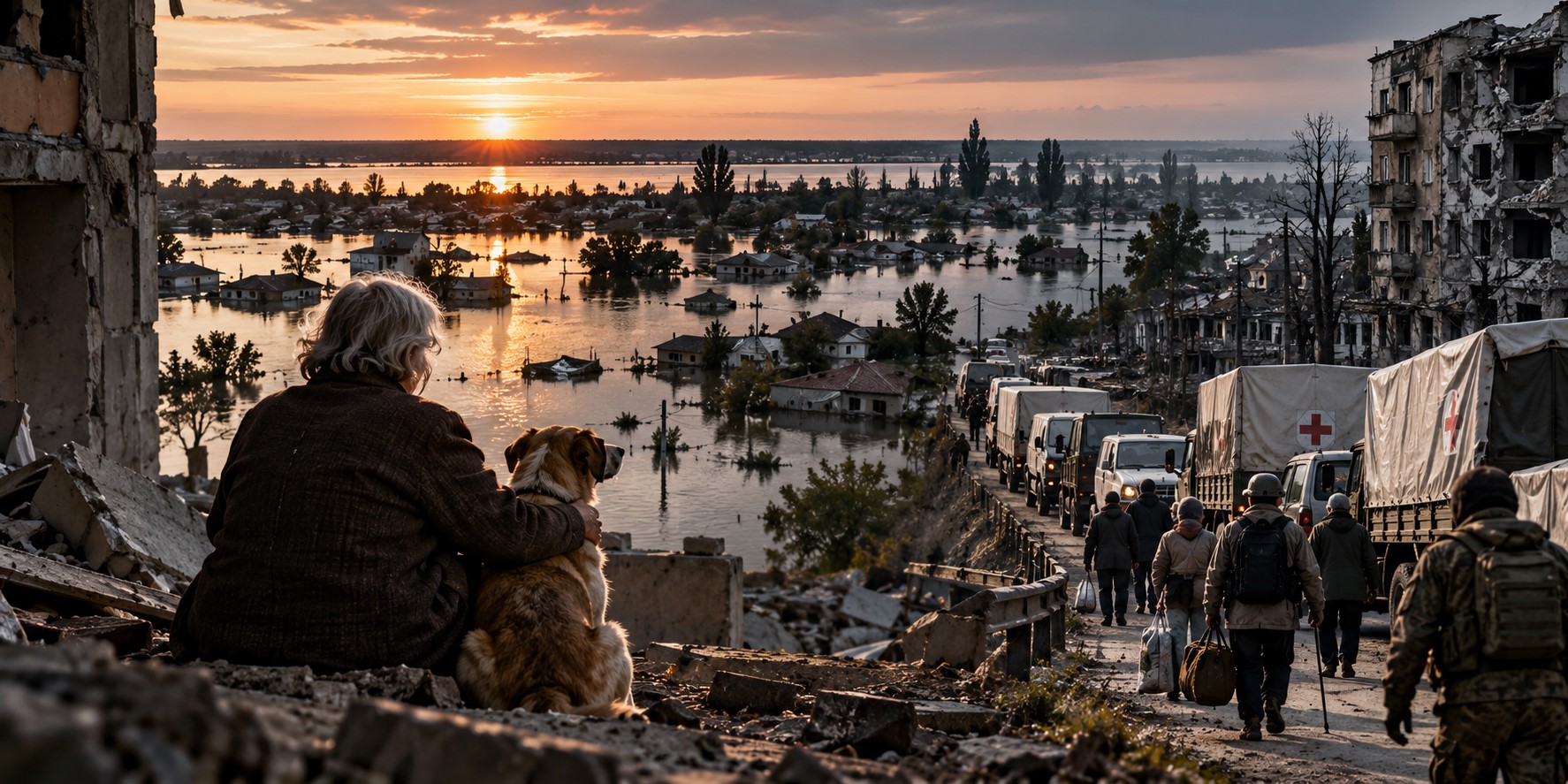
On 30 October 2026, a humanitarian operation began in the temporarily occupied city of Oleshky in Ukraine’s Kherson region. Its aim is to deliver aid to the civilian population and evacuate people wishing to leave the city. Representatives of Ukraine, Russia, and the United States are involved in the operation. An agreement on a localized ceasefire was reached with the mediation of US First Lady Melania Trump.
For Oleshky, this is not just another humanitarian initiative. Before Russia’s full-scale invasion, the city had a population of approximately 24,000. Over the past several years, it has endured occupation, the destruction of infrastructure, the consequences of catastrophic flooding following the destruction of the Kakhovka Hydroelectric Power Plant, landmine threats, and constant military danger.
According to estimates by the Ukrainian authorities and accounts from local residents, approximately 1,500–2,000 people remain in the city. Most are elderly people, persons with disabilities, people with chronic illnesses, and those who were unable to leave earlier due to circumstances beyond their control.
However, to understand the significance of the current humanitarian mission, it is necessary to examine the full history of Oleshky since the beginning of Russia’s full-scale invasion. What happened in the city? Why were its residents effectively cut off from Ukrainian-controlled territory? What efforts were made by Ukrainian authorities, international organizations, and volunteers? What responsibility does Russia bear as the occupying power? And how realistic is the current prospect of evacuation?
These questions must be examined not through political statements, but through documents, independent reports, eyewitness accounts, and verifiable outcomes.
1. February 2022: The Occupation of Oleshky
Oleshky is located on the left bank of the Dnipro River, opposite Kherson. Before the full-scale war, it was a city with developed local infrastructure, residential neighborhoods, businesses, educational institutions, and medical facilities.
On 24 February 2022, Russia launched its full-scale invasion of Ukraine. Kherson region became one of the first areas targeted by the Russian offensive.
Oleshky came under Russian occupation in the first days of the invasion. Since then, the city has remained under the control of Russian forces.
The occupation meant more than a change in military control over the territory. It gradually affected every aspect of daily life: access to Ukrainian public services, freedom of movement, the operation of local institutions, the ability to receive information, and the ability to maintain contact with Ukrainian-controlled territory.
A report by the Office of the United Nations High Commissioner for Human Rights (OHCHR), covering the period from 24 February 2022 to 31 December 2023, describes systematic human rights violations in the occupied territories of Ukraine.
The documented issues include:
- Arbitrary detention of civilians;
- Torture and ill-treatment;
- Suppression of dissent against the occupation authorities;
- Imposition of Russian administrative and legal systems;
- Restrictions on freedom of expression and other fundamental rights;
- The displacement of Ukrainian culture, identity, and state institutions.
This document is particularly important because it is based on the work of the UN Human Rights Monitoring Mission in Ukraine, rather than solely on statements made by one party to the conflict.
At the same time, an important limitation must be taken into account: the Russian Federation did not grant the United Nations access to the territories of Ukraine under its occupation. As a result, international monitoring organizations were not always able to independently verify every incident on the ground.
This does not mean that residents’ testimonies should be dismissed. It means that, when assessing specific events, the methodology used to collect information, the independence of the source, and the possibility of cross-checking evidence must be taken into account.
2. November 2022: The Liberation of Kherson and the Isolation of the Left Bank
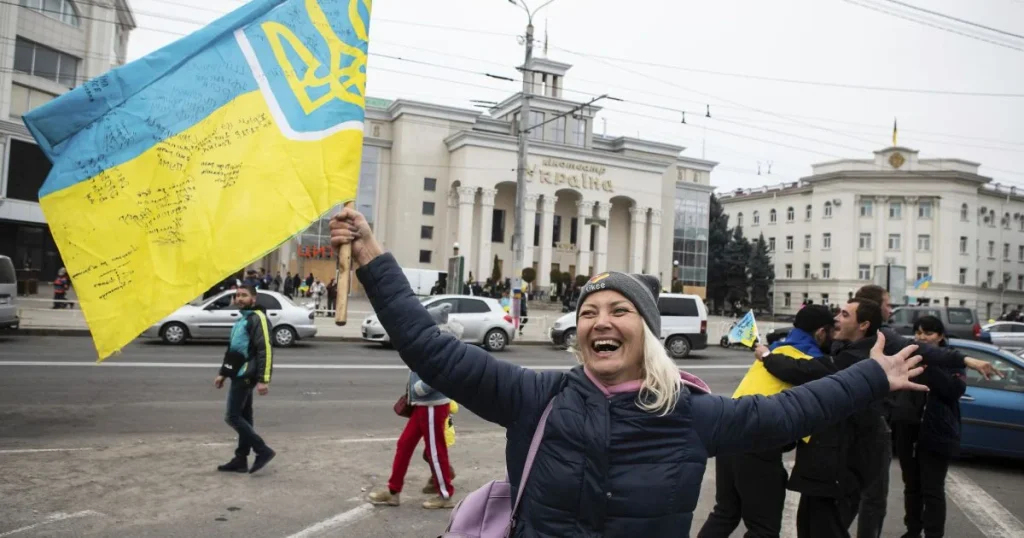
On 11 November 2022, the Armed Forces of Ukraine liberated Kherson and the right-bank part of the region.
This was a major military and humanitarian development. However, Oleshky, located on the opposite bank of the Dnipro River, remained under Russian occupation.
Following the withdrawal of Russian forces from the right bank of the Dnipro and the consolidation of their positions on the left bank, the situation for Oleshky residents changed significantly.
Contact with Kherson, which had previously been maintained, among other routes, via the Antonivskyi Road Bridge, was effectively lost. The bridge was destroyed during the retreat of Russian forces in November 2022.
The Dnipro River became a frontline. Crossing it became extremely dangerous due to hostilities, shelling, and military control.
For civilians, this meant significantly greater difficulty in:
- Evacuating to Ukrainian-controlled territory;
- Receiving food and medicine;
- Accessing medical care;
- Maintaining regular contact with relatives;
- Accessing Ukrainian administrative and social services.
After the liberation of Kherson, the Ukrainian authorities continued working on ways to assist people who remained on the occupied left bank. However, their ability to directly influence the situation in Oleshky was limited by the military situation and Russia’s control over the city.
It is important to distinguish between two different processes: the evacuation of people who were able to leave the occupied territory independently or with the assistance of volunteers, and an organized humanitarian evacuation supported by an agreed route and security guarantees.
The first process did take place in certain cases. The second remained unavailable for a long time.
3. June 2023: The Destruction of the Kakhovka Hydroelectric Power Plant and the Humanitarian Catastrophe
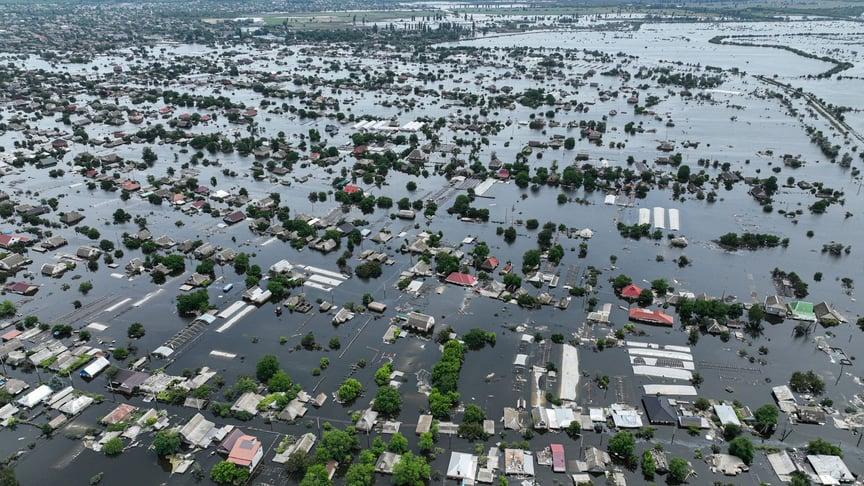
On 6 June 2023, the dam of the Kakhovka Hydroelectric Power Plant was destroyed. This caused extensive flooding in settlements downstream along the Dnipro River, including communities on the left bank of Kherson region.
Oleshky was among the cities severely affected by the disaster.
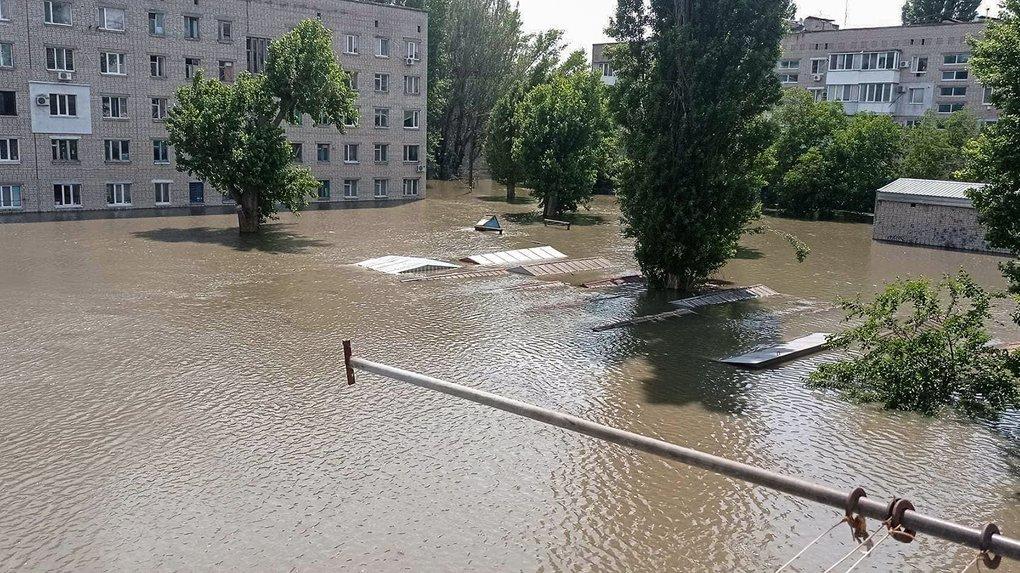
Floodwaters inundated residential buildings, streets, and outbuildings. People became trapped in their homes, on rooftops, and on the upper floors of buildings.
The flooding damaged infrastructure and made access to drinking water, food, and medical assistance even more difficult. Electricity and other utility services were disrupted in many areas.
However, the greatest problem was that people were on occupied territory, where international humanitarian organizations could not move freely.
What Did International Organizations Report?
On 8 June 2023, the United Nations announced that its humanitarian teams were working to assist people affected by the flooding. Together with humanitarian partners, the organization was delivering water, food, and financial assistance to people in affected areas of Kherson and Mykolaiv regions under Ukrainian control.
At the same time, the UN emphasized that it had repeatedly asked the Russian Federation to provide access and security guarantees for humanitarian workers seeking to assist people on the left bank of the Dnipro.
The organization did not receive the necessary guarantees or access.
On 13 June, Denise Brown, the UN Humanitarian Coordinator for Ukraine, issued a separate statement.
She reported that the UN had boats, personnel, and humanitarian supplies ready for deployment. However, the Russian Federation had not provided the necessary security guarantees for crossing the frontline and accessing the left bank, including Oleshky.
The UN stressed that it was ready to assist all those affected, regardless of which bank of the Dnipro River they were on.
What Did the UN Document Regarding the Actions of the Russian Occupation Authorities?
Of particular importance is the periodic report by the Office of the United Nations High Commissioner for Human Rights, published in October 2023.
It states that the Russian authorities:
- Failed to take the necessary measures to evacuate people who needed assistance after the flooding;
- Restricted access for the international humanitarian community to the occupied left bank;
- Obstructed volunteers attempting to deliver food and medicine.
One documented incident in Oleshky is particularly telling.
According to information received by the UN from witnesses, on 9 June 2023, representatives of the occupation authorities blocked access for volunteers carrying medical supplies and food for approximately 600 people sheltering in a building in the central part of the city.
The UN also reported that Russian military personnel detained three volunteers near Oleshky on 6 June and another volunteer on 9 June. They had been transporting food and medicine for people in need of assistance and evacuation.
This was not merely a report about the difficulties of the humanitarian situation. These were documented incidents of obstruction of humanitarian assistance to civilians.
Source: OHCHR — Report on the Human Rights Situation in Ukraine, 4 October 2023, paragraph 38.
What Did Human Rights Watch Establish?
On 14 June 2023, the international human rights organization Human Rights Watch published a report entitled Loss After Loss After Loss: Dam Destruction in Ukraine.
It included testimonies from residents and volunteers describing the situation following the flooding.
According to their accounts, during the first hours and days after the disaster, the Russian occupation authorities failed to adequately warn people about the danger and did not organize timely evacuations.
Subsequently, water supply, gas supply, and electricity in Oleshky were disrupted or ceased to function properly. Communication with the outside world also became significantly more difficult.
Some people were rescued by local residents who had boats. They independently reached flooded homes and helped people escape.
Human Rights Watch noted that the residents interviewed had not witnessed an adequate response from Russian emergency services during the first days of the disaster.
Source: Human Rights Watch — Loss After Loss After Loss: Dam Destruction in Ukraine, 14 June 2023.
Taken together, the UN and Human Rights Watch reports provide grounds to speak of serious failures by the Russian occupation administration in protecting civilians during the disaster, as well as documented obstruction of humanitarian assistance.
4. 2023–2025: Life Under Conditions of Isolation
After the flooding, life in Oleshky did not return to normal.
The city remained occupied, and its proximity to Ukrainian positions on the right bank turned it into a dangerous frontline area.
Residents gradually lost access to their usual sources of essential supplies. The operation of shops, medical facilities, transport services, and utilities became increasingly difficult.
The lack of a stable electricity and gas supply meant that people had to find alternative ways to heat their homes, prepare food, and meet basic household needs.
Problems with water, medicine, and food became increasingly severe.
Why Was It So Difficult to Leave?
Oleshky’s geographical location became one of the main factors behind its isolation.
The city is located close to Ukrainian positions across the Dnipro River. Travel along roads in the frontline area involves the risk of shelling, drone attacks, and landmines.
According to accounts from residents and volunteers, roads around the city had been mined. Some routes became so dangerous that even private transport operators refused to use them without special preparation and an escort.
Under such conditions, an ordinary car journey became a life-threatening risk.
The situation was particularly difficult for:
- Elderly people who could not move independently;
- People with disabilities;
- Patients requiring regular treatment;
- Families with children;
- People without identity documents;
- Residents who did not own cars or could not afford private transport.
It is also important to understand that evacuation from occupied territory is not simply a matter of physically moving someone from one place to another. It requires a safe route, the ability to pass through checkpoints, appropriate documents, transport, accommodation after arrival, and access to medical care.
For many residents, the decision to leave meant abandoning their homes, possessions, the graves of their loved ones, and everything they had built over decades.
Therefore, the fact that people remained in Oleshky cannot be explained simply as an unwillingness to evacuate.
Did Evacuations Take Place Before 2026?
Yes. Some people managed to leave the city with the help of relatives, volunteers, and private transport operators.
However, this was not equivalent to a large-scale, organized state evacuation with a guaranteed safe route.
An article published by Ukrainska Pravda on 25 September 2026 includes testimonies from residents, volunteers, and local officials indicating that, over an extended period, a fully organized official evacuation corridor from Oleshky had not been established.
Volunteers described difficult and dangerous journeys that often depended on brief opportunities to travel along certain sections of road.
Residents also reported fears of passing through Russian checkpoints, detention, and so-called filtration procedures.
This article is important not only as an investigative journalistic report, but also because it contains accounts from different groups of interviewees: residents, volunteers, local officials, and representatives of the International Committee of the Red Cross.
It was also noted separately that the ICRC maintained contact with the Ukrainian and Russian authorities regarding the situation in Oleshky and was ready to provide assistance with evacuation as soon as it could be carried out safely.
5. What Did Ukraine Do to Help Save the Residents of Oleshky?
When assessing the actions of the Ukrainian side, it is important to avoid two extremes.
The first is to claim that Ukraine could have simply organized an evacuation at any time but failed to do so.
The second is to assume that every possible measure was implemented properly and that no problems existed.
The reality is more complicated.
Ukraine has not controlled Oleshky since 2022. It cannot freely send buses, medical teams, or humanitarian convoys there without coordinating security arrangements with the other side.
At the same time, the state has an obligation to continue seeking ways to assist its citizens who remain in occupied territories.
5.1. The Work of Local and Regional Authorities
The Oleshky City Military Administration continued its work outside the occupied city.
Its representatives collected information about residents, their needs, the humanitarian situation, and possible evacuation arrangements.
Tetiana Hasanenko, Head of the Oleshky City Military Administration, repeatedly reported on the critical situation facing people who remained in the city.
This information was used in appeals to central government authorities, international organizations, and partners.
It is important to understand that an administration that does not control a territory cannot independently guarantee access to its residents or organize the full-scale operation of government services there.
However, it can collect information, coordinate appeals, compile lists of needs, and participate in preparing evacuation arrangements.
5.2. Appeals to the UN and the International Committee of the Red Cross
Ukraine repeatedly appealed to international organizations for assistance in securing access to civilians on the occupied left bank.
Following the destruction of the Kakhovka Hydroelectric Power Plant, the UN itself declared its readiness to provide assistance, while emphasizing that the necessary security guarantees from Russia were lacking.
In 2026, the Ukrainian side once again initiated consultations with the UN and the ICRC on the possibility of arranging humanitarian access and evacuating residents from the occupied part of Kherson region.
On 6 May 2026, the Ministry of Foreign Affairs of Ukraine published a statement on the critical humanitarian situation in Oleshky and other settlements on the left bank.
The statement referred to:
- Restricted access to food and medicine;
- The dangers of travelling along roads;
- Blocked evacuation efforts;
- The lack of adequate living conditions;
- A significant number of people in need of assistance.
According to the Ukrainian Ministry of Foreign Affairs, approximately 2,000 people remained in the city at that time, and government authorities had received more than 220 direct requests for evacuation from the relevant settlements.
The Ministry announced that urgent consultations with international partners were taking place and that it intended to raise the issue on international platforms.
This is the official position of the Ukrainian state, so its figures and assessments should be understood as information provided by Ukrainian authorities. At the same time, some of the problems described have also been independently corroborated by reports from international organizations and journalistic investigations.
5.3. Volunteers and Evacuation Initiatives
Special attention should be given to the volunteers who helped residents leave the occupied territory.
Among them were people who had themselves been forced to leave Oleshky but continued supporting their fellow residents.
They maintained contact with people in the city, shared information about opportunities to leave, searched for transport, helped organize journeys, and coordinated assistance for those unable to leave independently.
Reports by Kyiv Independent and Ukrainska Pravda describe the work of volunteers who tried to organize the departure of people from the occupied territory even when no official humanitarian corridor was available.
People who maintained direct contact with the city and understood local conditions played a particularly important role.
However, volunteer-led evacuation cannot replace a state-organized or international humanitarian operation. Volunteers do not have the authority to guarantee the safety of routes, secure a ceasefire, or oblige the occupation administration to comply with international humanitarian law.
Their work often involved personal risk to their lives.
Sources:
- Kyiv Independent — Nearly 2,000 Ukrainian Civilians Trapped in Russian-Occupied Oleshky, 15 April 2026
- Ukrainska Pravda — Report on the Humanitarian Situation and Evacuation from Oleshky, 25 September 2026.
5.4. Preparations for the Current Humanitarian Operation
In 2026, the situation in Oleshky became the subject of increasingly active international appeals.
Ukrainian representatives emphasized the need for a ceasefire, humanitarian access, and the evacuation of civilians.
Dmytro Lubinets, the Ukrainian Parliament Commissioner for Human Rights, became an important participant in the negotiation process.
The Ukrainian side held talks with Yana Lantratova, Russia’s Commissioner for Human Rights, regarding the possibility of organizing a humanitarian mission.
Thus, the current operation was the result not merely of a single diplomatic statement, but of sustained efforts by Ukrainian representatives, international contacts, and volunteer initiatives.
6. Russia’s Actions: The Responsibility of the Occupying Power and Its Participation in the Current Operation
When assessing Russia’s role, it is important to distinguish between two issues: its responsibility for the living conditions of civilians in the occupied territory, and its participation in the specific humanitarian operation in 2026.
6.1. Responsibility for the Population of the Occupied Territory
Under international humanitarian law, a state exercising occupation has obligations to protect the civilian population.
In particular, Article 55 of the Fourth Geneva Convention requires the occupying power, to the fullest extent of the means available to it, to ensure the food and medical supplies of the population.
Article 56 concerns the occupying power’s duty to ensure and maintain medical and hospital establishments and services, as well as public health and hygiene.
Article 59 requires the occupying power to agree to and facilitate relief schemes when the population of an occupied territory is inadequately supplied.
This means that Russia cannot shift all responsibility for the living conditions of Oleshky residents onto Ukraine or international organizations.
As the state exercising effective control over the city, Russia has specific obligations to ensure that civilians have access to food, medicine, medical care, and safe movement.
Primary source: International Committee of the Red Cross — Fourth Geneva Convention, Articles 55, 56 and 59.
6.2. Obstruction of Humanitarian Assistance After the 2023 Flooding
As noted above, the UN documented cases in which access by volunteers to Oleshky residents was blocked following the destruction of the Kakhovka Hydroelectric Power Plant.
This is one of the most important facts when assessing the actions of the occupation administration.
The issue was not simply a lack of resources or logistical difficulties. The UN report describes specific incidents in which people attempting to deliver food and medicine were obstructed, and the volunteers themselves were detained.
Such actions are contrary to humanitarian principles and may constitute violations of international humanitarian law.
6.3. The Situation in 2026
In 2026, the Russian side continued to control the city and its main access routes.
Reports by independent media included accounts from residents and volunteers describing mined roads, the dangers of travelling, restricted access to food and medicine, and difficulties leaving the city.
In April 2026, Kyiv Independent published an article in which Oleshky residents described food shortages, the lack of reliable water, gas, and electricity supplies, and difficulties obtaining assistance.
The article also included testimonies that residents may have been required to present Russian-issued documents to receive certain types of assistance. These claims came from interviewed residents and representatives of the Ukrainian local administration; they should not automatically be generalized to every assistance programme or every resident.
6.4. What Is Russia Doing as Part of the Current Mission?
It would be inaccurate to claim that the Russian side is not participating in humanitarian efforts at all.
In October 2026, Russia’s Commissioner for Human Rights, Yana Lantratova, took part in negotiations with Dmytro Lubinets.
According to statements by the Ukrainian Ombudsman and reports by international media, the Russian side participated in agreeing on the ceasefire, preparing humanitarian supplies, clearing routes of mines, and arranging the transport component of the evacuation.
The Russian side also announced that it was preparing buses, ambulances, and specialized transport for people with limited mobility.
This is an important practical contribution to a specific operation and should be acknowledged as a fact.
However, it does not erase Russia’s previous responsibility for the humanitarian situation in the city, including the obstruction of humanitarian access documented by the UN in 2023.
The key distinction is this: participating in efforts to save people today does not absolve a party of responsibility for the conditions in which those people were previously left.
7. October 2026: How the Humanitarian Mission Was Agreed
On 23 October 2026, the Office of the US First Lady, Melania Trump, announced that an agreement had been reached on a localized ceasefire in the Oleshky area.
According to the White House, Melania Trump had acted as a mediator in negotiations between Ukraine and Russia.
The aim of the agreement was to temporarily halt hostilities in the area around the city to enable the delivery of humanitarian aid and prepare for the evacuation of civilians.
The statement also said that residents should be able to choose their evacuation destination independently — either Ukraine or Russia.
On 23 October, Dmytro Lubinets confirmed that agreements had been reached with the Russian side.
According to him, the agreement provided for three main measures:
- Establishing a ceasefire;
- Delivering humanitarian supplies to Oleshky;
- Ensuring that civilians could leave freely.
The ceasefire came into effect on 27 October at 03:00 Kyiv time. According to the information released, it was scheduled to remain in force until 22:59 on 1 November.
29 October: Route Preparation and the Arrival of Delegations
On 29 October, David Arakhamia announced that delegations from Ukraine, the United States, and Russia had arrived at the starting point from which humanitarian aid was to be delivered to Oleshky.
Media representatives from all three countries were also present.
At the same time, demining operations were underway along the designated routes. Ukrainian Ombudsman Dmytro Lubinets reported that preparations for the humanitarian convoy were nearing completion.
On the same day, the Ukrainian and Russian sides announced that demining of the agreed routes had been completed.
Sources:
- Ukrainska Pravda — Joint US, Ukrainian and Russian Delegation Reaches Starting Point for Oleshky Aid Delivery, 29 October 2026
- Reuters — Russia, Ukraine Say Oleshky Demining Operations Complete, 29 October 2026.
30 October: Humanitarian Aid and Evacuation
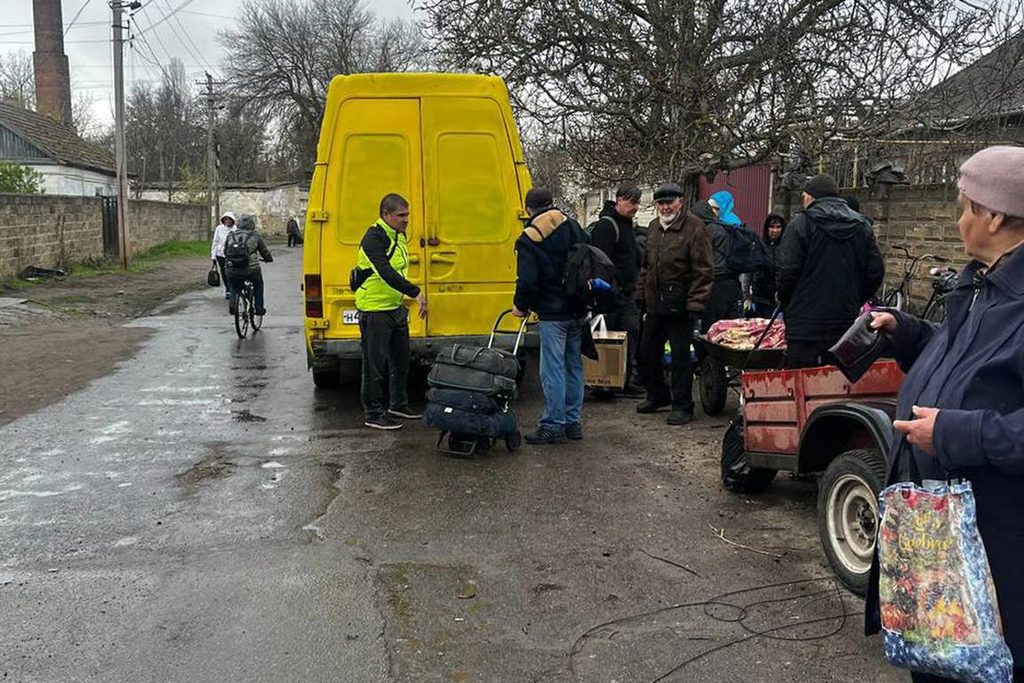
On 30 October, Ukrainian Ombudsman Dmytro Lubinets reported that the Ukrainian delegation was in Armyansk, coordinating further steps with Yana Lantratova, Russia’s Commissioner for Human Rights.
The following resources had been prepared for the evacuation:
- 25 buses with a total capacity of 750 passengers;
- Ambulances;
- Specialized transport for people with limited mobility.
According to the Ukrainian side, the humanitarian cargo included food, medicine, hygiene products, fuel, and other essential supplies.
Special attention was to be given to elderly people, people with disabilities, and those unable to care for themselves independently.
Dmytro Lubinets reported that residents who did not wish to leave would also receive humanitarian assistance.
During the day, the Ukrainian delegation announced its arrival in Oleshky, the start of the evacuation, and the distribution of aid.
Sources:
- Ukrinform — Humanitarian Aid Being Delivered to Oleshky, 25 Buses with 750 Seats Ready for Evacuation, 30 October 2026
- Ukrainska Pravda — Humanitarian Aid Being Distributed in Oleshky, Evacuation Underway, 30 October 2026
- Reuters — Oleshky Aid Mission and Evacuations Begin as Local Russia-Ukraine Truce Holds, 30 October 2026.
An Important Clarification Regarding the Number of Evacuees
On 30 October, a figure of 527 people appeared in the public domain as the number of residents supposedly planning to leave Oleshky for Ukrainian-controlled territory.
However, Ukrainian Prime Minister Serhii Koretskyi later clarified that the final number had not yet been established, as the operation was ongoing and residents’ lists and decisions were changing.
Therefore, 527 people must not be presented as the confirmed number of people already evacuated.
According to the Ukrainian side, the route for people choosing to return to Ukraine involves transit through the territory of Russia and Belarus. Upon arrival in Ukraine, they are to receive medical examinations, assistance, and temporary accommodation.
Source: Reuters — Number of Residents Leaving Oleshky Still Unclear, Kyiv Says, 30 October 2026.
This is a crucial distinction: the number of people who have submitted applications, the number who have completed preparations for evacuation, the number who have actually left, and the number who have already reached Ukrainian-controlled territory are different indicators.
They must not be confused.
8. What Risks Remain Even After the Ceasefire Agreement?
The mere fact that a ceasefire has been agreed does not automatically resolve all problems.
For the residents of Oleshky, at least five serious risks remain.
8.1. The Safety of the Evacuation Route
Roads leading to and surrounding the city had been mined. Clearing the agreed routes is an important step, but it does not mean that all nearby areas have become safe.
In addition to landmines, there are risks of shelling, drone attacks, and other military threats.
According to international media reports, people were killed during demining operations. This once again demonstrates how dangerous the operation remains.
8.2. Voluntary Evacuation
Every person must have the right to decide independently whether to leave the city and choose an available destination.
At the same time, voluntariness must be more than a formality. Residents need sufficient information about the route, conditions at transit points, opportunities for family reunification, and the support available after arrival.
Particular attention must be given to people without documents, people with limited mobility, and those who depend on continuous medical treatment.
8.3. The Risk of Forced Displacement or Unlawful Checks
Residents of occupied territories may fear inspections by Russian authorities, detention, or other restrictions.
According to journalistic reports, some Oleshky residents expressed concerns about so-called filtration procedures when leaving through Russian territory.
This does not mean that every evacuee will necessarily face such actions. However, the risk must be taken into account by the organizers, and any inspection procedures must comply with international humanitarian law.
8.4. The Fate of Those Who Remain
Evacuation does not solve the problems of people who decide to stay.
They will continue to need food, water, medicine, medical services, and safe living conditions.
Therefore, the humanitarian mission must not end when the buses leave. A mechanism is needed to ensure the continued delivery of assistance to those who remain.
8.5. Independent Monitoring and Verification of Results
The presence of journalists from three countries may contribute to the transparency of the operation. However, their presence alone does not guarantee full independence or access to every event.
It is important that information about the mission’s results can be verified through independent sources, including:
- How many people received humanitarian assistance;
- How many people left the city;
- How many chose Ukraine as their destination;
- How many people required medical evacuation;
- Whether those who remained received assistance;
- Whether any violations of the ceasefire or the rights of civilians were recorded.
Without such data, it is impossible to assess the success of the operation.
9. What Does This Humanitarian Mission Mean for International Humanitarian Law?
Oleshky is not just a single humanitarian story. It is an example of how difficult it can be to protect civilians in occupied territories when an active frontline runs between the territory and the rest of the country.
International humanitarian law provides for the protection of civilians during armed conflicts and occupation.
An occupying power has obligations to ensure that the population has access to food, medical assistance, and the necessities of life.
At the same time, all parties to the conflict are required to comply with the principles of distinction between civilian and military objects, proportionality, and the obligation to take precautions to protect civilians.
Humanitarian organizations must be able to provide assistance to people in need, in accordance with international humanitarian law.
In the case of Oleshky, the following provisions are particularly important:
- Article 55 of the Fourth Geneva Convention — the provision of food and medical supplies;
- Article 56 — the maintenance of medical facilities and public health services;
- Article 59 — the organization and facilitation of humanitarian relief operations;
- Article 49 — restrictions on the forcible transfer and deportation of the population of occupied territory.
Primary source: ICRC — Geneva Convention Relative to the Protection of Civilian Persons in Time of War, 12 August 1949.
It is important that humanitarian evacuation must not become a tool for the forced displacement of a population or for changing the demographic composition of occupied territory.
People have the right to protection, respect for their dignity, preservation of family ties, and freedom of personal choice.
10. Can the Humanitarian Mission Already Be Called a Success?
As of 30 October 2026, there are grounds to describe the operation as an important diplomatic and practical step.
For the first time in an extended period, the parties managed to agree on a localized ceasefire, clear designated routes of mines, prepare humanitarian transport, and begin the evacuation of civilians.
The operation involves Ukrainian and Russian representatives, as well as the United States, which helped facilitate the agreement.
This is an important achievement.
However, it is still too early to declare the entire mission a success.
To do so, confirmed results are needed:
- Did the humanitarian supplies reach the residents of the city?
- Did the most vulnerable people receive assistance?
- How many people actually left Oleshky?
- Were all those who wished to leave able to reach Ukrainian-controlled territory?
- Were adequate arrangements made for people with chronic illnesses and disabilities?
- Will those who decided to remain continue receiving assistance?
- Will further humanitarian access to the city be ensured?
The answers to these questions will determine the actual effectiveness of the mission.
Conclusion: Every Diplomatic Agreement Must Result in Lives Saved
The story of Oleshky is the story of people caught between occupation, war, destroyed infrastructure, and the absence of a safe route to survival.
It demonstrates how vulnerable civilians can become when their city falls under the control of an occupying power and the frontline cuts it off from ordinary supply routes.
Documents from the UN and Human Rights Watch confirm that, following the flooding caused by the destruction of the Kakhovka Hydroelectric Power Plant, the Russian occupation authorities failed to provide adequate evacuation measures and obstructed humanitarian assistance. Over the following years, Ukrainian authorities, volunteers, and international organizations continued searching for ways to help the population, but the security situation and the lack of agreed access significantly limited these efforts.
The current humanitarian operation became possible through negotiations, a localized ceasefire, and the involvement of representatives from several countries.
It is important to recognize the contribution of all participants who are genuinely helping to save civilians. But it is equally important not to forget the responsibility of the party occupying the territory and obligated to protect its population.
Humanitarian assistance cannot be reduced to a political gesture or an information victory. Its success is measured not by the number of statements, buses, or participants in negotiations, but by lives saved, medicines delivered, and the ability of civilians to choose their own future.
Oleshky needs more than a one-time evacuation. It needs sustained humanitarian support, protection for its civilian population, and the opportunity to return to normal life.
And the most important thing now is to ensure that every person waiting for help actually receives it.
Sources and Documents
International Organizations and Human Rights Institutions
- Office of the United Nations High Commissioner for Human Rights (OHCHR). Human Rights Situation During the Russian Occupation of Territory of Ukraine and Its Aftermath, 24 February 2022 to 31 December 2023.
https://ukraine.ohchr.org/en/human-rights-situation-during-russian-occupation-territory-ukraine-and-its-aftermath-EN - OHCHR. Report on the Human Rights Situation in Ukraine, 4 October 2023. Documented cases of obstruction of humanitarian assistance in Oleshky following the flooding.
https://ukraine.un.org/sites/default/files/2023-10/23-10-04-OHCHR-36th-periodic-report-ukraine-en.pdf - Human Rights Watch. Loss After Loss After Loss: Dam Destruction in Ukraine, 14 June 2023.
https://www.hrw.org/news/2023/06/14/loss-after-loss-after-loss-dam-destruction-ukraine - United Nations in Ukraine. UN Support to Ukraine in the Face of the Kakhovka Dam Disaster, 8 June 2023.
https://ukraine.un.org/en/235478-un-support-ukraine-face-kakhovka-dam-disaster - United Nations in Ukraine. Statement by the Humanitarian Coordinator for Ukraine Denise Brown, 13 June 2023.
https://ukraine.un.org/en/236039-statement-humanitarian-coordinator-ukraine-denise-brown - International Committee of the Red Cross. Fourth Geneva Convention Relative to the Protection of Civilian Persons in Time of War, 1949.
https://ihl-databases.icrc.org/en/ihl-treaties/gciv-1949
Independent Media and Investigative Journalism
- Ukrainska Pravda. Oleshky Under Siege: The City Where People Eat Grass, Bury Bodies in a Hospital Basement, and Wait for an Evacuation That Never Comes, 25 September 2026.
https://www.pravda.com.ua/eng/articles/2026/09/25/8054947/ - Kyiv Independent. Nearly 2,000 Ukrainian Civilians Trapped in Russian-Occupied Oleshky, 15 April 2026.
https://kyivindependent.com/humanitarian-catastrophe-nearly-2-000-ukrainian-civilians-trapped-in-russian-occupied-oleshky-with-no-way-to-evacuate-little-food/ - Deutsche Welle. Hunger in Oleshky: Ukraine Asks for Evacuation, 2026.
https://amp.dw.com/en/hunger-in-oleshky-ukraine-asks-for-evacuation/a-77395744 - Kyiv Independent. Life in Russian-Occupied Oleshky Was Dire. Now It’s ‘Hell’, September 2026.
https://kyivindependent.com/the-situation-in-russian-occupied-oleshky-was-dire-now-its-hell/
Official Statements on the 2026 Humanitarian Operation
- The White House. First Lady Melania Trump Secures Ceasefire Between Russia and Ukraine, Localized to Oleshky, 23 October 2026.
https://www.whitehouse.gov/briefings-statements/2026/10/first-lady-melania-trump-secures-ceasefire-between-russia-and-ukraine-localized-to-oleshky/ - Ukrainian Parliament Commissioner for Human Rights / Interfax-Ukraine. Agreement on the Humanitarian Mission in Oleshky, 23 October 2026.
https://interfax.com.ua/news/general/1225460-amp.html - Reuters. Russia, Ukraine Say Oleshky Demining Operations Complete, 29 October 2026.
https://www.reuters.com/world/russia-ukraine-say-oleshky-demining-operations-complete-humanitarian-operation-2026-10-29/ - Reuters. Oleshky Aid Mission and Evacuations Begin as Local Russia-Ukraine Truce Holds, 30 October 2026.
https://www.reuters.com/world/europe/aid-convoy-sets-off-russian-held-town-oleshky-ukraine-izvestia-says-2026-10-30/ - Reuters. Number of Residents Leaving Oleshky Still Unclear, Kyiv Says, 30 October 2026.
https://www.reuters.com/world/europe/number-residents-leaving-oleshky-still-unclear-kyiv-says-2026-10-30/ - Ukrinform. Humanitarian Aid Being Delivered to Oleshky, 25 Buses with 750 Seats Ready for Evacuation, 30 October 2026.
https://www.ukrinform.net/rubric-ato/4179663-humanitarian-aid-being-delivered-to-oleshky-25-buses-with-750-seats-ready-for-evacuation-lubinets.html