

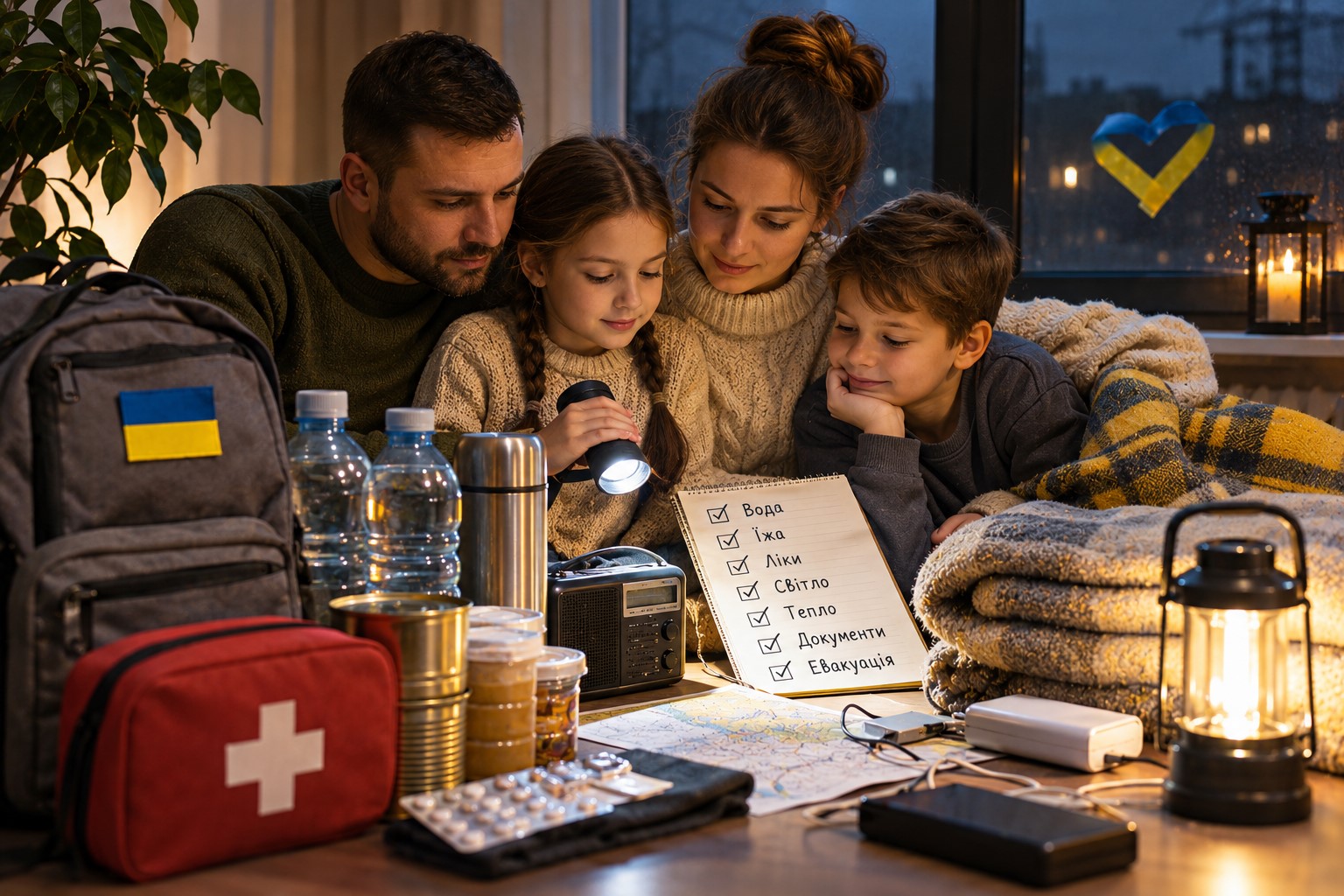
Power outages, cold homes, water shortages, evacuation, psychological exhaustion, and caring for children. How to prepare for difficult circumstances without panic, protect your health, and maintain a sense of stability.
The war has changed our everyday lives. But we can still take care of ourselves
Over the years of Russia’s full-scale war against Ukraine, Ukrainians have learned to live in conditions that would have seemed unimaginable not so long ago. We work during air-raid alerts, charge our phones with power banks, adapt to electricity outages, look for water, arrange temporary homes, and try to support our children, parents, and loved ones.
For some, the war means regular blackouts and disruption to everyday routines. For others, it means living close to the front line. And for many, it means losing their homes, being forced to relocate, separation from loved ones, uncertainty, and the constant feeling that the ground beneath their feet could disappear at any moment.
In these circumstances, it is important not only to know what to do during an emergency. It is equally important to protect physical and mental health, support those close to us, and have a clear action plan.
This guide is not about preparing for the worst. It is about making everyday life safer, reducing risks, and regaining at least some control over our circumstances.
Preparation is not panic. It is a way of caring for yourself and your family, and of being able to act when circumstances become difficult.
1. Household preparedness: what to get ready in advance
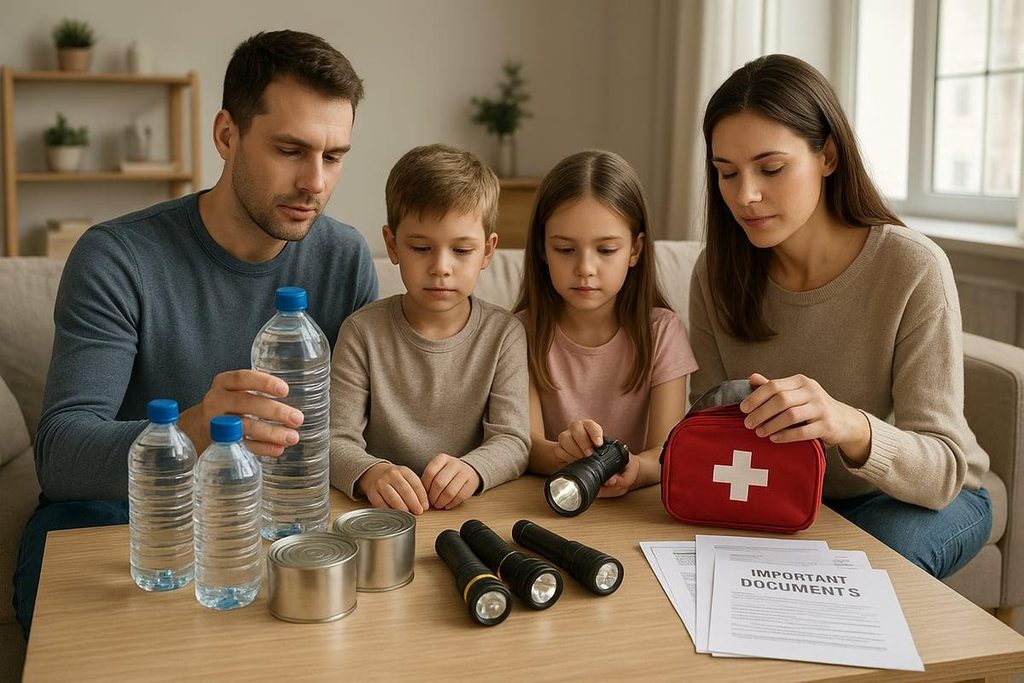
Emergencies rarely leave enough time to prepare calmly. That is why it is better to organise essential supplies in advance, rather than waiting for an evacuation announcement or a prolonged interruption of essential services.
You do not have to buy everything at once. You can gradually build up household reserves, taking into account the number of people in your family, their ages, health conditions, and individual needs.
What should you have at home?
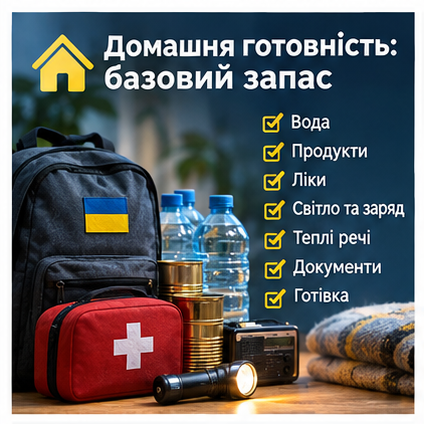
It is advisable to prepare a basic reserve that includes:
- drinking water and water for household use;
- non-perishable food;
- essential medicines and a first-aid kit;
- flashlights, batteries, and power banks;
- communication devices and a backup source of information;
- warm clothing, blankets, and sleeping bags;
- personal hygiene products;
- identity documents and copies of important papers;
- cash in case banking services are disrupted;
- essential items for children, older people, people with disabilities, and pets.
It is also worth agreeing on a communication plan with your family: whom to call, where to meet if mobile networks stop working, and who will help family members with limited mobility.
Ukraine’s State Emergency Service (SESU) recommends keeping supplies of water, food, medicines, and lighting equipment, as well as preparing essential belongings in case evacuation becomes necessary. It is important to adapt this list to your family’s actual needs rather than trying to assemble a universal emergency kit without considering your circumstances.
2. How to get through a blackout: lighting, communication, and safety
A power outage is more than an inconvenience. A prolonged loss of electricity can affect water supplies, heating, elevators, medical equipment, refrigerators, bank terminals, and mobile communications.
That is why it is better to prepare for a possible blackout in advance.
Lighting
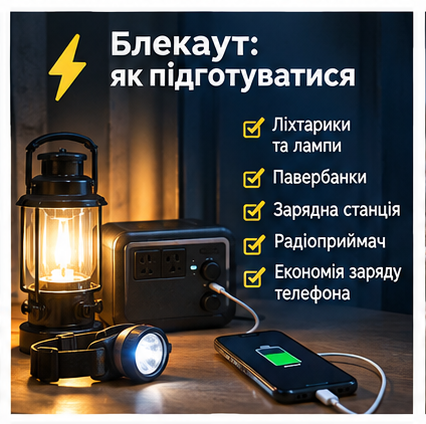
For household use, it is worth having:
- rechargeable flashlights;
- a headlamp to keep your hands free;
- spare batteries of the appropriate type;
- rechargeable lamps;
- power banks;
- a portable power station, if possible.
Candles should not be considered your primary source of lighting. They create a fire risk, especially in homes with children or pets, or when someone might fall asleep from exhaustion.
If you do use candles, place them only on a stable, non-combustible surface, away from curtains, paper, and other flammable materials. Never leave an open flame unattended.
Communication and information
Download the following to your phone in advance:
- the Air Alert app;
- official contact details for local authorities and emergency services;
- offline maps of your city and region;
- important telephone numbers;
- copies of identity documents and medical prescriptions.
It is also useful to have a small battery-powered or otherwise self-powered radio. It can provide information if mobile internet and telephone services become unavailable.
During a power outage, save your phone battery whenever possible: reduce screen brightness, switch off unnecessary functions, and use power-saving mode.
If your mobile operator is unavailable, try using Ukraine’s national roaming service, if it is accessible in your area.
Generators, gas camping stoves, and power stations: essential safety rules
This is not a situation where you can rely on the idea that things will somehow work out. Improper use of alternative power sources and heating equipment can cause fires or fatal carbon monoxide poisoning.
Generators:
- Use them outdoors only.
- Never operate a generator inside an apartment, house, basement, garage, or on a balcony.
- Position it away from doors, windows, and ventilation openings, following the manufacturer’s instructions and SESU recommendations.
- Never refuel a running generator or one whose engine has not cooled down.
- Do not store fuel in living areas.
- Do not overload the generator or attempt to modify its electrical connections yourself.
Carbon monoxide has no colour or smell. A person may not realise they are being poisoned in time.
Portable gas camping stoves:
Do not use them to heat indoor spaces. A gas camping stove is designed for cooking in accordance with the manufacturer’s instructions, not for prolonged burning inside an enclosed room. Do not use such appliances in tents, basements, or other poorly ventilated spaces.
Portable power stations and power banks:
- Follow the manufacturer’s instructions.
- Use compatible charging equipment.
- Do not cover equipment while it is operating.
- Keep it away from heat sources and moisture.
- Do not use damaged cables or batteries.
In apartment buildings, a portable power station is often a safer alternative to a household generator, but it must still be used correctly.
3. If there is no heating: how to stay warm and prevent hypothermia
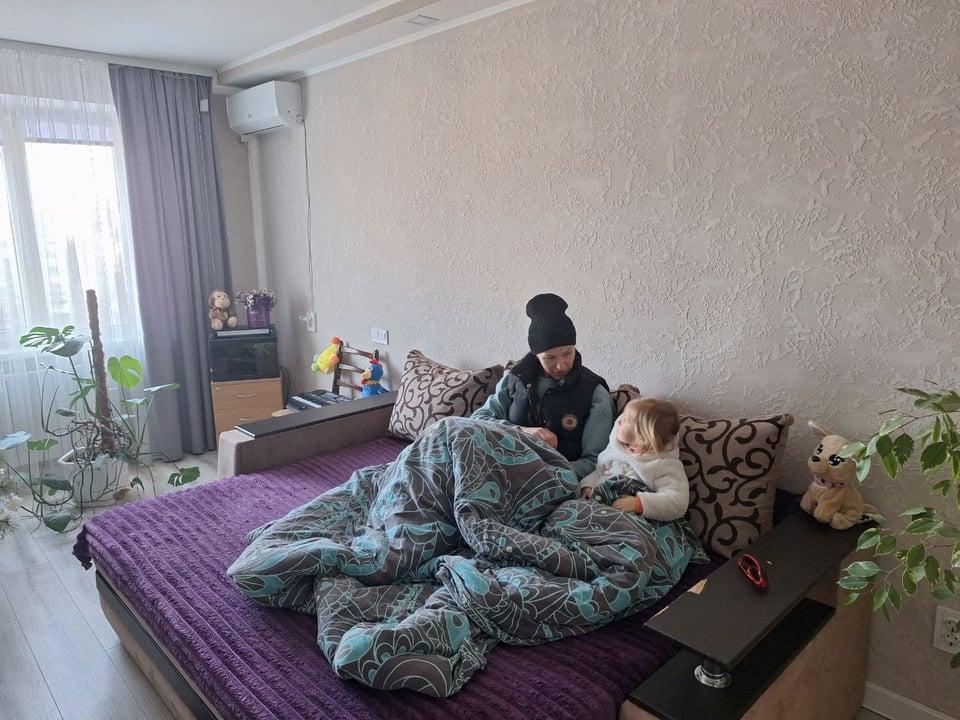
A lack of heating in winter can pose a serious health risk, especially for young children, older people, people with chronic illnesses, and those with limited mobility.
The most important thing is not to wait until your home becomes dangerously cold.
How to keep your apartment or house warm
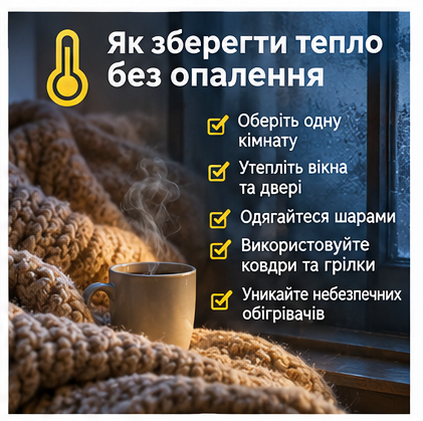
- Choose one room, preferably a small one, where the family can stay together.
- Close the doors to other rooms.
- Check windows and doors for draughts.
- Use thick curtains, blankets, or special weatherstripping.
- Dress in layers: thermal underwear, a sweater, and warm outer clothing.
- Remember warm socks, a hat, and protection for your neck.
- Place rugs, sleeping mats, or blankets on the floor to reduce heat loss.
- Use a hot-water bottle filled with warm water, not boiling water.
Ukraine’s Ministry of Internal Affairs also recommends staying in one room, insulating windows and doors, and wearing several layers of clothing. Gentle movement can help maintain body heat, provided your health allows it.
You do not need to try to heat the entire apartment at any cost. It is better to focus on one room and consider in advance whether you could temporarily move in with relatives or friends, or to a place with heating.
What you must never do
- Do not heat your apartment using a gas stove or oven.
- Do not use barbecues, charcoal, or open fires indoors.
- Do not operate a generator on a balcony or in a garage.
- Do not block ventilation ducts.
- Do not leave homemade heaters unattended.
- Do not fall asleep near an open flame or unsafe heating appliance.
This is not an exaggeration. Carbon monoxide poisoning can develop without being noticed.
Possible signs of carbon monoxide poisoning include headache, nausea, dizziness, weakness, drowsiness, and impaired coordination. If poisoning is suspected, immediately move into fresh air, do not return to the dangerous premises, and call for help at 112 or 103.
How to recognise hypothermia
Possible signs include:
- intense shivering;
- cold and pale skin;
- impaired coordination;
- slow or slurred speech;
- drowsiness;
- confusion;
- shallow or slow breathing.
If you notice these symptoms in yourself or another person:
- move the person to a dry, warm place;
- remove wet clothing;
- cover them with blankets and keep their head and neck warm;
- if the person is conscious and able to swallow, offer a warm, sweet drink;
- seek medical assistance.
Do not rub the person’s limbs, attempt to warm them rapidly with a hot bath, or give them alcohol. Severe hypothermia requires emergency medical attention.
The Ministry of Health of Ukraine has published recommendations on preventing and recognising hypothermia.
4. Water: how much to store and how to keep it safe
Water is one of the first things to consider when preparing for an emergency.
Without a reliable water supply, it becomes difficult not only to drink and prepare food. Water is also needed for handwashing, sanitation, and caring for children, older people, and those who are ill.
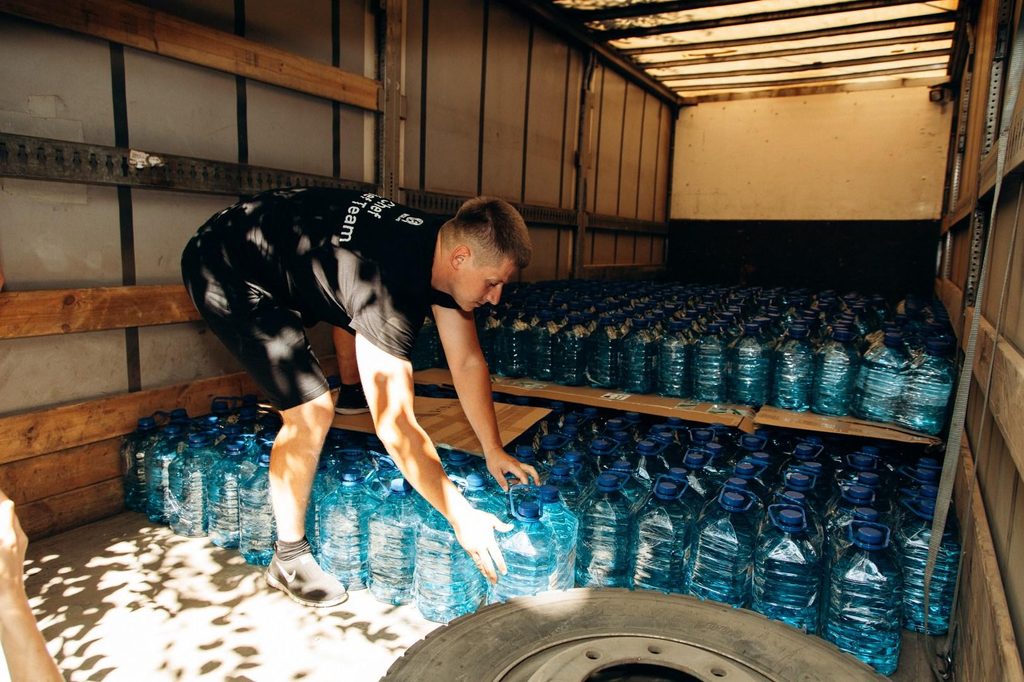
How much water do you need?
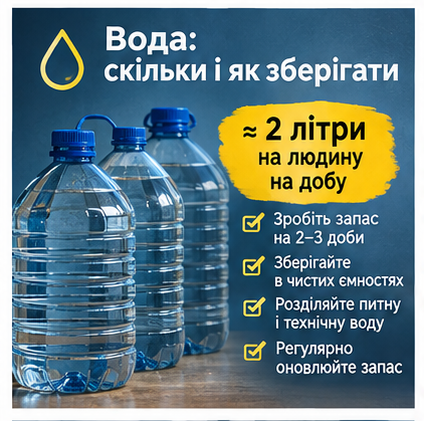
For basic planning, you can use the State Emergency Service recommendation for drinking water supplies in shelters: approximately 2 litres per person per day. This is a minimum guideline for drinking water only, not the total daily amount required for drinking, cooking, and hygiene.
Actual needs may be higher depending on temperature, physical activity, age, health conditions, and other circumstances.
Calculate your family’s requirements based on the number of people and the expected duration of a possible disruption.
For example, for a family of three, the minimum drinking water supply for three days at a rate of 2 litres per person per day would be 18 litres. You should also provide separate water for household needs.
How to store water
- Use clean, food-grade containers with lids.
- Never store drinking water in containers previously used for household chemicals.
- Label containers: “Drinking water”, “Technical water”, and “Household use”.
- Keep water away from sunlight, heat sources, and chemicals.
- Renew your household supply regularly.
- Keep drinking water separate from technical water.
The Ministry of Health recommends storing water in closed containers and maintaining a supply for 2–3 days. Water from open bodies of water must not be used for drinking without appropriate treatment.
What if the central water supply stops?
The safest option is to use bottled water or water from a source known to be safe.
If you have doubts about water quality, follow announcements from local authorities and recommendations from public health and sanitation services.
Boiling helps destroy many disease-causing microorganisms, but it does not remove all chemical contaminants. If chemical or radioactive contamination is suspected, boiling does not make the water safe. In such cases, use only a recommended water source and follow official instructions.
Do not rely on water from puddles, open bodies of water, or unknown sources.
5. Food supplies: how to prepare without unnecessary expense
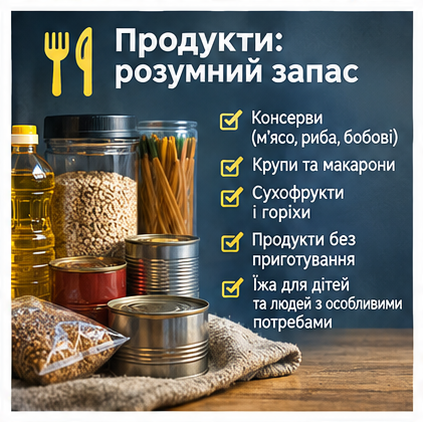
Your household food supply should not be an enormous stockpile. It should be a well-planned reserve that allows your family to eat for several days if shops are closed or cooking becomes impossible.
The best approach is to gradually buy foods you already eat but that have a longer shelf life.
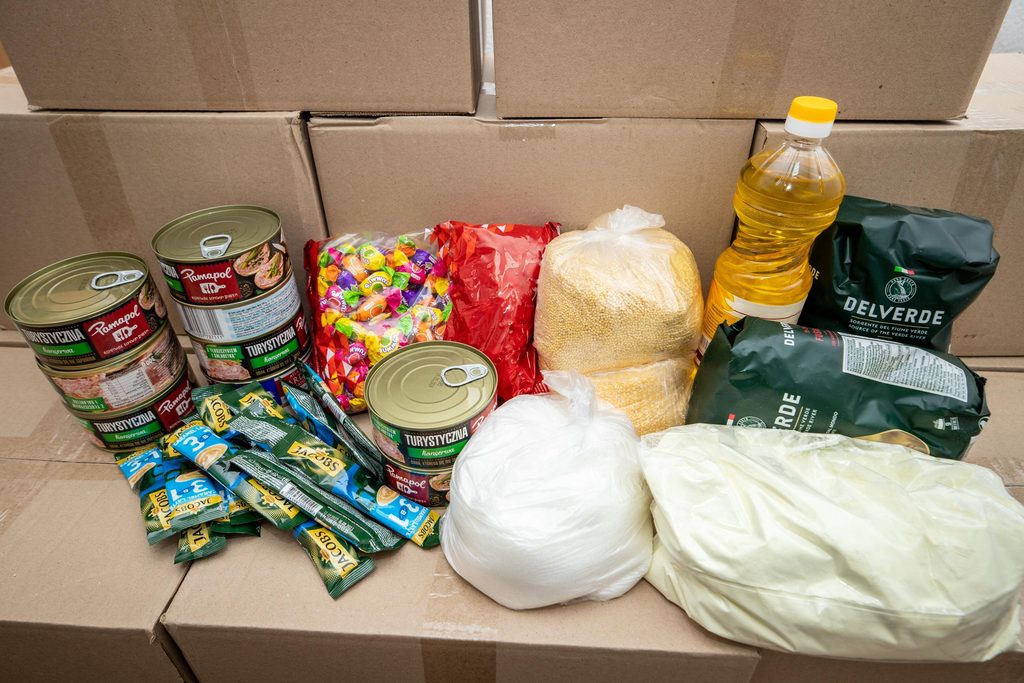
What should you have?
Foods that do not require cooking:
- canned meat, fish, and legumes;
- crackers, rusks, and crispbreads;
- nuts and dried fruit;
- energy bars;
- peanut butter;
- breakfast cereals;
- baby food, if needed;
- special dietary products for people with specific nutritional requirements.
Foods that can be prepared if a safe heat source is available:
- grains and cereals;
- pasta;
- legumes;
- instant soups;
- canned vegetables;
- cooking oil;
- tea;
- sugar;
- powdered milk or suitable alternatives.
Do not forget food for infants and for people with diabetes, allergies, chronic illnesses, or other special dietary needs.
How to keep food safe during a blackout
When the electricity goes out, do not rush to open the refrigerator. The less often you open it, the longer it will stay cold.
According to the US Centers for Disease Control and Prevention (CDC):
- a refrigerator can maintain a safe temperature for approximately 4 hours if its door remains closed;
- a full freezer can maintain its temperature for approximately 48 hours;
- a half-full freezer can maintain its temperature for approximately 24 hours.
These timeframes assume that the doors remain closed and the temperature inside stays within safe limits.
Perishable food that has been kept without adequate refrigeration beyond the recommended time should be discarded. Do not taste food or rely on its smell to determine whether it is safe: dangerous bacteria do not always change the appearance of food.
If you have a refrigerator thermometer, use it. The safe storage temperature for refrigerated food is no higher than 4°C.
6. First-aid kit and medicines: what you need to prepare
Medicines are not something you should buy indiscriminately “just in case”. Your first-aid kit should reflect the actual needs of the people living in your home.
It is particularly important to plan ahead for medicines that someone takes regularly.
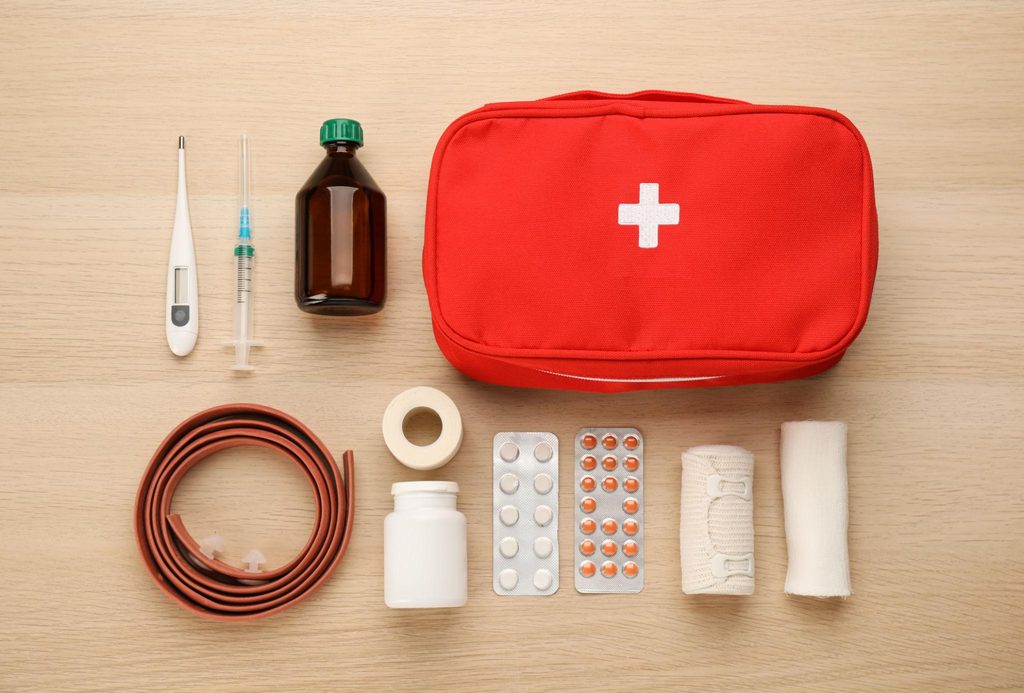
A basic home first-aid kit
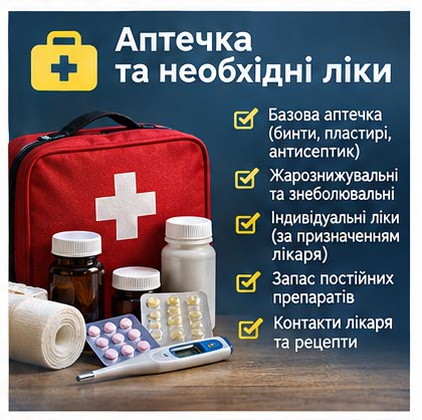
Depending on your family’s needs, it may include:
- a thermometer;
- sterile bandages and gauze pads;
- adhesive plasters in different sizes;
- an antiseptic for skin treatment;
- disposable gloves;
- a wound-cleaning solution, in accordance with medical advice;
- a fever-reducing and pain-relieving medicine;
- an antihistamine, if required by family members;
- oral rehydration products;
- individual medicines prescribed by a doctor.
This list does not replace advice from a doctor or pharmacist. Do not prescribe antibiotics to yourself, change the dosage of prescription medicines, or use medicines of unknown composition.
Keeping a supply of regular medication
If you or someone close to you takes medication regularly:
- Prepare a supply, as far as permitted by the doctor’s instructions and the rules governing the medicine.
- Keep medicines in their original packaging.
- Make a list of medication names, dosages, and administration times.
- Keep copies of prescriptions and medical instructions.
- Check expiry dates.
- Find out in advance where you can obtain the necessary medicines if you have to relocate.
Pay particular attention to medicines that require refrigeration. Discuss acceptable storage conditions during prolonged power outages with your doctor or pharmacist in advance. Not all medicines can simply be cooled in any way or frozen.
People with chronic illnesses, pregnant women, infants, and older people should ideally have an individual medical preparedness plan.
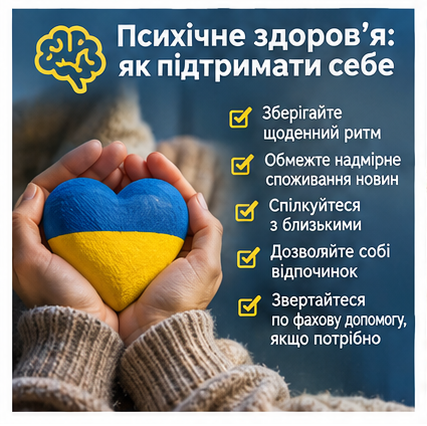
7. Mental health during the war: how to maintain your inner stability
We often talk about supplies of water, food, and medicines, but forget another essential resource — mental health.
Prolonged exposure to danger, air-raid alerts, shelling, uncertainty, loss of housing, separation from loved ones, and constant anticipation of bad news place a heavy strain on the nervous system.
A person may experience anxiety, irritability, helplessness, difficulty concentrating, sleep disturbances, or emotional numbness. Sometimes it feels as though there is no energy left even for ordinary daily tasks.
This is not a sign of weakness. It is one way the mind can respond to prolonged stress and traumatic events.
The World Health Organization (WHO) and Ukraine’s Ministry of Health recommend maintaining basic routines and social connections, limiting excessive exposure to distressing news, and seeking professional help if symptoms become too intense or persistent.
What can help maintain psychological resilience?
1. Restore small, everyday sources of stability.
Even when it is impossible to plan life months ahead, you can try to maintain simple habits:
- wake up at roughly the same time;
- eat regularly;
- drink enough water;
- take short breaks;
- go for a walk when it is safe;
- stay in touch with loved ones.
A routine will not solve every problem, but it can create a sense of predictability.
2. Do not spend your entire day following the news.
Information is essential for understanding danger and making decisions. But constantly refreshing your news feed does not make you safer.
Choose several reliable sources and check updates at specific times. In an immediate emergency, of course, follow official alerts and instructions from the relevant services.
Do not share unverified reports about shelling, evacuation, disasters, or supposed future power cuts. Rumours increase anxiety and can cause harm.
3. Do not demand constant productivity from yourself.
During wartime, sometimes it is enough to do what is essential: eat, sleep, care for your children, take your medication, and contact loved ones.
Not every day has to be productive. Rest is not a luxury or a sign of weakness; it is one of the conditions necessary for recovery.
4. Talk to people you trust.
You do not need to find the perfect words. Sometimes it is enough to say: “I’m having a hard time”, “I’m exhausted”, “I need some company”, or “Please stay with me”.
Support does not always mean giving advice. Often, the best thing a loved one can do is listen, avoid dismissing another person’s feelings, and resist the urge to immediately fix everything.
5. Do not be ashamed to seek help from a psychologist or psychotherapist.
If anxiety, insomnia, panic reactions, intrusive memories, feelings of hopelessness, or other stress-related symptoms interfere with everyday life, consider contacting a professional.
If someone has thoughts of suicide or self-harm, urgent help is needed. Do not leave the person alone if there is an immediate risk, and call 112 or 103.
How to support someone who has lost their home
For many Ukrainians, home is more than a number of square metres. It is the belongings collected over many years, photographs, family stories, neighbours, familiar streets, the graves of loved ones, and a sense of belonging to a particular place.
When someone loses their home because of the war, they may experience not only material loss but also profound grief.
In such circumstances, avoid saying:
- “At least you’re alive.”
- “Now you can start a new life.”
- “Don’t think about negative things.”
- “Other people have it even worse.”
- “You have to be strong.”
Even when these words are well-intentioned, they can invalidate someone’s pain.
It is better to say:
- “I’m sorry you had to go through this.”
- “You have every right to miss your home.”
- “I’m here. Let’s think about what might make things a little easier for you right now.”
- “What can I do to help today?”
- “You don’t have to solve everything at once.”
Do not force positive thinking on someone. Give them the opportunity to process their loss at their own pace. Help with practical matters: documents, finding accommodation, medical care, transport, and applying for assistance.
Sometimes small, practical actions are exactly what helps someone feel that they are not facing the crisis alone.
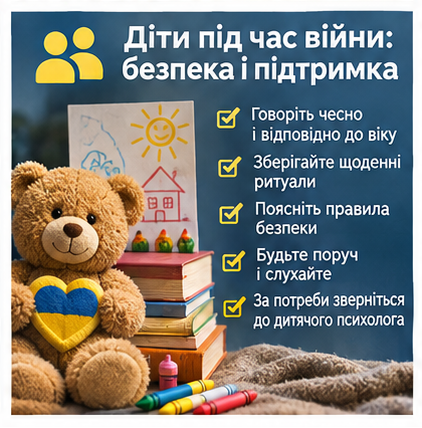
8. Protecting children: safety, trust, and a sense of stability
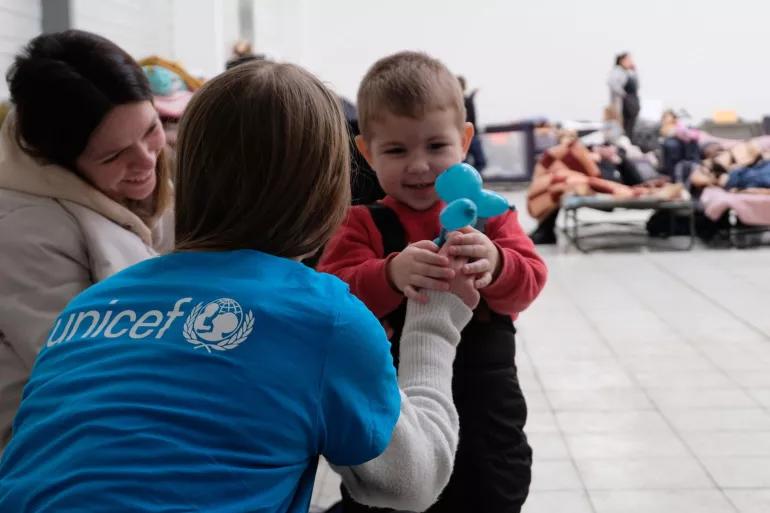
Children experience war differently from adults. They may not understand all the reasons behind events, but they are very sensitive to fear, tension, and their parents’ emotional state.
A child may ask the same questions repeatedly, be afraid to stay alone, sleep poorly, become irritable, or, conversely, withdraw into themselves.
This does not necessarily mean that something is wrong with the child. It often reflects their need for safety, explanations, and support.
UNICEF emphasises the importance of age-appropriate explanations, maintaining everyday rituals, emotional connection, and paying attention to changes in children’s behaviour.
How to talk to a child about the war
- Be honest, but use language appropriate to the child’s age.
- Do not hide obvious things if the child can see or hear them.
- Do not overwhelm them with details about deaths, destruction, or violence.
- Explain that adults and the relevant services are doing everything they can to keep people safe.
- Allow the child to ask questions.
- Do not scold them for being afraid, crying, or not wanting to talk.
- Do not promise something you cannot guarantee.
Instead of saying, “Nothing will happen”, it is better to say: “I cannot know everything in advance, but we have a plan. I will stay with you and help you know what to do.”
What can help a child feel more stable?
Even in temporary accommodation or a shelter, try to maintain simple routines:
- having breakfast together;
- reading before bedtime;
- keeping a favourite toy nearby;
- drawing;
- taking short walks when it is safe;
- staying in touch with friends and relatives.
Show your child where the nearest shelter is, explain what to do during an air-raid alert, and tell them whom to approach if they get lost.
For younger children, it is useful to put a note in their backpack with their name, their parents’ contact details, and important health information. Older children should memorise at least one telephone number belonging to someone close to them.
When does a child need professional help?
Contact a paediatrician or child psychologist if you notice persistent or significant changes, such as:
- the child is constantly afraid of being alone;
- they regularly have nightmares or sleep problems;
- their behaviour changes dramatically;
- they lose interest in activities they used to enjoy;
- they become excessively aggressive or withdrawn;
- they frequently complain of stomach aches or headaches without an obvious physical cause;
- they return to behaviours typical of a much younger age;
- they are unable to resume their usual activities after experiencing traumatic events.
Do not attempt to diagnose the child yourself. The important thing is to seek professional help in time.
9. Older people and people with disabilities: those we must not forget

During prolonged power, water, and heating outages, people who cannot move quickly, evacuate independently, or provide for their own basic needs become particularly vulnerable.
If there are older people, people with disabilities, or people with chronic illnesses among your neighbours or acquaintances, agree on a simple mutual support system.
Check:
- whether they have water, food, and necessary medication;
- whether their phone is charged;
- whether they can reach a shelter independently;
- whether they have assistance available during evacuation;
- whether they can access the medical equipment that requires electricity;
- whether they know whom to call in an emergency.
If someone uses a wheelchair, hearing aid, oxygen concentrator, or other equipment, plan in advance for backup power, transport, and assistance.
Do not wait until a person asks for help. Sometimes they simply do not have the strength or ability to do so.
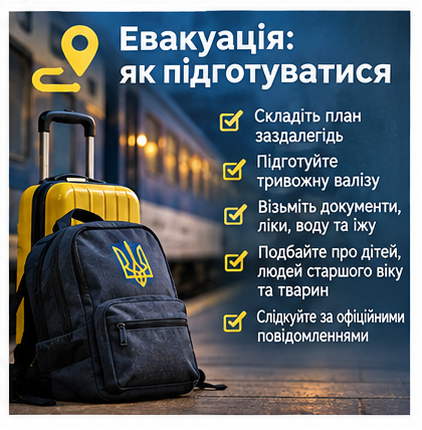
10. Evacuation: how to prepare and what you need to know
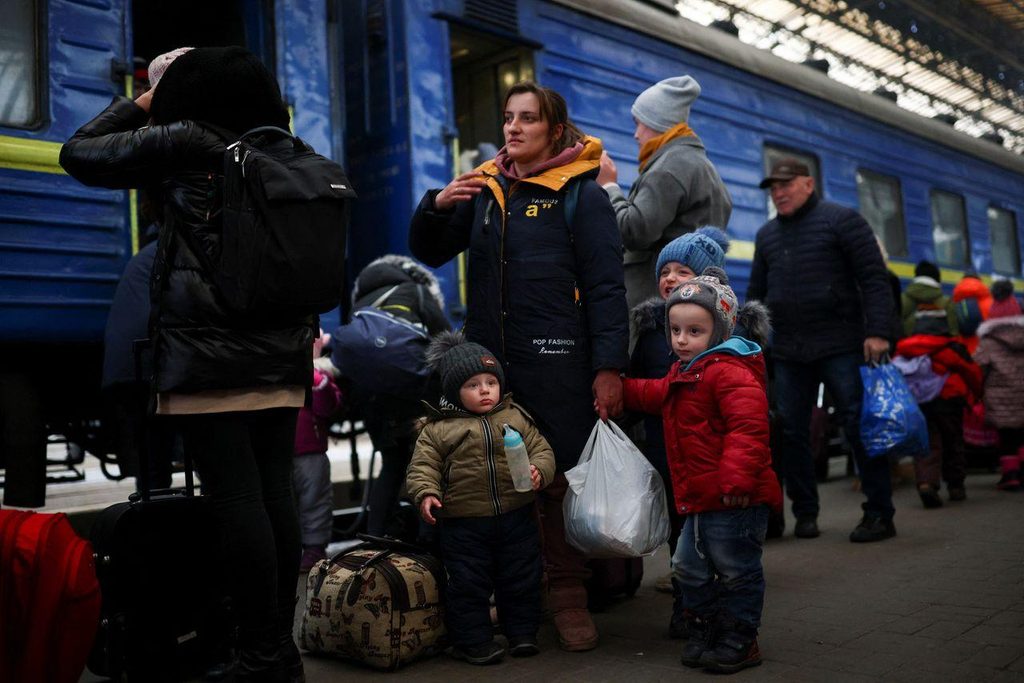
Evacuation is not a defeat, a betrayal of your home, or a sign of weakness. It is a way to save lives when staying in a particular place becomes dangerous.
The decision to leave home can be extremely difficult, especially for those who have already experienced forced displacement or lost their homes before.
But it is important to remember: no possession is worth a human life. If official services announce mandatory evacuation or warn of an immediate threat, do not delay your departure without a compelling reason.
When should you seriously consider evacuation?
- Mandatory evacuation has been announced.
- Hostilities are approaching your settlement.
- Critical infrastructure is being repeatedly damaged.
- There is no reliable access to water, heating, electricity, or medical care.
- Children, older people, or people with chronic illnesses are at risk.
- Local authorities warn of a dangerous situation.
You do not need to wait until every risk becomes obvious. It is better to have an evacuation plan in advance.
An emergency bag: what to take with you
Pack your belongings so that you can pick them up quickly and carry them yourself.
Documents:
- passports and birth certificates;
- education certificates, property documents, and other important papers;
- medical records, prescriptions, and certificates;
- children’s documents;
- contact details of loved ones;
- paper and digital copies of important documents.
Keep original documents in a waterproof bag or folder.
Communication and money:
- mobile phone;
- charger;
- power bank;
- cash;
- bank cards;
- a paper list of important telephone numbers.
Clothing and hygiene:
- several sets of underwear;
- socks;
- comfortable shoes;
- season-appropriate clothing;
- personal hygiene products;
- a towel;
- wet wipes;
- menstrual hygiene products, if needed.
Food and water:
- drinking water;
- food that does not require cooking;
- a small supply of food for children;
- basic utensils and a water bottle.
Medication:
- essential regular medication;
- an individual first-aid kit;
- medical prescriptions and instructions;
- information about allergies and important medical conditions.
For children:
- a favourite toy;
- a small blanket;
- a change of clothes;
- necessary food;
- medication;
- a note with parents’ contact details.
For pets:
- a pet carrier or leash;
- a supply of food;
- water;
- veterinary passport;
- necessary medication;
- hygiene products.
Do not try to fit all your belongings into one suitcase. The most important things are documents, medicines, water, communication devices, and the items a person needs to get through the first few days safely.
What to do before leaving
If time allows and doing so does not conflict with urgent instructions from emergency responders:
- tell your loved ones where you are going;
- check that all family members have their documents;
- switch off electrical appliances;
- turn off the gas and water supply, if it is safe and appropriate to do so;
- close windows and doors;
- make sure no dangerous heating appliances are left switched on;
- take essential medicines and water;
- help neighbours who cannot evacuate independently.
Do not return to a dangerous area to collect belongings without permission from the relevant authorities.
How to organise your departure
Before evacuating, check with local authorities or an official hotline:
- where organised departures are taking place;
- whether transport is available;
- where evacuees will arrive;
- whether temporary accommodation is provided;
- how people with limited mobility will be transported;
- whether pets can be taken along;
- where assistance can be obtained after arrival.
Do not accept unverified transport offers from strangers. Do not publish evacuation convoy routes, exact assembly points, or other information on social media that could create additional risks.
The State Emergency Service recommends following announcements from local authorities, official alert channels, and designated assembly points.
11. Where to seek help when you need it
In difficult circumstances, it is important not only to know what to do but also where to find support.
Below are contact details for government services and humanitarian organisations that may be able to help with different issues.
Ukraine’s emergency services
- 112 — the single emergency number.
- 101 — State Emergency Service of Ukraine.
- 102 — National Police.
- 103 — Emergency Medical Service.
- 104 — Emergency gas service.
If someone’s life is in immediate danger, do not delay contacting the emergency services.
Evacuation and crisis support hotline — 1548
The 1548 hotline is a round-the-clock government service that can be contacted about:
- evacuation from dangerous areas;
- information about temporary accommodation;
- support for internally displaced persons (IDPs);
- humanitarian assistance;
- payments and other crisis-related matters.
Telephone: 1548.
Additional contact channels: +380 96 078 8433 (Viber, WhatsApp, Telegram).
Website: https://1548.gov.ua/
Ukrainian Red Cross Society
The Ukrainian Red Cross provides humanitarian assistance, support to people affected by the war, mental health and psychosocial support, first-aid training, and other programmes depending on the region.
For mental health and psychosocial support:
- 0 800 332 656 — national hotline;
- email: pss@redcross.org.ua.
Hotline opening hours: Monday to Friday, 09:00–18:00.
Official website: https://redcross.org.ua/
To find out which programmes are available in your city or region, contact your local Red Cross branch.
United Nations High Commissioner for Refugees (UNHCR)
The organisation provides information and consultations for internally displaced people, refugees, people returning to Ukraine, and others affected by the war.
You can seek assistance with:
- support for internally displaced persons;
- legal consultations;
- documentation;
- available assistance programmes;
- return and reintegration.
Hotline: 0 800 307 711.
Opening hours: Monday to Friday, 09:00–18:00.
Official information: https://help.unhcr.org/ukraine/
UNICEF
UNICEF works to protect children and support families affected by the war. Its resources include guidance on children’s psychological well-being, health, education, safety, and care.
Useful resources for parents:
https://www.unicef.org/ukraine/parents-children-support-during-military-actions
International Organization for Migration (IOM)
IOM works on migration, displacement, protection, and support for affected populations. Information about current assistance programmes in Ukraine should be checked on the organisation’s official resources.
Official website: https://ukraine.iom.int/
Other useful resources
- State Emergency Service of Ukraine: https://dsns.gov.ua/ — safety guidance, emergency procedures, and evacuation information.
- Ministry of Health of Ukraine: https://moz.gov.ua/ — medical recommendations and health information.
- World Health Organization (WHO): https://www.who.int/ukraine — public health and humanitarian support information.
- Dovidka.info: https://dovidka.info/ — practical safety instructions, emergency preparedness, and guidance on what to do during wartime.
- eDopomoha platform: https://edopomoga.gov.ua/ — information about available types of assistance.
Please note: the inclusion of an organisation in this list does not mean that every assistance programme is available in every region or to every person. Eligibility criteria, the scope of support, and contact details may change. Always check the official websites and pages of the relevant organisations.
12. Mutual support: why it is important not to face difficulties alone
The war has shown us just how important the people around us can be.
A neighbour who checks whether everything is all right. Someone who helps charge a phone. A volunteer who brings water. An acquaintance who finds transport for evacuation. A stranger who simply helps carry someone’s belongings.
These are not small things. They are the building blocks of human solidarity.
If you can, create a small mutual support network in your apartment building, entrance, or local community.
Agree on:
- who will check on older people living alone;
- who can help with transport;
- who can provide a place to charge phones;
- where people can obtain water;
- who needs help getting medication;
- who can assist during evacuation.
You do not have to be a volunteer with a large organisation to make a difference. Sometimes one timely action can mean a great deal.
At the same time, it is important not to put yourself or others in danger. Do not enter damaged buildings, touch unknown objects, or attempt to clear mines yourself. If you find a suspicious object, move to a safe distance and report it by calling 101 or 102.
In closing. We cannot control everything, but we can make sure no one is left alone
The war has taken away things that once seemed permanent for many people: homes, familiar lives, jobs, plans, and a sense of security. Sometimes people are forced to start all over again without even the most basic necessities.
That is why conversations about preparedness, supplies, and safety should not become another source of fear. You do not have to demand perfect readiness for every possible scenario from yourself. You do not need to buy things you cannot afford or blame yourself for not having something.
Start small: check your documents, prepare essential medication, replenish your water supply, charge your power bank, and agree on a communication plan with your loved ones. Find the contact details of support services. Think about which of your neighbours might need help.
And do not forget about yourself.
You have the right to feel tired, to grieve, to be afraid, to ask for help, and not to be strong every minute of every day. Taking care of your own health is not selfish. It helps you preserve the strength to support the people around you.
We do not know everything that tomorrow may bring. But we can make today a little safer, a little more predictable, and a little more humane.
Home is not just walls. It is people, connections, memories, and the feeling that you matter to someone. And even when war takes away the familiar ground beneath our feet, we can help one another find new sources of stability.
Take care of yourselves. Look after your loved ones. And do not leave the people around you to face hardship alone.
Sources and Further Reading
- State Emergency Service of Ukraine (SESU) — Safety During Wartime.
- SESU — Emergency Service Contacts.
- Ministry of Internal Affairs of Ukraine — How to Keep Your Home Warm Without Electricity or Heating.
- Ministry of Health of Ukraine — How to Prevent Hypothermia During Wartime.
- Ministry of Health of Ukraine — Recommendations for the Public During Martial Law.
- Ministry of Health of Ukraine — How to Cope with Stress During the War.
- UNICEF — Supporting Parents and Children During the War.
- UNICEF — Children’s Mental Health During the War: Advice for Parents and Caregivers.
- Ukrainian Red Cross Society — Mental Health and Psychosocial Support.
- World Health Organization (WHO) — Recommendations on Water, Sanitation and Hygiene System Preparedness in Wartime Ukraine.
- US Centers for Disease Control and Prevention (CDC) — How to Keep Food Safe After an Emergency.
- United Nations High Commissioner for Refugees (UNHCR) — Contacts and Assistance in Ukraine.
- Government Crisis Hotline — 1548.
- International Committee of the Red Cross (ICRC) — Information for People Affected by the Armed Conflict in Ukraine.