

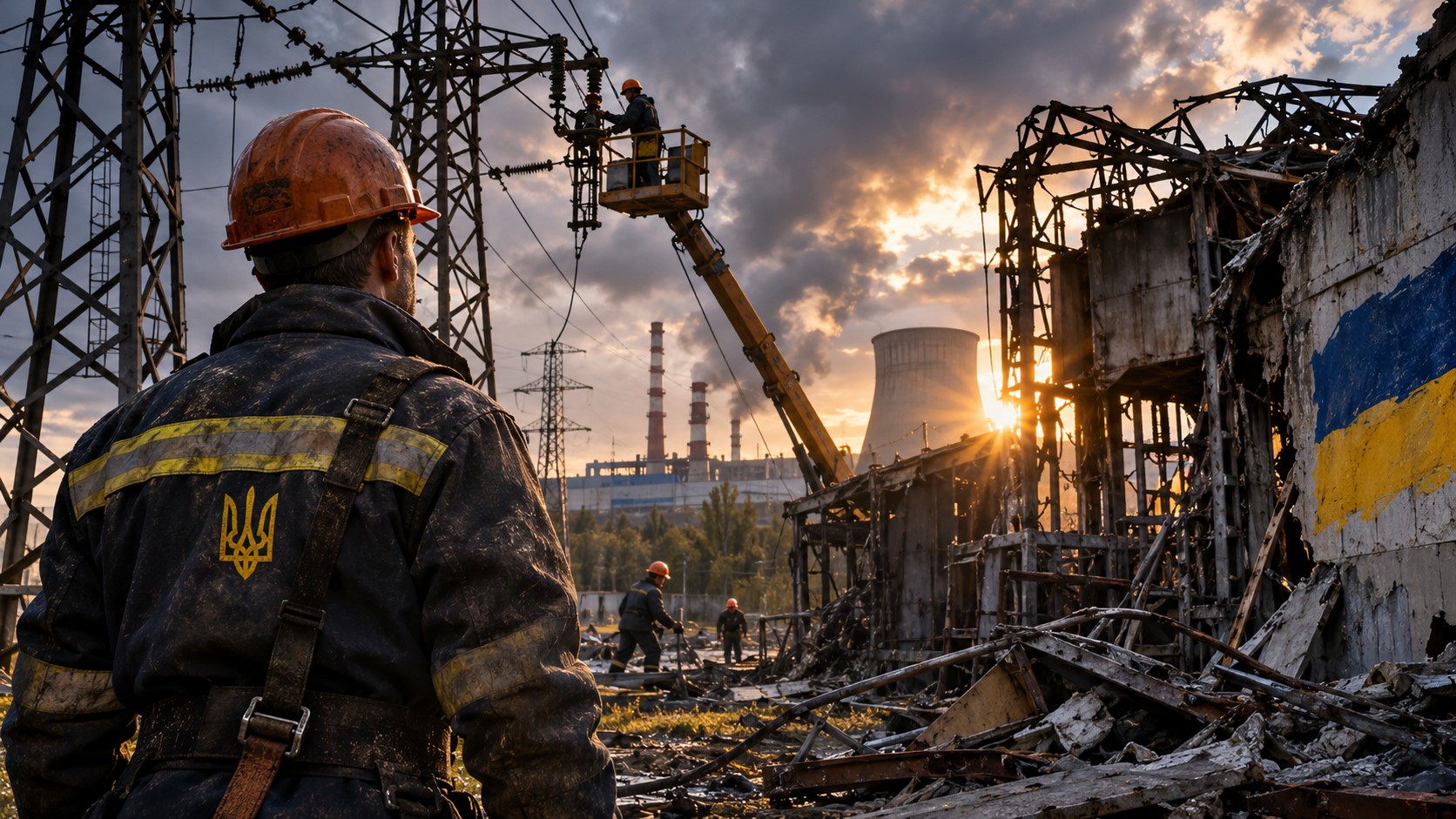
Ukraine’s energy sector is about much more than power plants, transmission lines and figures in official reports. It represents decades of development, engineering expertise, difficult decisions and efforts to build a system capable of supplying the country even in the most challenging circumstances.
Today, this system is facing one of the greatest tests in its history. The Russian Federation, which launched its armed aggression against Ukraine in 2014 and escalated it into a full-scale invasion on 24 February 2022, is systematically attacking Ukraine’s energy infrastructure. Russian missile and drone strikes are damaging power plants, substations, high-voltage transmission networks and electricity distribution facilities.
Millions of people are experiencing the consequences: from electricity and heating outages to disruptions in water supplies, hospitals, transport systems and businesses.
Ukrainian energy workers are restoring damaged facilities under the threat of further attacks. At the same time, the country faces another major challenge: how to protect critical infrastructure against new strikes and ensure that the funds allocated for this protection are actually put to effective use.
Yet the history of Ukraine’s energy sector is not simply a story of destruction. It is also a story of development, adaptation, technological change and the people who work every day to bring electricity back to Ukrainian homes.
To understand the challenges Ukraine is facing today, it is necessary to look at the full picture: what the country’s energy system looked like before the full-scale invasion, how it evolved after independence, what Russia is destroying, how effective the protection of energy facilities is, and what price the country pays for corruption and failures in public administration.
1. From the First Power Plants to a Modern Energy System: How Ukraine Developed Its Energy Sector
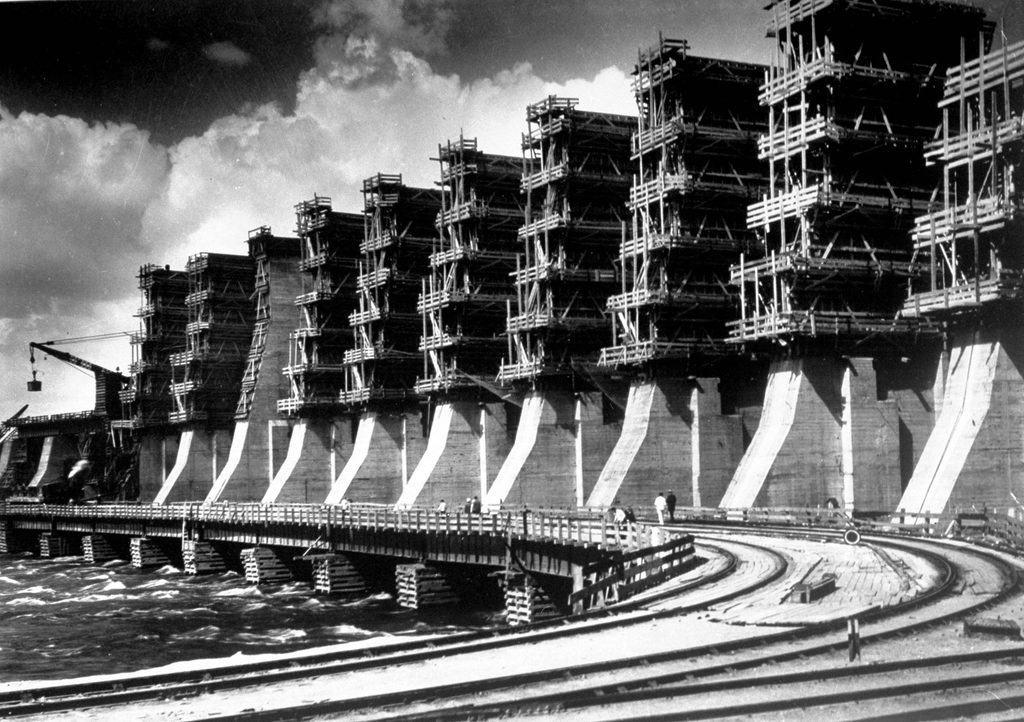
The history of electrification in Ukrainian lands began long before the emergence of an independent Ukraine. In the late nineteenth and early twentieth centuries, electricity began to be used in industry, transport and municipal services. As industrial centres expanded, the demand for large power plants increased, and the energy sector gradually became a foundation of economic development.
One of the most important milestones in this history was the construction of the Dnipro Hydroelectric Power Plant, known as DniproHES. Construction began in 1927, and its first generating unit became operational in 1932. The plant became one of the symbols of large-scale industrialisation and an important component of the region’s energy system.
In the following decades, thermal and hydroelectric power plants were developed across Ukraine. A network of high-voltage transmission lines took shape, and nuclear power plants were built. Nuclear generation eventually became one of the country’s key sources of electricity.
However, the history of Ukraine’s energy sector did not end with the collapse of the Soviet Union.
After regaining independence in 1991, Ukraine inherited a large and complex energy infrastructure, along with responsibility for maintaining, modernising and further developing it. The country gradually established its own energy policy, created national regulatory mechanisms, reformed the electricity market, and modernised generating facilities and power networks.
The development of nuclear energy remained an important priority. Following the 1986 Chornobyl nuclear disaster, nuclear safety became one of the central issues in Ukraine’s energy policy. The last operating unit of the Chornobyl Nuclear Power Plant was permanently shut down in December 2000. Meanwhile, Ukraine’s other nuclear power plants continued to supply a substantial share of the country’s electricity.
At the same time, Ukraine was developing renewable energy. Between 2000 and 2021, new solar and wind power plants were built, investment in renewable sources increased, and the structure of electricity generation gradually changed. International energy connections were also developing, while Ukraine’s energy system was being prepared for integration into the European energy market.
After 2014, when Russia occupied Crimea and launched its armed aggression in eastern Ukraine, energy independence became particularly important. Losing control over parts of the country’s territory, industrial facilities and energy infrastructure forced the state to reconsider its approach to energy security.
One of the most important milestones was the synchronisation of Ukraine’s energy system with the Continental European Network operated by ENTSO-E on 16 March 2022 — after Russia had already launched its full-scale invasion. This enabled Ukraine to operate synchronously with the European power system and develop cross-border electricity trading.
Thus, modern Ukraine’s energy sector is the result of a long historical process, the work and decisions of generations of Ukrainian engineers, energy professionals and public administrators, as well as modernisation, reforms and gradual integration into the European energy space.
This development was uneven. The system had ageing generating facilities, financial and governance problems, and dependencies on certain types of fuel and technologies. But it was not standing still.
2. What Ukraine’s Energy System Looked Like Before the Full-Scale Invasion
To understand the scale of the destruction, it is important to know what resources Ukraine had before 24 February 2022.
According to the industry overview Wind Power of Ukraine 2021, at the end of 2021 the installed capacity of Ukraine’s energy system stood at approximately 56.17 GW. During that year, the country generated around 156.6 TWh of electricity.
The approximate structure of installed capacity was as follows:
- Thermal generation — approximately 27.9 GW, or almost half of total installed capacity.
- Nuclear generation — approximately 13.8 GW.
- Hydropower and pumped-storage hydropower — around 6.3 GW.
- Renewable energy sources — approximately 8 GW, including solar and wind generation.
At that time, Ukraine had four nuclear power plants with a total of 15 operating generating units. Nuclear power accounted for more than half of the country’s total electricity generation, making it one of the key pillars of national energy security.
However, installed capacity does not mean that every power plant could operate at full capacity continuously. Some thermal generating units were physically worn out, others required repairs or modernisation, and electricity generation depended on fuel availability, equipment condition and seasonal demand.
In other words, Ukraine’s energy system already had vulnerabilities before the full-scale invasion. Nevertheless, it remained a large and diversified system supplying electricity to households, industry, transport, hospitals and other critical facilities.
It is important to distinguish between three concepts:
- Installed capacity — the total rated capacity of generating equipment.
- Available capacity — the amount of electricity that can actually be generated at a particular moment.
- Actual generation — the amount of electricity the system has produced over a given period.
This distinction is particularly important today, when part of Ukraine’s generating capacity has been destroyed, damaged, occupied or made unavailable for operation.
3. How Russia Turned Ukraine’s Energy Sector into One of the Main Targets of the War
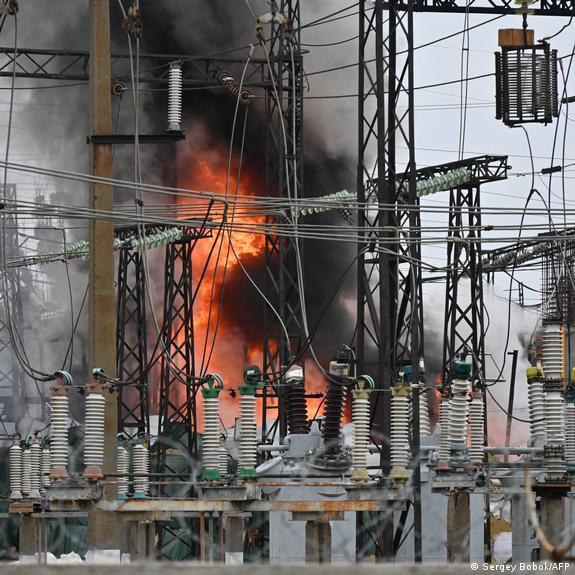
Russian attacks on Ukraine’s energy infrastructure did not begin in 2024 or 2025. Their history is linked to the full-scale invasion launched in 2022, although Ukraine had already lost control of some energy facilities as a result of Russian occupation since 2014.
After 24 February 2022, energy infrastructure became one of the targets of Russian military operations. The seizure of the Zaporizhzhia Nuclear Power Plant — the largest nuclear power plant in Europe — was particularly dangerous. Its occupation created unprecedented risks to nuclear and radiation safety.
On 10 October 2022, Russia launched a large-scale campaign of missile strikes against Ukraine’s energy infrastructure. Power plants, substations and other facilities essential to electricity transmission came under attack.
On 23 November 2022, a massive Russian attack caused a major disruption to Ukraine’s energy system. Damage to power networks and the loss of generating capacity triggered a system-wide blackout. Numerous regions of the country were left without electricity.
In 2023, Ukrainian energy workers focused on restoring damaged facilities, repairing equipment and preparing for the following heating seasons. However, Russia continued its attacks on Ukrainian territory, and the threat of further strikes remained constant.
In 2024, the intensity of Russian attacks on the energy sector increased sharply once again. According to the UN Human Rights Monitoring Mission in Ukraine, nine major coordinated waves of attacks on energy infrastructure took place between 22 March and 31 August.
On 26 August 2024, Russia launched one of the largest aerial attacks of that year, using more than 200 missiles and drones. According to the International Energy Agency, approximately eight million households temporarily lost their electricity supply.
In 2025–2026, Russian attacks on Ukraine’s energy sector continued. Generating facilities, electricity transmission and distribution infrastructure, as well as facilities essential for maintaining reliable heating during the winter season, remained targets.
These are not isolated or accidental incidents of damage. They are systematic Russian attacks on infrastructure that is essential to the everyday lives of Ukraine’s civilian population.
4. What Exactly Is Russia Attacking, and Why Can Damage to One Facility Affect Entire Regions?
An energy system is a complex mechanism in which all its components are interconnected. Power plants generate electricity, high-voltage transmission networks carry it over long distances, substations transform voltage levels, and distribution networks deliver electricity to consumers.
This means that a Russian strike does not necessarily have to destroy a power plant to cause widespread consequences.
Electricity generation. This includes nuclear, thermal, hydroelectric, solar and wind power plants. Damage to large generating facilities reduces the amount of electricity available to the entire system.
Electricity transmission. High-voltage transmission lines and substations make it possible to transfer electricity between regions. Damage to such facilities can disrupt electricity transmission even when other power plants continue to generate electricity.
Electricity distribution. Distribution substations and networks supply electricity to cities, villages, hospitals, businesses and residential buildings. Damage to these facilities can leave entire communities or neighbourhoods without power.
System operation and control. For an energy system to function reliably, electricity generation and consumption must be continuously balanced. Equipment damage, disrupted connections between regions and insufficient generating capacity make system management more difficult.
This is why Russian strikes on energy infrastructure can have consequences far beyond the location of the direct impact.
5. The State of Ukraine’s Energy Sector as of 9 November 2026
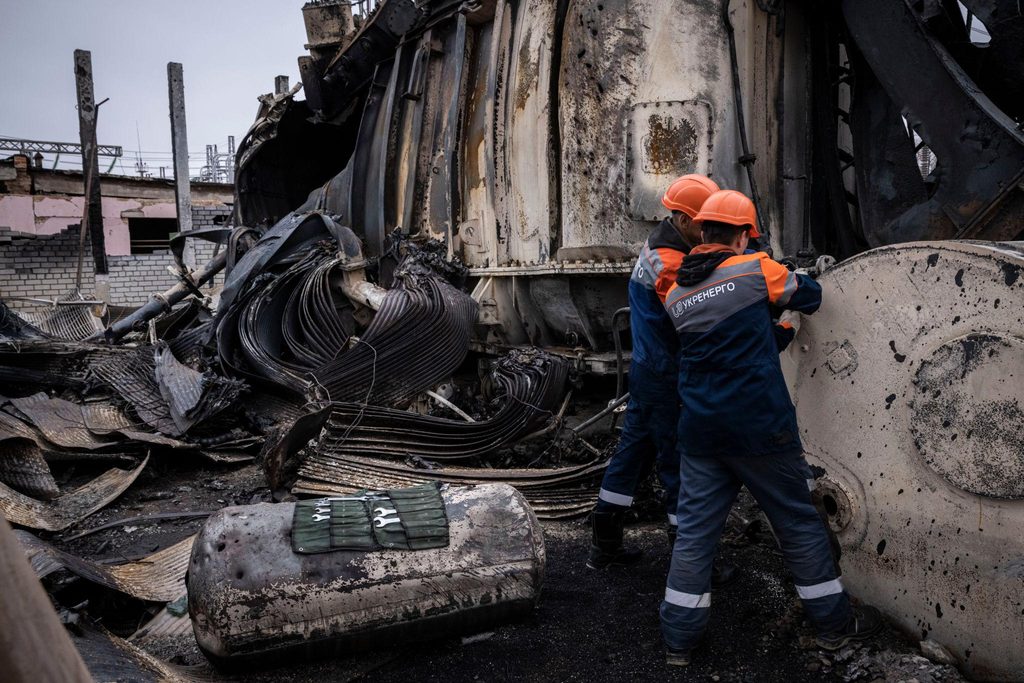
As of 9 November 2026, Ukraine’s energy system continues to operate under the impact of Russian attacks, damaged equipment and limited opportunities for rapid restoration.
According to energy companies and regional authorities, emergency or scheduled electricity restrictions were in effect in several regions on that date. Emergency outages were reported in Sumy, Poltava and Kharkiv regions. The situation remained particularly difficult in Dnipropetrovsk and Kyiv regions.
Consumption restrictions were being applied in different parts of the country. The duration of outages depended on the condition of power networks, available generation, transmission capacity and current levels of electricity consumption.
In its report Ukraine’s Energy Security 2026, published on 4 November 2026, the International Energy Agency warned of the risk of electricity shortages during the winter of 2026–2027.
The agency identified several key challenges:
- Damage to generating capacity as a result of Russian attacks.
- Limited electricity transmission capacity between certain regions.
- Shortages of equipment needed for rapid repairs.
- Long delivery times for specialised energy components.
- The growing importance of decentralised generation and electricity storage systems.
The ability to import electricity from Europe remains an important tool for supporting Ukraine’s energy system. However, the maximum import capacity for the Ukraine–Moldova bidding zone cited in the IEA report is 2,450 MW. Even using this resource does not guarantee that a potential electricity deficit can be fully covered.
Another challenge is the limitations of Ukraine’s internal power networks. Even if electricity is available in one region or can be imported from abroad, it is not always possible to transmit it to the areas where it is most urgently needed. Certain parts of eastern Ukraine remain particularly vulnerable.
The IEA also draws attention to changes in the nature of Russian attacks. Jet-powered drones are playing an increasingly prominent role among the weapons used, creating additional challenges for air defence systems and the protection of energy facilities.
At the same time, Ukraine is developing new sources of generation. According to the IEA, approximately 0.4 GW of distributed gas-fired generation was added in 2026. The use of battery energy storage systems is also increasing, while strategic reserves of essential equipment are being established.
However, new capacity cannot immediately compensate for the loss of large power plants. Batteries can store and release electricity, but they do not generate it themselves. Gas-fired generation requires fuel, maintenance and supporting infrastructure.
Therefore, the current situation is not simply a matter of how much electricity is being generated. It is also about the ability of the entire system to withstand Russian attacks, recover quickly and deliver electricity to consumers.
6. Why Energy Decentralisation Has Become a Matter of Survival
The traditional energy system relies heavily on large power plants and high-voltage transmission networks. This model is efficient for large-scale electricity generation and transmission, but it also has vulnerabilities: damage to several key facilities can cause widespread disruptions.
Russian attacks have demonstrated how dangerous excessive dependence on a limited number of large facilities can be.
One way to improve resilience is decentralisation — the development of numerous smaller generating facilities located closer to consumers.
These include:
- Gas-piston and gas-turbine units.
- Combined heat and power (CHP) plants, which produce electricity and heat simultaneously.
- Solar power plants.
- Wind turbines.
- Battery energy storage systems.
- Backup generators for hospitals, water utilities and other critical facilities.
The advantage of this approach is that damage to one facility does not necessarily result in the interruption of electricity supply across an entire region.
However, decentralised generation is not a universal solution. Smaller installations cannot always replace the capacity of large power plants, and their operation depends on fuel availability, weather conditions, technical reliability and the ability to connect to the grid.
District heating is another important challenge. According to the IEA, more than 30% of Ukrainian households depend on district heating systems. This means that even the availability of local electricity generation does not necessarily guarantee that a residential building will have heating if the heating infrastructure itself is damaged.
A resilient energy system of the future must combine large power plants, local generation, energy storage, reserve capacity and reliable electricity networks.
7. Energy Workers Under Fire: The People Bringing Electricity Back to Ukraine
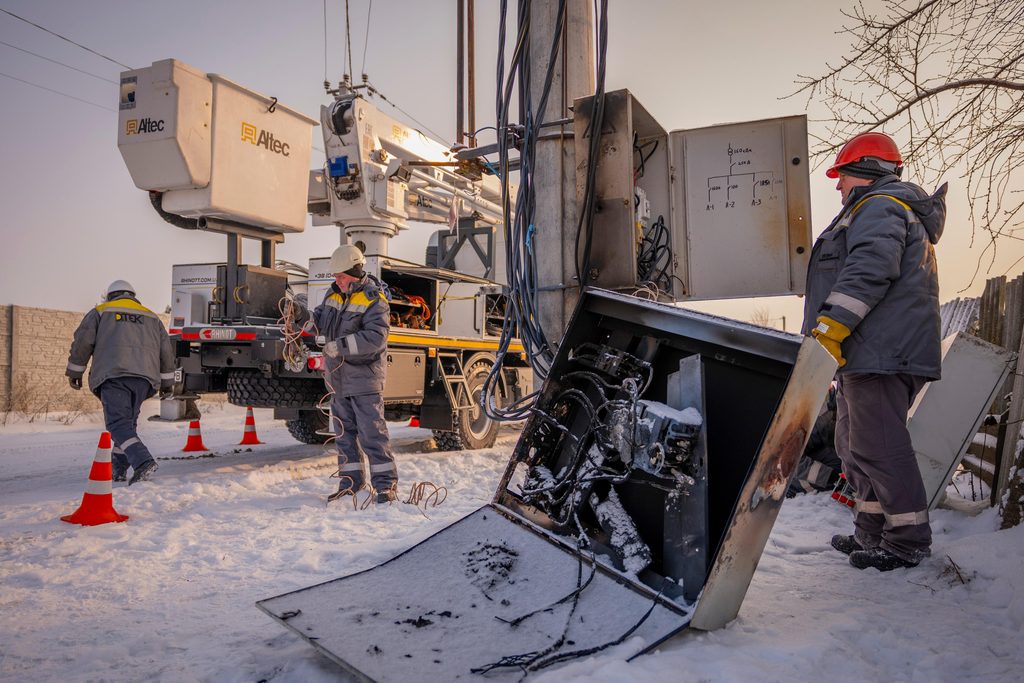
Behind every report about restored electricity supply are real people: engineers, electricians, dispatchers, repair crews, and employees of power plants and substations.
They work in dangerous conditions: after missile strikes, during air raid alerts, at damaged facilities and sometimes in the immediate vicinity of active combat zones.
Russian attacks threaten not only equipment but also the people who repair it.
In February 2026, DTEK reported drone attacks on repair crews in Dnipropetrovsk region. The workers were restoring power lines damaged by previous Russian strikes when their vehicles became targets of further attacks.
On 9 November 2026, three Ukrenergo employees were injured in a Russian strike on their vehicle in Sumy region. According to reports, one of them required surgery.
In January 2026, the President of Ukraine reported that nearly 58,000 workers were involved in repairing electricity networks, generating facilities and heating infrastructure.
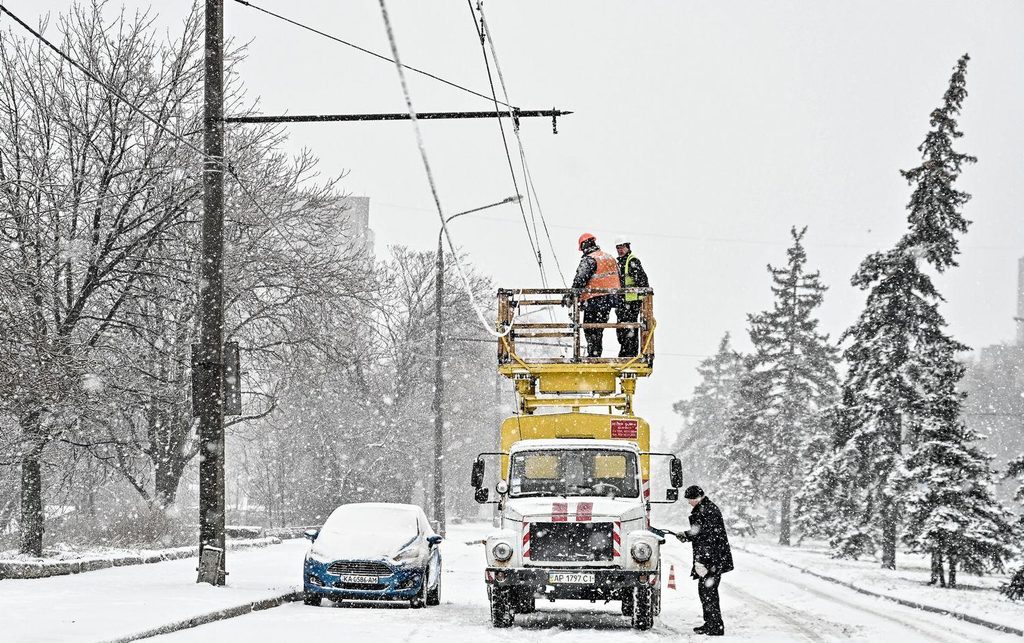
This is an enormous human resource without which the restoration of the energy system would be impossible. At the same time, these are people who risk their lives every day because of Russian attacks.
On 4 November 2026, the Cabinet of Ministers adopted a decision to provide an additional monthly payment of UAH 30,000 to workers directly involved in restoring critical energy, housing and utilities, and railway infrastructure during the heating season.
This is an important measure of support for people whose work directly affects the country’s ability to function.
However, financial support cannot replace safety. Workers need appropriate protective equipment, armoured vehicles where possible, clear response protocols, coordination with the military and the ability to suspend work when there is an immediate threat of another attack.
8. Can Energy Facilities Be Physically Protected Against Missiles and Jet-Powered Shahed Drones?
This is one of the most difficult questions facing Ukraine’s energy security.
Following the first large-scale attacks, the state began implementing programmes to provide physical protection for critical infrastructure. Protective structures were built at certain facilities, equipment was reinforced, anti-drone constructions were installed, and other forms of passive protection were introduced.
But how effective are these measures against modern weapons?
The answer depends on the type of threat, the design of the facility, the nature of the protective structure and the location of a potential impact.
Protection against fragments and certain drone attacks
Reinforced concrete structures, specialised shelters, protective screens and engineering barriers can reduce the risk of equipment damage caused by fragments, blast effects or certain types of unmanned aerial vehicles.
Such structures do not necessarily have to enclose an entire facility. Their purpose may be to protect the most vulnerable components, reduce the scale of damage or preserve the possibility of subsequent repairs.
Protection against jet-powered Shahed drones
Jet-powered variants of these drones create additional risks because of their speed, kinetic energy and impact characteristics. An ordinary anti-drone net or lightweight structure cannot be considered reliable protection against a direct hit by such a drone.
Protection against ballistic missiles
The situation is even more complicated. Ballistic missiles travel at high speeds and carry enormous destructive energy. A protective structure may reduce the consequences of certain types of impact, but there is no universal construction that can guarantee the survival of any energy facility following a direct hit by a modern ballistic missile.
This is why physical protection cannot be the only line of defence.
An effective protection system must combine:
- Passive physical protection — shelters, reinforcement and protective structures for the most vulnerable equipment.
- Air defence — detecting and intercepting missiles and drones before they reach their targets.
- Dispersion — reducing the concentration of critical equipment in a single location.
- Redundancy — maintaining alternative lines, equipment and power sources.
- Equipment reserves — transformers, circuit breakers, cables and other components required for repairs.
- Decentralisation — developing local generation sources capable of supporting critical consumers.
- Rapid restoration — trained repair crews, logistics, reserve components and clearly defined response procedures.
Ultimately, the question is not whether it is possible to build a concrete structure capable of withstanding every possible Russian strike. There is no such guarantee. The task is to create a multilayered system that reduces the consequences of attacks, prevents a single impact from paralysing large areas and ensures the fastest possible restoration.
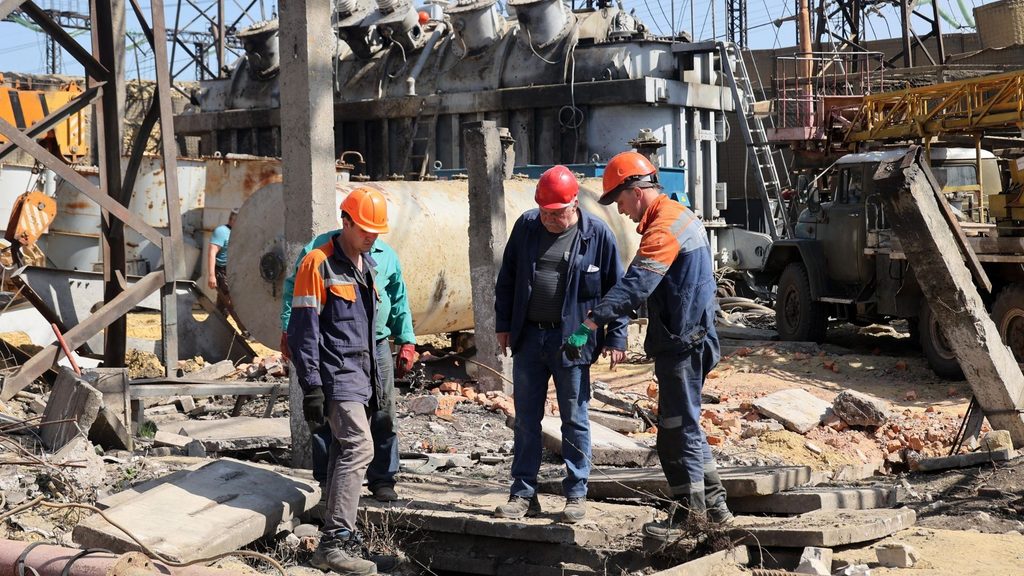
9. Energy Infrastructure Protection and Corruption: Where Did the Billions Go?
The physical protection of energy infrastructure requires enormous resources. This includes the construction of shelters, equipment procurement, engineering works, logistics, design and quality control.
During a full-scale war, these expenditures are particularly important: every delay or poorly executed project can leave a facility vulnerable to the next Russian attack.
However, audits and law enforcement investigations have revealed serious problems in the use of funds allocated to protect energy facilities.
What the Accounting Chamber’s Audit Revealed
According to the results of an audit of energy infrastructure protection projects for 2023–2024, reported in October 2025, approximately UAH 35.9 billion had been allocated for the relevant measures.
Of this amount, approximately UAH 29.97 billion had actually been received, while around UAH 18.71 billion had been spent.
The problems identified included:
- The implementation rate of planned drone-protection measures was below 75%.
- The implementation rate of measures designed to protect against missile strikes was below 25%.
- Some facilities remained unfinished.
- Problems with procurement transparency were identified.
- Auditors pointed to risks of inflated costs for certain works.
- Some international assistance remained unused.
These figures indicate serious problems with the planning, implementation and oversight of government programmes.
At the same time, financial figures must be interpreted correctly: funds that have not been spent cannot automatically be described as stolen. Specific evidence of illegal appropriation is required to make such a conclusion. Nevertheless, unfinished works, delays and inefficient use of resources in the protection of critical infrastructure are serious problems that demand accountability and clear explanations.
Zakarpattia: More Than UAH 104 Million
On 2 June 2026, the Security Service of Ukraine (SSU) announced that a former official had been served with a notice of suspicion in a case concerning the alleged embezzlement of approximately UAH 104 million allocated for the construction of a protective structure for a substation in Zakarpattia region.
According to investigators, the work had not been completed in full, and some of the funds may have been misappropriated. The total value of the project was approximately UAH 5.1 billion.
At the time of the law enforcement announcement, the facility remained unfinished.
This is a suspicion, not a court verdict. The final legal assessment of the individuals’ actions must be made by a court.
Mykolaiv Region: Funds Allocated for Anti-Drone Protection
On 22 July 2026, the SSU announced that it had uncovered an alleged scheme involving the appropriation of nearly UAH 68 million allocated for the construction of anti-drone structures at an energy facility in Mykolaiv region.
According to investigators, the contractor received an advance payment under a contract worth approximately UAH 90 million but did not actually begin the work.
Law enforcement authorities reported that a suspect had been notified of the suspicion. Their guilt must be proven in court.
Zmiiv Thermal Power Plant: The Quality of Protective Structures
On 23 June 2026, the SSU announced an investigation into alleged losses of approximately UAH 8.1 million during the construction of protective structures at the Zmiiv Thermal Power Plant.
According to investigators, false information may have been entered into project documentation, while the concrete mixture actually used did not meet the required standards.
The contract value exceeded UAH 245 million. Two individuals were identified as suspects in the case.
This case is particularly illustrative: when it comes to protecting critical infrastructure, the issue is not only how much money has been spent but also the actual quality of the completed work. A protective structure that fails to meet its design specifications may fail to serve its purpose precisely when it is needed most.
10. Operation Midas: Corruption in the Energy Sector Is a Separate but Equally Serious Problem
Any discussion of corruption in Ukraine’s energy sector must address the investigation conducted by the National Anti-Corruption Bureau of Ukraine (NABU) and the Specialized Anti-Corruption Prosecutor’s Office (SAPO), known as Operation Midas.
On 4 November 2026, NABU announced the completion of the pre-trial investigation and the opening of the case materials for examination by the defence.
According to the investigators, between 2020 and 2025, a system for obtaining illicit benefits from contractors operated in the procurement activities and business relations of Energoatom. The investigation alleged that kickbacks of 10–15% of contract values had been demanded.
According to NABU, more than USD 111 million and EUR 12 million in cash passed through mechanisms associated with the alleged scheme. The investigation also described methods of money laundering, including the use of cryptocurrency, securities and foreign investment structures.
An important clarification is necessary here.
Operation Midas concerns alleged corrupt practices in the energy sector and contractual relations involving Energoatom. It is not the same as the investigations into the construction of protective structures for substations, thermal power plants or other energy facilities. Similarly, the amounts reported by NABU cannot automatically be described as losses to the state budget or as funds directly allocated for the physical protection of energy infrastructure.
The completion of a pre-trial investigation also does not mean that a criminal conviction has been issued. The guilt of each suspect must be established by a court, and the presumption of innocence remains mandatory.
Nevertheless, the very fact of a large-scale corruption investigation in the energy sector during a full-scale war raises an extremely important question: how effectively does the state control the use of resources in an industry on which the safety of millions of people depends?
When Russia is systematically destroying Ukraine’s energy infrastructure, corruption, poor-quality procurement and unfinished protective structures are not merely administrative shortcomings. They can directly weaken the country’s ability to withstand the consequences of Russian attacks.
11. What the Destruction of the Energy Sector Means for Ordinary People
An energy crisis is about much more than the absence of electricity from a wall socket.
When Russian strikes damage power generation or electricity networks, the consequences spread across many areas of everyday life.
Heating. During the cold season, electricity disruptions can affect pumps, boiler houses and other components of district heating systems.
Water supply. Water utilities depend on electricity to operate pumping stations, treat water and deliver it to consumers.
Healthcare. Hospitals require an uninterrupted power supply for operating theatres, intensive care units, laboratories, ventilation systems and the storage of medicines.
Transport and communications. Electric public transport, mobile networks, the internet, traffic management systems and logistics also depend on a stable electricity supply.
The economy. Businesses are forced to use generators, change working schedules or temporarily suspend production. This increases costs, reduces productivity and affects employment.
Households. People lose the ability to work and study normally, prepare food, maintain comfortable temperatures in their homes and use household appliances.
Particularly vulnerable groups include older people, people with disabilities, families with young children, patients who depend on electrically powered medical equipment, and residents of buildings where heating and water supplies rely on electricity.
A report by the UN Human Rights Monitoring Mission in Ukraine covering the period from 1 December 2025 to 31 May 2026 describes the consequences of Russian attacks on energy infrastructure. It documents damage to electricity generation, transmission and distribution facilities, emergency outages, disruptions to district heating, and situations in which hundreds of thousands of people were left without heating and hot water for extended periods.
This is a reminder that energy infrastructure is not an abstract collection of technical facilities. People’s lives, health and basic needs directly depend on its operation.
12. How Much Will It Cost to Restore Ukraine’s Energy Sector?
The restoration of energy infrastructure is one of the most expensive areas of Ukraine’s post-war recovery.
According to the RDNA5 — the fifth joint Rapid Damage and Needs Assessment prepared by the Government of Ukraine, the World Bank, the European Union and the United Nations and published on 23 February 2026 — total direct damage across all sectors in Ukraine amounted to approximately USD 195.1 billion as of 31 December 2025.
The total needs for recovery and reconstruction over the following ten years were estimated at approximately USD 587.7 billion.
In the energy sector, the value of damaged assets increased by approximately 21% compared with the previous RDNA4 assessment.
These figures cover much more than power plants. They include a broad range of infrastructure: electricity networks, substations, heating systems and other energy facilities.
It is important to understand that recovery does not simply mean rebuilding what was destroyed in exactly the same form. Ukraine has both the opportunity and the need to create a more resilient system: modernising networks, developing local generation, introducing energy storage, strengthening protection and continuing integration into the European energy market.
13. What Ukraine Needs to Achieve Energy Security
The experience of recent years has shown that energy security is not simply a matter of having enough power plants. It is about the ability of the system to operate, withstand attacks, recover and supply consumers even under the most difficult conditions.
The key priorities for further development include:
1. Diversification of generation. Ukraine needs to develop different sources of electricity generation rather than relying on a single type of generation or a limited number of large facilities.
2. Decentralisation. Local power plants and combined heat and power facilities can supply critical infrastructure and individual communities even when parts of the large-scale energy system are damaged.
3. Electricity storage. Energy storage systems help balance consumption, make use of surplus generation and support the operation of power networks.
4. Modernisation of networks. Reliable substations, reserve transmission lines, modern control systems and the ability to redistribute electricity flows increase the resilience of the entire system.
5. Physical protection and air defence. Engineering structures, systems for detecting and intercepting aerial threats, equipment redundancy and dispersion must work together.
6. Transparency in the use of funds. Protection and recovery projects must be accompanied by independent technical and financial oversight, public reporting and accountability for poor-quality work.
7. Worker safety. Energy workers must have appropriate protective equipment, transport, training and clear procedures for working under the threat of further attacks.
8. European integration. Developing connections with ENTSO-E, expanding import and export opportunities, and aligning technical standards with the European Union remain important elements of energy resilience.
These measures will not eliminate the threat of Russian attacks while the war continues. However, they can make Ukraine’s energy system less vulnerable, reduce the consequences of destruction and accelerate recovery.
Conclusion. Ukraine’s Energy Sector: A Story of Development, Resistance and Recovery
Ukraine’s energy sector has come a long way: from the first power plants and large-scale industrialisation to a modern system that, after independence, continued to develop, modernise and integrate into the European energy space.
Russia’s full-scale invasion has subjected this system to unprecedented challenges. Russia is systematically attacking electricity generation, transmission and distribution facilities, seeking to destroy infrastructure on which the lives of millions of Ukrainians depend.
Yet Ukraine’s energy sector continues to operate. Engineers, repair crews, dispatchers and thousands of other workers are restoring it. International partners, communities, businesses and ordinary citizens are also helping to sustain it.
At the same time, war does not remove the state’s responsibility. The protection of energy infrastructure must be real, not merely declared. Funds allocated for shelters, equipment and restoration must result in properly completed work. Corruption, abuse and irresponsibility in this sector must receive an appropriate legal assessment.
Energy resilience is not only a matter of technology and funding. It is a matter of public accountability, professionalism, trust and human life.
And while Russia continues to destroy Ukraine’s infrastructure, Ukraine’s task is not simply to restore electricity after every strike, but to build a system that will be much harder to break.
Sources and References
- International Energy Agency (IEA). Ukraine’s Energy Security 2026, 4 November 2026.
- International Energy Agency (IEA). Ukraine’s Energy Security and the Coming Winter, 2024.
- Office of the UN High Commissioner for Human Rights (OHCHR). Reports and materials on attacks against Ukraine’s energy infrastructure, including the report covering 1 December 2025 – 31 May 2026 and the report dated 18 September 2024.
- World Bank, Government of Ukraine, European Commission and United Nations. Ukraine Fourth Rapid Damage and Needs Assessment (RDNA4) and Ukraine Fifth Rapid Damage and Needs Assessment (RDNA5), 23 February 2026.
- Wind Power of Ukraine / EVERLEGAL. Wind Power of Ukraine 2021 — Market Overview / The Year Before the War.
- NPC Ukrenergo. Official updates on the state of the energy system and emergency or scheduled electricity restrictions.
- Accounting Chamber of Ukraine. Audit materials concerning measures to protect energy infrastructure facilities.
- Security Service of Ukraine (SSU). Official statements on investigations into alleged abuses during the construction of protective structures at energy facilities, 2026.
- National Anti-Corruption Bureau of Ukraine (NABU) and Specialized Anti-Corruption Prosecutor’s Office (SAPO). Official materials concerning Operation Midas, 4 November 2026.
- Cabinet of Ministers of Ukraine. Announcement concerning additional payments to workers involved in restoring critical infrastructure, 4 November 2026.
- President of Ukraine. Official statements on the involvement of repair crews in restoring energy and heating infrastructure, January 2026.
- DTEK. Official statements on attacks against repair crews in Dnipropetrovsk region, 2026.
Note on facts and legal assessments: The data presented reflects information published by the relevant institutions as of the dates indicated. Statements by law enforcement authorities concerning suspicions and investigative theories do not constitute court convictions. Installed capacity, actual electricity generation and available resources are distinct indicators and should not be treated as interchangeable. The state of the energy system may change depending on further attacks, repairs and weather conditions.