

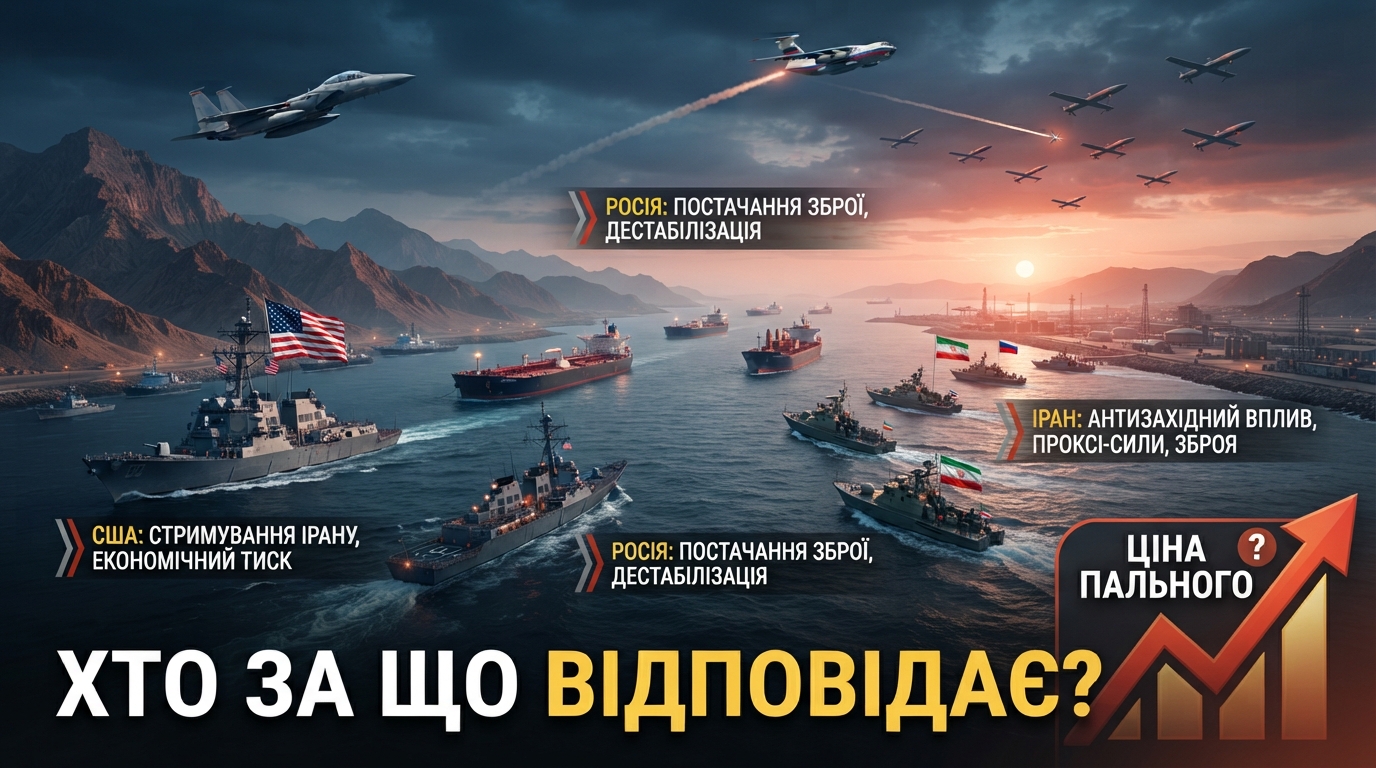
How ancient Persia became the Islamic Republic, why relations between Tehran and Washington turned into decades of hostility, what role Iran has played in Russia’s war against Ukraine, and why the conflict in the Middle East affects everyone who fills up their car.
INTRODUCTION. WHEN A CONFLICT ON THE OTHER SIDE OF THE WORLD BECOMES OUR PROBLEM
The Middle East has once again found itself at the centre of a global crisis. The United States and Iran, which had been locked in political, economic and military confrontation for decades, moved to direct armed conflict in 2026. Military strikes, retaliatory attacks, threats to shipping through the Strait of Hormuz, disruptions to energy supplies and diplomatic attempts to stop the escalation are already having consequences far beyond the region.
This story is of particular importance to Ukraine.
Iran is not simply a country in conflict with the United States. It is a state that supplied Russia with Shahed attack drones, which have become one of the most painful instruments of Russia’s air campaign against Ukrainian cities, energy facilities and civilian infrastructure.
Iranian designs became the basis for Russia’s Geran drones. Russia subsequently established its own production of these systems, gradually adapting them to its requirements.
At the same time, the current crisis cannot be viewed solely through the lens of Russia’s war against Ukraine. Iran has its own complex history, political ambitions, internal contradictions, economic problems and conflicts with its neighbours. The United States, for its part, also has a long history of intervention in the region, controversial decisions and military operations whose consequences have often been the opposite of what was expected.
To understand how the situation reached its current point, we need to examine the broader picture.
Most importantly, we must not confuse the responsibility of Iran’s political regime with that of Iranian society as a whole, just as we should not equate the policies of a US administration with the views of every American citizen.
1. IRAN: A COUNTRY WITH A THOUSAND-YEAR HISTORY AND A COMPLEX POLITICAL IDENTITY
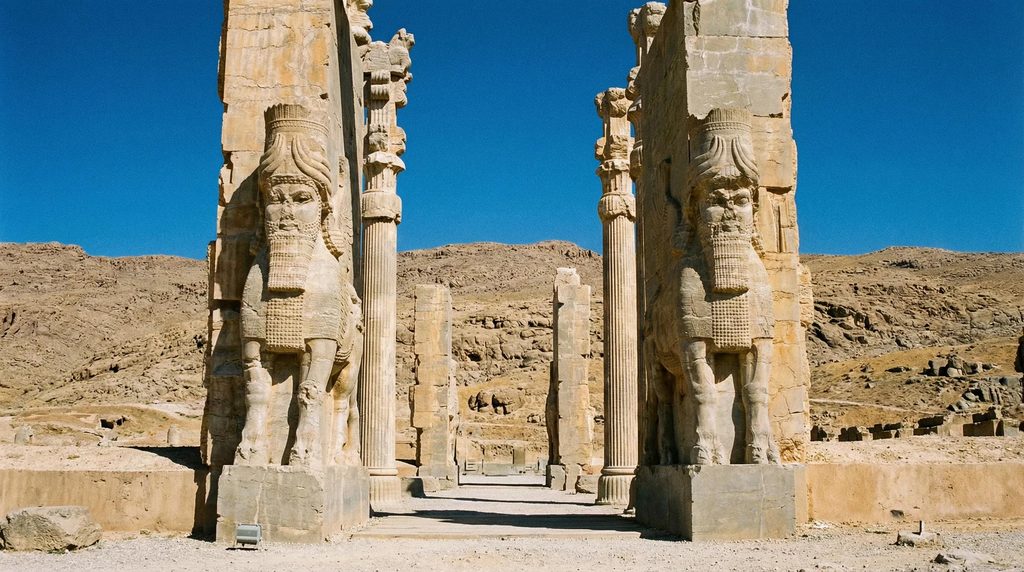
Before discussing the conflict with the United States, it is worth answering a simple question: what kind of country is Iran?
Iran is located in Western Asia and borders Iraq, Türkiye, Armenia, Azerbaijan, Turkmenistan, Afghanistan and Pakistan. It has access to the Caspian Sea in the north and to the Persian Gulf and Gulf of Oman in the south.
Its geographical position is of strategic importance: major transport and energy routes pass through the region, and some of the world’s largest oil and natural gas reserves are located nearby.
However, Iran is much more than oil, deserts, a nuclear programme and headlines about missiles.
It is one of the world’s oldest civilisations.
1.1. Persia — an empire that shaped world history
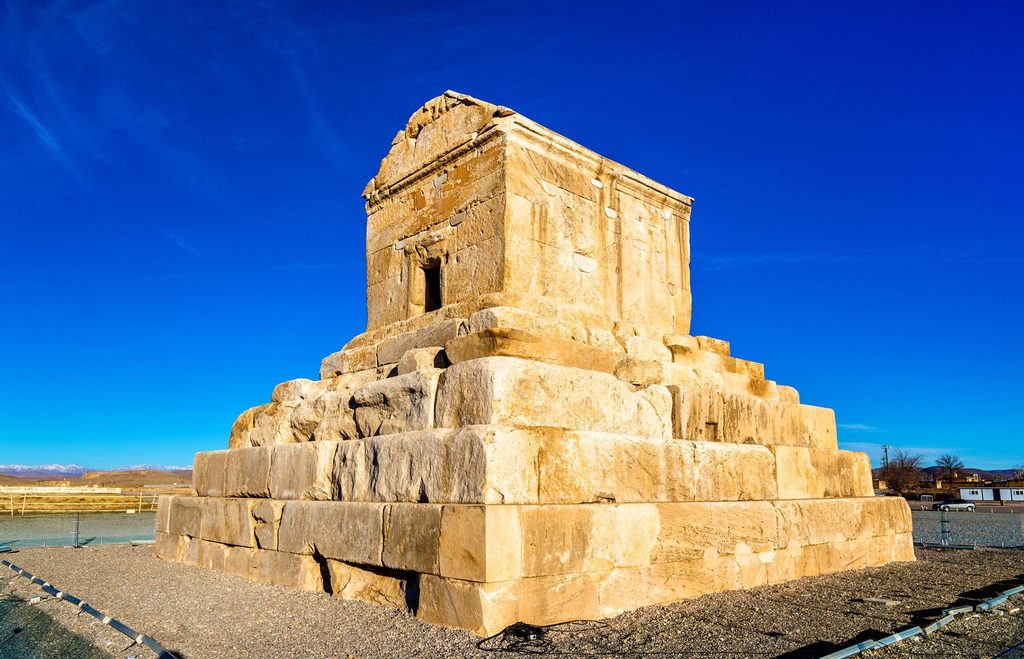
Modern Iran has deep historical roots. For many centuries, Europeans referred to the country as Persia, although its people used the name Iran.
One of the best-known ancient states was the Achaemenid Empire, founded by Cyrus II the Great around the sixth century BCE.
Under Darius I and his successors, the Persian Empire became one of the largest states in the ancient world. It extended across vast territories, from Asia Minor and Egypt to Central Asia and the Indus Valley.
The Persian state had a sophisticated system of government, an advanced administration, a network of roads, a postal system, a tax system and mechanisms for governing different peoples.
One of the well-known principles of the Achaemenids was a degree of religious and cultural tolerance towards conquered peoples. This did not mean equality or democracy in the modern sense, but it allowed the empire to govern diverse territories without completely eradicating local traditions.
In 330 BCE, the Persian Empire was conquered by Alexander the Great. Following his death, the region experienced periods of Hellenistic, Parthian and Sasanian rule.
The Sasanian Empire, which existed from 224 to 651 CE, was one of the most powerful empires of late antiquity. For centuries, it rivalled the Roman Empire and later the Byzantine Empire.
1.2. The Arab conquest and the spread of Islam
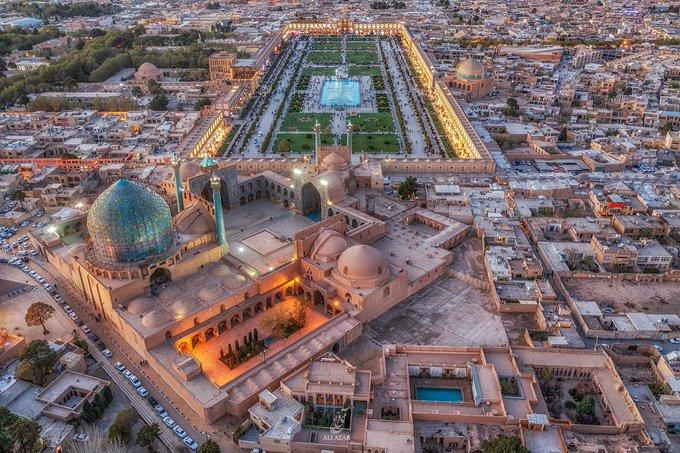
In the seventh century, Arab armies conquered the Sasanian Empire. This became a turning point in the history of the region.
Islam gradually became the dominant religion, and the Arabic language acquired great importance in religious and administrative life. However, Persian cultural traditions did not disappear.
On the contrary, they later became an important part of Islamic civilisation.
The Persian language survived and developed in a new form. Persian literature became one of the most influential literary traditions in the region, while Iranian scholars, philosophers, poets and statesmen made significant contributions to science and culture.
In other words, modern Iran is not simply a country that was once Persia. It is a society in which a thousand-year-old Persian identity has merged with Islamic religious traditions.
1.3. Why Iran became a Shia state
This is one of the key points for understanding the country’s modern politics.
There are two major branches of Islam: Sunni Islam and Shia Islam. Their historical differences are primarily connected with the question of succession after the death of the Prophet Muhammad.
Today, most Muslims around the world are Sunni. Iran, by contrast, has become the principal centre of Shia Islam.
The decisive turning point came in 1501, when Shah Ismail I founded the Safavid state and declared Twelver Shia Islam the state religion.
This decision had not only religious but also political significance. It helped establish a distinct Iranian state identity and set the country apart from the powerful Sunni Ottoman Empire.
Over the following centuries, this religious distinction became one of the factors contributing to Iran’s political rivalry with several neighbouring states.
However, it is important not to reduce modern conflicts to a confrontation between Sunnis and Shias. In the Middle East, religious differences are often intertwined with struggles over territory, resources, influence, security and political leadership.
1.4. Iran is not a homogeneous society
Iran has a multi-ethnic population. In addition to Persians, the country is home to Azerbaijanis, Kurds, Lurs, Arabs, Baloch, Turkmen and other ethnic groups.
The official language is Persian, or Farsi. At the same time, other languages are widely used in different regions.
This matters because Iran cannot be viewed as a monolithic community in which everyone shares the same views on politics, religion, government or foreign policy.
The country includes religious conservatives, supporters of reform, secular citizens, ethnic minorities, opposition movements and people who do not support the current political system.
Therefore, the statement “Iran wants war” is an excessively broad generalisation. Political decisions are made by the country’s leadership, not by the entire population.
2. FROM THE SHAH TO THE ISLAMIC REPUBLIC: HOW THE COUNTRY CHANGED
To understand why Iran became one of the United States’ main adversaries, we need to return to the twentieth century.
It was during this period that the main causes of today’s hostility took shape.
2.1. Oil, foreign influence and the struggle for independence
At the beginning of the twentieth century, Iran was under considerable influence from Great Britain and the Russian Empire.
In 1901, British entrepreneur William Knox D’Arcy received a concession to explore for and extract oil across much of Persia. In 1908, major oil deposits were discovered in the country’s southwest.
The Anglo-Persian Oil Company subsequently emerged and became an important instrument of British economic influence.
For Iran, this created a paradoxical situation: the country possessed enormous natural resources, yet a significant share of the revenues and control over the oil industry remained in foreign hands.
As national consciousness grew and demands for political independence increased, one question became increasingly prominent: why should a country’s own resources not work primarily for that country?
2.2. Mohammad Mosaddegh and the 1953 coup
In 1951, Mohammad Mosaddegh became Prime Minister of Iran. He was a politician who advocated stronger parliamentary oversight and the nationalisation of the oil industry.
His government nationalised the oil sector, effectively depriving the British company of its former control over it.
For Great Britain, this was a major economic and political blow. London sought to regain control over its oil interests, applied economic pressure and looked for support from the United States.
The US administration was initially reluctant to support the forcible removal of Mosaddegh. However, during the Cold War, Washington became increasingly concerned that political instability in Iran might strengthen the influence of the Soviet Union.
In August 1953, the US Central Intelligence Agency (CIA) and British intelligence service MI6 organised an operation to remove Mosaddegh’s government.
The coup resulted in his overthrow, while Shah Mohammad Reza Pahlavi consolidated his power.
This is neither a conspiracy theory nor merely a political interpretation. The involvement of US intelligence is confirmed by declassified CIA documents and materials from the US Department of State.
American intelligence documents explicitly described the operation to remove Mosaddegh and establish a pro-Western government.
The consequences were long-lasting.
For a significant part of Iranian society, the coup became evidence that the United States was prepared to interfere in the country’s domestic politics whenever doing so served its strategic interests.
This event became one of the most important sources of anti-American sentiment in Iran.
2.3. Iran under the Shah: modernisation, economic growth and political repression
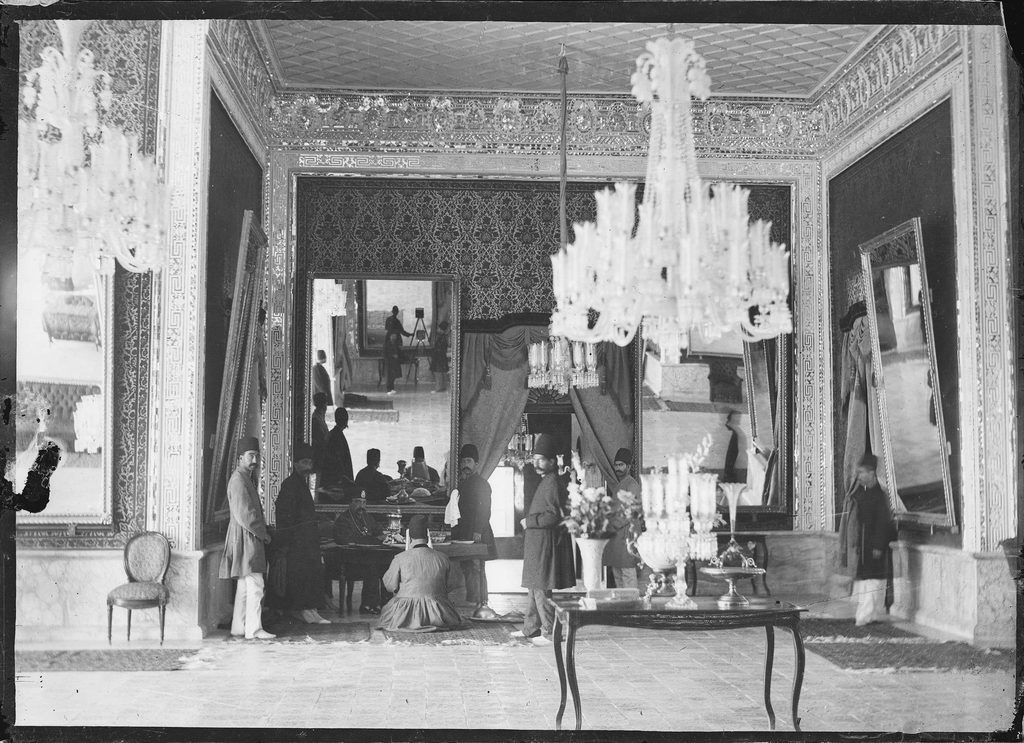
After the coup, Shah Mohammad Reza Pahlavi gradually became an authoritarian ruler in practice.
His policies were contradictory.
On the one hand, Iran underwent modernisation:
- Industry and infrastructure developed.
- The education system expanded.
- Roads, hospitals and universities were built.
- Educational opportunities for women increased.
- Land reforms were introduced.
- The country received substantial oil revenues.
On the other hand, the political system was authoritarian.
The opposition was persecuted, the activities of independent political organisations were restricted, and the secret police, SAVAK, became a symbol of the Shah’s repressive apparatus.
US support for the Shah was substantial. The United States regarded Iran as an important regional ally, supplied it with weapons and supported its role in the Persian Gulf security system.
However, modernisation without political freedom, social inequality, corruption, religious discontent and dependence on foreign support gradually undermined the regime’s legitimacy.
2.4. The Islamic Revolution of 1979
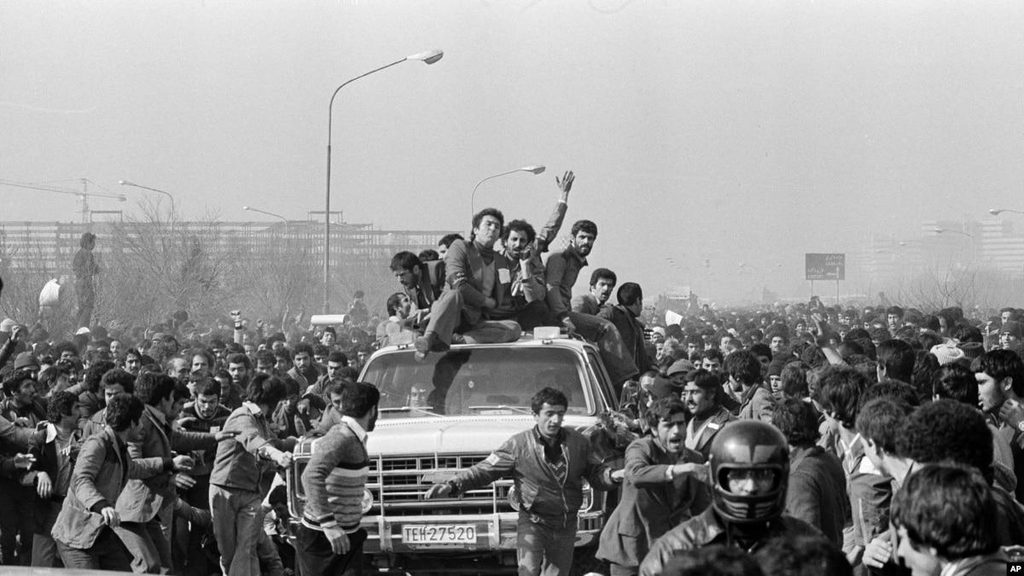
In 1978–1979, Iran was swept by mass protests.
The Shah faced opposition from various groups: Islamists, leftists, nationalists, students, workers, religious figures and supporters of democratic reforms.
These groups had different goals, but they were united by dissatisfaction with the Shah’s rule.
In February 1979, the Shah’s regime fell. Ayatollah Ruhollah Khomeini, who had been living in exile, returned to the country.
The Islamic Republic was proclaimed after the revolution.
The new political system was based on the concept of the guardianship of the Islamic jurist, known as velayat-e faqih. The highest political and religious authority was concentrated in the hands of the Supreme Leader.
Thus, Iran moved from a Western-oriented monarchy to a theocratic republic whose political identity was largely built around opposition to Western influence.
2.5. The seizure of the US embassy: the moment relations turned hostile
On 4 November 1979, a group of Iranian students seized the US embassy in Tehran and took its staff hostage.
The crisis lasted 444 days.
Among other demands, the participants called for the Shah to be returned to Iran to stand trial. They also referred to the 1953 coup and fears of renewed US intervention.
However, seizing a diplomatic mission and holding its staff hostage was a serious violation of international law.
In 1980, the United States severed diplomatic relations with Iran.
This episode became one of the key turning points after which mutual distrust developed into a systemic confrontation.
3. WHY IRAN HAS SO OFTEN FOUND ITSELF AT WAR
Iran cannot be described as a country that simply “got caught up in wars” because of random circumstances.
Its geographical position, resources, political system and ambitions for regional influence have made it an important participant in many conflicts.
However, not every war involving Iran was started by Iran. This distinction is essential for an objective analysis.
3.1. The Iran–Iraq War of 1980–1988
One of the most tragic episodes in Iran’s modern history was its war with Iraq.
On 22 September 1980, Iraqi forces under Saddam Hussein invaded Iranian territory. Relations between the two states had deteriorated sharply beforehand.
The causes of the conflict were complex:
- Disputes over the border and control of the Shatt al-Arab waterway.
- A struggle for influence in the Persian Gulf.
- Iraq’s fears about the spread of the Islamic Revolution.
- Saddam Hussein’s desire to exploit Iran’s weakness following the revolution.
- Regional rivalry.
Iraq expected a quick victory. Instead, the war became an eight-year war of attrition that exhausted both countries.
It involved massive casualties, missile attacks on cities, strikes against oil infrastructure and the use of chemical weapons.
The United Nations documented the use of chemical weapons during the conflict. UN Security Council Resolution 612 of 9 May 1988 condemned their use and called on the parties to stop such actions.
An important fact: Iraq launched the full-scale invasion in September 1980. However, after Iraqi forces had been largely pushed out of Iranian territory, Iran continued offensive operations inside Iraq.
Therefore, the history of this war cannot be described simply as one-sided aggression throughout all eight years. The beginning of the conflict and its subsequent stages need to be assessed separately.
In 1988, the parties accepted the ceasefire terms set out in UN Security Council Resolution 598.
The war left Iran with enormous human losses, destroyed infrastructure, economic problems and deep distrust of the outside world.
3.2. Why did the United States support Iraq even though it used chemical weapons?
This is one of the most troubling episodes in American policy in the region.
During the Iran–Iraq War, the United States gradually began supporting Iraq because Washington viewed an Iranian victory as a threat to its own interests and to stability in the Persian Gulf.
Washington provided Baghdad with intelligence, political support and assistance in maintaining economic relations.
During this period, the US administration knew that Iraq was using chemical weapons. Documentary research and declassified materials indicate that American officials had information about such attacks but continued supporting Iraq as part of their policy of containing Iran.
This does not mean that the United States was Iraq’s only arms supplier or that all countries acted in the same way. However, it demonstrates how pragmatic and contradictory the policies of major powers in the region could be.
In international politics, strategic interests have often outweighed moral principles. This is one of the cases in which the consequences of such a policy were particularly tragic.
3.3. The “Tanker War” and US intervention in the Persian Gulf
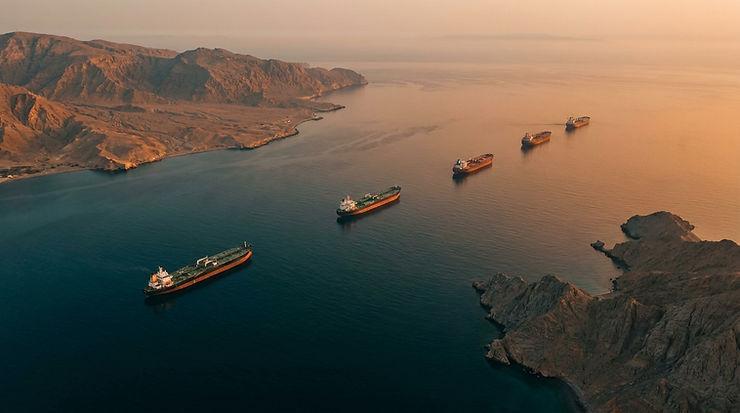
In the 1980s, the conflict gradually spread to maritime trade routes.
Iran and Iraq attacked tankers, oil facilities and vessels connected with their opponents’ economic interests.
The situation became so dangerous that the United States launched an operation to protect international shipping in the Persian Gulf.
In 1987–1988, US warships escorted tankers, and direct clashes took place between American and Iranian forces.
In April 1988, the United States conducted Operation Praying Mantis, during which American forces destroyed several Iranian military facilities and vessels.
On 3 July 1988, the US guided-missile cruiser USS Vincennes shot down Iran Air Flight 655, a passenger aircraft. All 290 people on board were killed.
The United States said that the crew had mistakenly identified the aircraft as a military threat. Iran regarded the tragedy as an attack on a civilian aircraft.
This episode remains one of the most tragic events in the history of US–Iran relations.
3.4. Iran after the war: a strategy of regional influence
After 1988, Iran gradually rebuilt its economy and military capabilities.
However, the country’s leadership concluded that direct confrontation with much stronger states was too costly.
Iran therefore began developing a different model of influence: supporting allied political and armed groups across the region.
These included:
- Hezbollah in Lebanon.
- Certain Shia armed groups in Iraq.
- The Houthis in Yemen.
- Palestinian organisations, including Palestinian Islamic Jihad and Hamas, although their religious and political traditions are not identical to Iran’s Shia model.
Iran used these relationships as instruments of regional influence and deterrence.
The United States, Israel and several Arab states regard this activity as destabilising and connected with support for armed groups.
Tehran, in turn, describes it as support for the “Axis of Resistance” against American and Israeli influence.
It is important to distinguish political statements from established facts: the nature and extent of Iran’s support, as well as its degree of operational control over individual groups, vary depending on the organisation and the period in question.
4. THE NUCLEAR PROGRAMME: WHY THE WORLD DOES NOT TRUST IRAN
The nuclear programme has become one of the main causes of conflict between Iran and the West.
Iran maintains that it has the right to use nuclear energy for peaceful purposes. This right is indeed provided for under the Treaty on the Non-Proliferation of Nuclear Weapons for states that comply with its requirements.
However, international concern is not related simply to the existence of a nuclear programme. It concerns its scale, the level of uranium enrichment, the lack of transparency surrounding certain facilities and questions about a possible military dimension.
4.1. What does uranium enrichment mean?
Natural uranium contains different isotopes, including uranium-235, which can sustain a nuclear chain reaction.
Enrichment is the process of increasing the proportion of uranium-235.
Nuclear power plants use uranium with a relatively low level of enrichment. Nuclear weapons require a much higher level.
Therefore, the enrichment level is one of the important indicators used by international organisations to assess the risks associated with a nuclear programme.
4.2. The 2015 nuclear deal: a compromise that did not survive a political change
On 14 July 2015, Iran and the group of international participants known as P5+1 — the United States, the United Kingdom, France, Germany, Russia and China — together with the European Union, concluded the Joint Comprehensive Plan of Action, known as the JCPOA.
Its purpose was to restrict Iran’s nuclear programme and ensure international monitoring in exchange for sanctions relief.
The agreement provided for:
- Limits on the number of centrifuges.
- Limits on uranium enrichment levels.
- Reductions in stocks of enriched uranium.
- Modification of the Arak reactor.
- Expanded access for IAEA inspectors.
- Mechanisms for monitoring and verifying compliance with the agreement.
In January 2016, the International Atomic Energy Agency (IAEA) confirmed that Iran had fulfilled its key initial nuclear commitments. This marked the beginning of the process of lifting some nuclear-related sanctions.
This is an important point: the agreement was not merely a political declaration. It included specific restrictions, inspections and an international verification mechanism.
4.3. Why did the United States withdraw from the agreement?
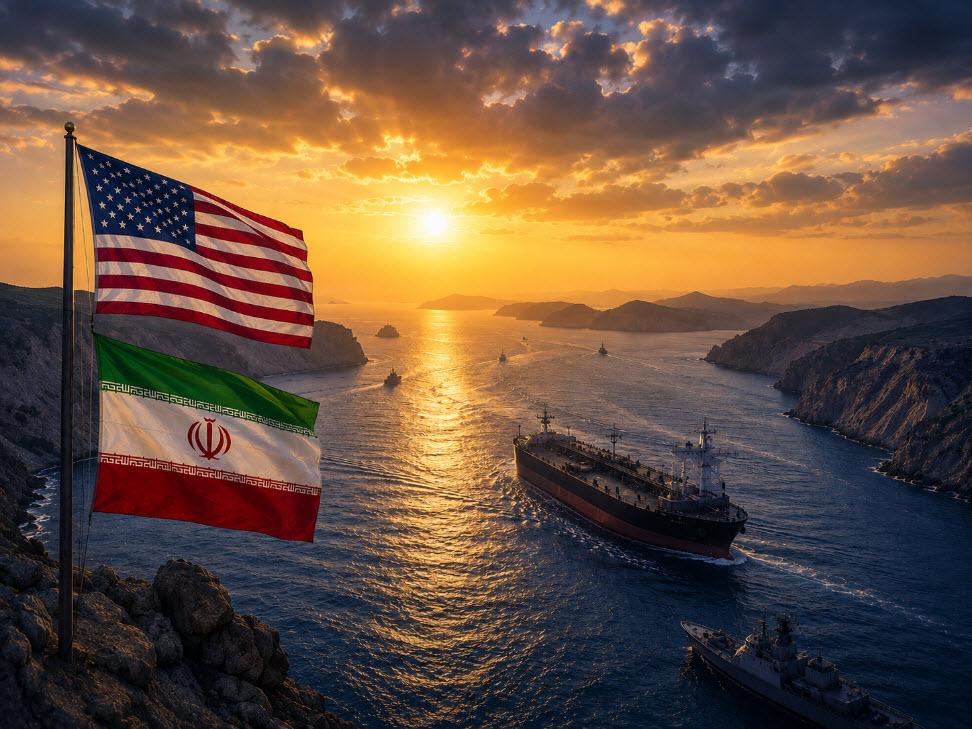
On 8 May 2018, President Donald Trump announced the withdrawal of the United States from the JCPOA.
The US administration argued that the agreement was insufficient because it did not adequately restrict Iran’s missile programme, its regional policies or its activities involving allied armed groups.
Washington reinstated sanctions that had previously been eased under the agreement.
Other participants, including European countries, did not support the US withdrawal and attempted to preserve the agreement.
After that, Iran gradually began moving away from some of its nuclear commitments.
Uranium enrichment levels increased, stockpiles grew, and the IAEA’s access to certain aspects of the programme became more limited.
There is an important cause-and-effect relationship here.
The US withdrawal from the agreement does not explain all of Iran’s subsequent actions and does not absolve Tehran of responsibility for breaching its commitments. However, it destroyed a mechanism that had previously made it possible to limit the nuclear programme through international verification and diplomatic agreements.
4.4. Does a high enrichment level mean that Iran already has a nuclear bomb?
No.
This distinction is fundamental.
A high level of uranium enrichment means that a country is approaching the technical capabilities required to produce nuclear material for military purposes.
However, creating a functioning nuclear weapon also requires other technological, engineering and military components.
The presence of highly enriched uranium must not automatically be equated with the possession of a ready-made nuclear warhead.
According to IAEA information published in November 2026, the agency does not have sufficient access to several Iranian nuclear facilities that were attacked during previous periods. It cannot fully verify the location and condition of some nuclear materials.
This creates a serious non-proliferation problem.
When international inspectors cannot access facilities, it becomes more difficult to assess a country’s actual capabilities.
And the absence of reliable information in itself increases the risk of mistaken assessments and military escalation.
5. 2026: HOW DIPLOMATIC CONFRONTATION TURNED INTO WAR
As of 18 November 2026, relations between the United States and Iran are in their most acute phase in many decades.
This is no longer merely a sanctions struggle or a diplomatic conflict.
5.1. The beginning of the large-scale military operation
On 28 February 2026, the United States and Israel launched large-scale military strikes against Iranian territory.
The US administration explained the operation as necessary to destroy Iran’s missile capabilities, naval forces and military infrastructure and to prevent it from developing nuclear weapons.
Israel, for its part, viewed Iran’s military and nuclear programmes as a direct threat to its own security.
Iran responded with strikes against military facilities and targets across the region, including sites associated with the United States, as well as attacks that affected the territories of other Persian Gulf states.
The conflict quickly took on a regional scale.
5.2. What happened to Iran’s leadership?
According to the Congressional Research Service, during the early stages of the operation, Israel struck Iran’s leadership. Among those killed was Supreme Leader Ali Khamenei, who had led the country since 1989.
Following his death, leadership of the Islamic Republic passed to a new Supreme Leader, Mojtaba Khamenei.
However, the elimination of individual leaders did not automatically mean the collapse of the political system.
Iran’s state apparatus, the Islamic Revolutionary Guard Corps, security structures and religious institutions retained the ability to function.
This is an important lesson: an authoritarian system may be highly personalised while still possessing enough institutional mechanisms to survive the loss of individual leaders.
5.3. The Strait of Hormuz — one of Iran’s main sources of leverage
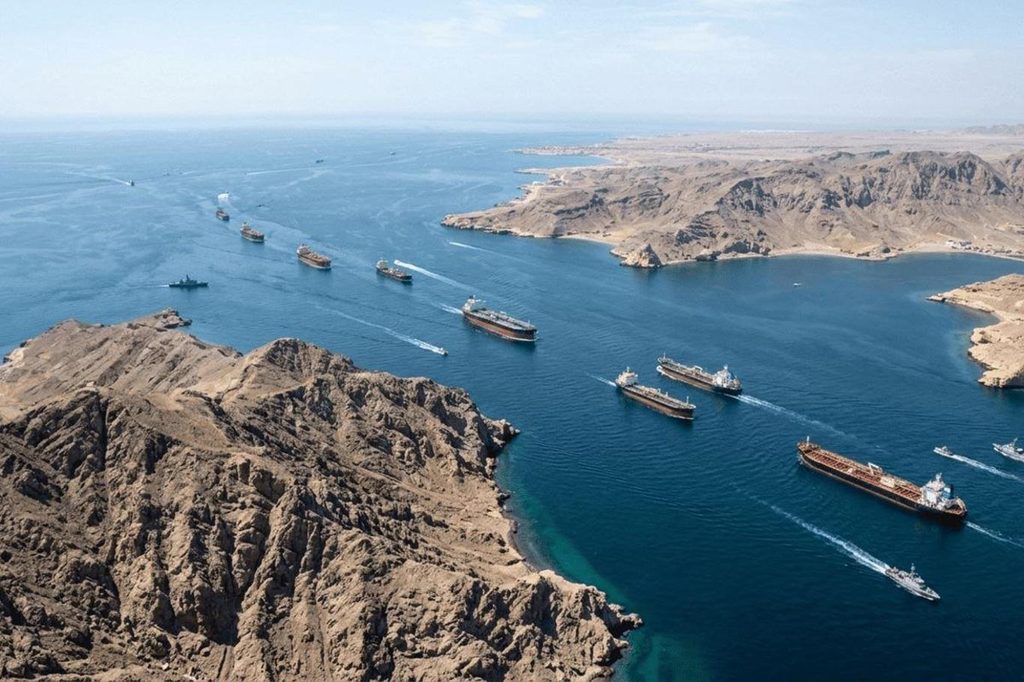
The Strait of Hormuz is a narrow maritime passage between the Persian Gulf and the Gulf of Oman.
It is of enormous importance to the global energy market.
Before the conflict began, approximately one-fifth of the world’s oil supplies passed through it, along with a significant share of global liquefied natural gas trade.
This means that even a partial disruption of shipping can affect energy prices in many countries.
Iran used threats to shipping, attacks on commercial vessels and its naval presence as instruments of pressure.
In response, the United States increased its military presence and imposed a naval blockade on Iran.
As a result, the strait — one of the world’s most important trade routes — became the centre of an economic and military confrontation.
5.4. Have the United States achieved its objectives?
There is no straightforward answer.
American and Israeli strikes inflicted significant damage on Iran’s military infrastructure. Some missile facilities, naval assets, air defence systems and command structures were destroyed or damaged.
However, as of September 2026, analysts at the Congressional Research Service assessed that the Iranian regime was not on the verge of imminent collapse.
The country continues to resist, and its ability to damage regional infrastructure and shipping has not been completely eliminated.
At the same time, the United States is also bearing significant costs. According to an estimate by the Congressional Budget Office, American military operations had cost approximately $38 billion as of 1 August 2026.
This is only one part of the total expenditure. There are also the costs of ammunition, logistics, military deployments, replenishing stockpiles and the economic consequences for allies.
5.5. Does this war have a basis in international law?
This question cannot be ignored.
The UN Charter prohibits the use of force against the territorial integrity or political independence of a state, except in cases permitted under international law, including self-defence following an armed attack or actions authorised by the UN Security Council.
On 28 February 2026, the UN Secretary-General condemned the military escalation, stating that US and Israeli strikes against Iran, as well as subsequent Iranian attacks on countries in the region, undermined international peace and security.
He called on all parties to comply with the UN Charter and international humanitarian law and to return to negotiations.
It is important not to draw oversimplified conclusions here.
The mere fact that one state considers another state a threat does not automatically create a legal right to launch a military attack. The use of force requires specific legal grounds, and any claim of self-defence must be assessed in light of the nature of the threat, necessity and proportionality.
Likewise, Iran does not acquire the right to attack civilian facilities or violate the sovereignty of neighbouring states simply because its own territory has been attacked.
International law does not operate on the principle that “whoever gets angry first is automatically right”.
5.6. What is happening now: diplomacy after months of war
As of 17 November 2026, according to Reuters, the United States and Iran remain locked in a prolonged confrontation.
Following the ceasefire in April and the conclusion of a settlement memorandum in June, the parties failed to implement their arrangements. The document effectively ceased to be valid in August after hostilities resumed.
Washington is now relying on a naval blockade and economic pressure, while Tehran is demanding that the blockade be lifted, frozen assets be released, its ability to sell oil be restored and military operations be halted before full-scale nuclear negotiations begin.
The United States, in turn, is demanding reciprocal steps and verifiable nuclear commitments.
Oman and Qatar are attempting to mediate the negotiations.
Reuters also notes that European officials fear the military campaign may have strengthened hardliners within Iran, while the absence of full IAEA monitoring increases nuclear risks.
The central problem, therefore, is that military superiority has not translated into a political settlement.
6. IRAN AND RUSSIA: HOW “SHAHED” DRONES BECAME PART OF THE WAR AGAINST UKRAINE
For Ukraine, this part of the story is of particular importance.
Iran became one of the first state suppliers of modern attack drones to Russia after the beginning of the full-scale invasion.
This is not speculation. It is a fact supported by government and intelligence documents, international organisations and studies of recovered drone debris.
6.1. What are the Shahed-136 and Shahed-131?
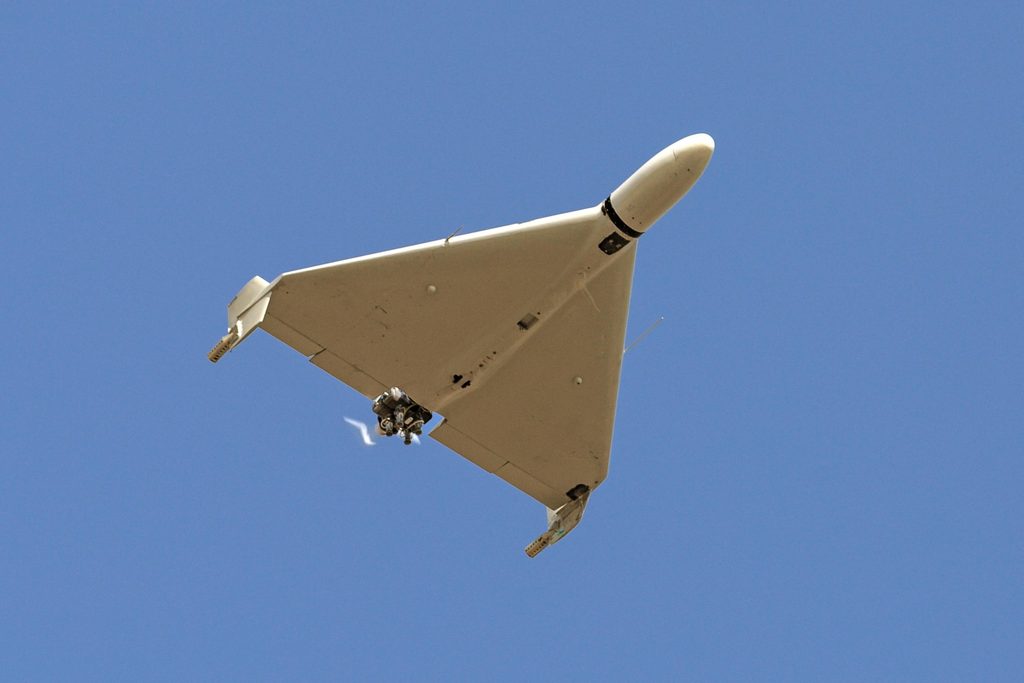
Shahed is a family of Iranian unmanned aerial vehicles.
The best-known models that Russia began using against Ukraine were:
- Shahed-136.
- Shahed-131.
These are one-way attack drones, often referred to as kamikaze drones or loitering munitions.
Compared with expensive cruise missiles, they have a relatively simple design, can be launched in groups and can be used to strike stationary targets.
Their danger lies not only in their warheads.
Mass deployment forces the opponent to spend resources detecting, tracking and intercepting targets. Even when a large proportion of the drones are shot down, an attack can place considerable strain on air defence systems.
6.2. When did Iran begin supplying drones to Russia?
In July 2022, the US administration publicly stated that it had information about Iran’s plans to supply Russia with drones for use in the war against Ukraine.
The first deliveries began in August 2022.
On 8 September 2022, the US Department of the Treasury announced sanctions against individuals and organisations involved in producing Iranian drones and transporting them to Russia.
On 15 November 2022, the United States imposed further sanctions against entities linked to the production and transfer of Shahed drones.
In January 2023, the US Treasury again confirmed that Iran had supplied Russia with drones that were used in attacks against Ukraine’s civilian infrastructure.
These were not merely political statements. American documents identified companies, officials, production entities and transport intermediaries involved in the supply network.
6.3. What did international examinations of the debris confirm?
Comparisons of components became important evidence of the drones’ Iranian origin.
In September 2023, an analysis by the US Defense Intelligence Agency was made public as part of documents submitted by UN member states.
Specialists compared components from Shahed-131 drones recovered after attacks in Ukraine with components from Iranian aircraft found elsewhere.
They identified significant similarities in the design and components.
Independent research organisations also examined the drones and production documents associated with their manufacture.
Taken together, these materials provided a compelling body of evidence that the initial models Russia received for its war against Ukraine were of Iranian origin.
6.4. Did Iran actually start the “Shahed escalation” in Ukraine?
This needs to be formulated precisely.
Iran did not invent the concept of attack drones and was not the sole cause of Russian attacks on Ukrainian territory.
However, Iranian Shahed-131 and Shahed-136 drones became the foundation of a new mass instrument in Russia’s air attacks in the autumn of 2022.
Russia began using them to strike Ukrainian cities, energy facilities, transport infrastructure and civilian infrastructure.
In October 2022, their use became particularly prominent during the campaign of attacks against Ukraine’s energy system.
This was an important stage of escalation: Russia gained the ability to launch relatively inexpensive attack drones in large numbers, supplementing its missile strikes.
It is therefore accurate to say that Iranian drones became one of the key factors behind the beginning of Russia’s large-scale “Shahed” campaign against Ukraine.
6.5. Russia did not simply buy drones — it learned to manufacture them itself
Over time, cooperation between Tehran and Moscow went beyond ordinary deliveries.
In 2023, information emerged about plans to establish drone production at Russia’s Alabuga Special Economic Zone in Tatarstan.
The Institute for Science and International Security examined documents related to Russia’s production of Geran-2 drones.
Researchers found that the Russian project involved large-scale production of aircraft based on the Iranian design, using technologies of Iranian origin.
Initially, the project involved a contract to manufacture approximately 6,000 drones as part of a multi-year programme.
Russia subsequently localised a significant part of production and began modifying the design, navigation systems, electronics and warhead configurations.
In other words, Russia moved from importing finished weapons to developing its own military-industrial capability based on foreign technology.
This is a very important point for Ukraine.
Even if Iran were to stop direct deliveries, Russia has already acquired the technological foundation, production experience and ability to improve these systems independently.
6.6. Can we say that Iran supplied Russia only with drones?
No.
In September 2024, the US Department of the Treasury stated that Iran had transferred short-range ballistic missiles to Russia and sanctioned networks involved in supplying the weapons.
The American side reported that Russian military personnel had been trained to use Iranian missile systems and that the first missile deliveries had taken place in 2024.
This marked a further deepening of military cooperation between the two countries.
However, it is important to distinguish officially confirmed deliveries and sanctions decisions from intelligence assessments and reports that have not been independently verified.
6.7. Why did Iran help Russia?
There is no single reason.
Several factors can be identified:
A common adversary in the form of Western sanctions pressure. Iran and Russia have been subject to various forms of international sanctions for decades. This created a basis for closer cooperation.
Military and technical cooperation. Russia needed relatively inexpensive attack drones, while Iran had the relevant technology and production capabilities.
Mutual political support. Tehran and Moscow are both interested in reducing Western influence over international affairs.
Economic interests. Military cooperation can create new markets, technological opportunities and financial flows.
Strategic calculation. Supporting Russia may have been viewed by Tehran as a way to strengthen its own position in relations with the United States and Europe.
But there is another side to this.
By helping Russia wage its war of aggression against Ukraine, Iran became complicit in expanding the military capabilities of a state that systematically attacks Ukrainian cities and civilian infrastructure.
For Ukraine, this is not an abstract geopolitical issue. It is a direct threat to people’s lives.
7. THE UNITED STATES AND IRAN: WHO IS RESPONSIBLE FOR WHAT, AND WHY THERE IS NO SIMPLE JUSTIFICATION
Political debates often create a temptation to choose one side and explain the entire history solely through its actions.
However, a clear-headed analysis requires us to distinguish different forms of responsibility.
7.1. The responsibility of the United States
American policy towards Iran includes several decisions that have had long-term negative consequences.
These include:
- Involvement in the overthrow of Iran’s democratically elected Prime Minister Mohammad Mosaddegh in 1953.
- Support for the authoritarian regime of the Shah.
- Prolonged intervention in Persian Gulf politics.
- Withdrawal from the nuclear agreement in 2018.
- Reinstatement of extensive sanctions.
- The use of military force in 2026.
This does not mean that the United States is responsible for every action taken by the Iranian regime. However, its policies have repeatedly contributed to distrust and escalating tensions.
The events of 1953 are particularly important to remember: when a major power interferes in another country’s domestic politics, the consequences can shape the political memory of generations.
7.2. The responsibility of the Iranian regime
At the same time, the historical mistakes of the United States do not justify Tehran’s policies.
Iran’s leadership is responsible for:
- The seizure of the US embassy and its staff as hostages in 1979.
- Repression of political opponents.
- Restrictions on civil liberties.
- Support for armed groups in the region.
- Lack of transparency surrounding certain aspects of its nuclear programme.
- Military cooperation with Russia.
- Supplying drones used in attacks against Ukraine.
It is also important not to equate Iran as a country with its political leadership.
Iranian society does not have a single set of political views. Some citizens support the current system, others oppose it, and many simply want a normal life, economic stability, security and freedom.
7.3. Can the US military operation be justified by Iran’s support for Russia?
No, not automatically.
Iran’s support for Russia in its war against Ukraine is a serious basis for holding Iran politically and economically accountable. However, this alone does not create an unlimited right to launch a military attack on Iranian territory.
Every military operation must be assessed separately under international law, taking into account necessity, proportionality and the protection of civilians.
Likewise, Iranian attacks against other states cannot be justified simply because Iran itself has been attacked by the United States and Israel.
War does not make every response lawful.
7.4. Why destroying military infrastructure does not guarantee regime change
The history of the Middle East has repeatedly demonstrated that military superiority does not equal political victory.
It is possible to destroy military facilities, damage missile systems and eliminate part of a country’s leadership. But this does not mean that society will automatically obtain a democratic state.
After an external attack, society may not unite against its own leadership. Instead, it may rally around its national identity.
War can strengthen radical forces, give the authorities an argument for further repression and destroy the space for domestic reform.
That is why the question “Will the regime fall?” cannot be the only criterion for assessing the success of a military operation.
We must also ask: what happens afterwards? Who will govern the country? Will statehood survive? Could a civil war break out? Could Iran become a territory of prolonged instability?
These are questions that a military campaign alone cannot answer.
8. WHY THE US–IRAN CONFLICT AFFECTS FUEL PRICES
Now we come to a question that directly affects Ukrainians.
Why do petrol and diesel prices in Ukraine rise because of a conflict in the Middle East?
And, most importantly, who is responsible?
8.1. The Strait of Hormuz — a bottleneck in the global energy system
A significant share of global oil and liquefied natural gas trade passes through the Strait of Hormuz.
Before the war began, approximately one-fifth of the world’s oil supplies were transported along this route.
Among the largest exporters using this route are Saudi Arabia, Iraq, Kuwait, the United Arab Emirates and Iran.
If shipping through the strait stops or becomes dangerous, several problems arise at once:
- Some oil cannot reach the global market on time.
- Tankers are forced to change their routes.
- Insurance costs rise.
- Vessel freight becomes more expensive.
- Uncertainty about future supplies increases.
- Traders factor the risk of shortages into their prices.
Even when oil is still physically available in other regions, the market reacts to the possibility of a shortage.
That is why oil prices can rise before the world actually experiences a supply deficit.
8.2. What happened to oil prices in 2026?
According to the US Energy Information Administration (EIA), the average price of Brent crude in October 2026 was approximately $124 per barrel.
This was $10 higher than in September and represented the highest monthly average since July 2022.
The EIA linked the increase to declining global oil inventories, attacks on tankers and disruptions to international energy flows.
However, it is important to take newer data into account as well.
The International Energy Agency’s report of 13 November 2026 stated that the price of North Sea Dated, an important benchmark for the oil market, had fallen from a peak of approximately $136 per barrel in early October to around $93 at the time the report was prepared.
This was attributed to the partial recovery of exports from the Persian Gulf and increased availability of oil on the global market.
However, this did not mean a full return to normal conditions.
According to the IEA, European diesel prices remained approximately 77% above their pre-war level.
In other words, even after oil benchmarks declined, consumers continued to feel the effects of disruptions to petroleum-product supplies.
8.3. Why does diesel become more expensive differently from petrol?
Crude oil is only a raw material.
To produce petrol, diesel, aviation fuel and other products, it must be processed at an oil refinery.
Therefore, the price of a finished product depends not only on the price of a barrel of oil but also on:
- Refinery utilisation rates.
- Availability of suitable grades of crude oil.
- Processing costs.
- Demand for a particular product.
- Stocks of finished fuel.
- Logistics.
- Insurance and transportation.
In 2026, the IEA specifically drew attention to the difficult situation in the diesel market.
The market was affected not only by disruptions in the Middle East but also by attacks on Russian energy infrastructure, which reduced the availability of Russian petroleum products on the international market.
As a result, diesel can remain expensive even when oil prices are already falling.
8.4. Why is Ukraine particularly sensitive to external prices?
Ukraine is almost entirely dependent on imported fuel.
Before the full-scale war, the country had its own oil refining capacity, but Russian attacks seriously damaged its refining infrastructure.
The Kremenchuk Oil Refinery, which was the main operating facility of this type under Ukrainian control, suffered numerous attacks and, according to researchers’ assessments, ceased full-scale operations.
This means that the Ukrainian market depends on supplies of finished petroleum products from abroad.
Suppliers include Poland, Lithuania, Germany, Romania, Greece and other European countries.
In September 2026, according to Reuters, citing the Ukrainian consulting group A-95, Lithuania accounted for approximately 32% of Ukraine’s fuel imports, while Poland accounted for 25%.
Therefore, any increase in fuel prices in Europe quickly affects the Ukrainian market.
Additional factors include:
- The hryvnia exchange rate against the euro and the US dollar.
- The cost of rail and road transportation.
- Border crossing capacity.
- Availability of port routes.
- Storage costs.
- Wartime risks.
- Taxes and excise duties.
In October 2026, Reuters reported logistical difficulties with diesel supplies to Ukraine. In particular, low water levels on the Danube reduced the ability to transport fuel by barge, while delays on rail and road routes complicated deliveries.
This is an important point: not every increase in prices at petrol stations can be explained solely by oil prices or US–Iran policy.
8.5. Who is to blame for rising prices at Ukrainian petrol stations?
To answer honestly, there is no single culprit.
There are several different levels of responsibility.
First — the global energy market.
The war in the Middle East, threats to the Strait of Hormuz, reduced availability of petroleum products and higher transportation costs have created additional pressure on global prices.
Second — Russia.
Russian attacks destroyed a significant part of Ukraine’s oil refining and fuel infrastructure, making the country almost entirely dependent on imports of finished fuel.
Russian aggression also creates constant risks for logistics, storage facilities and petrol stations.
Third — Ukraine’s exchange rate and tax policy.
Imported fuel is purchased in foreign currency. Therefore, changes in the hryvnia exchange rate affect its cost.
In addition, Ukraine has higher fuel excise rates in force in 2026. Under the schedule established by law, excise duty on petrol is €300.8 per 1,000 litres, on diesel €253.8 per 1,000 litres, and on liquefied petroleum gas €198 per 1,000 litres.
Excise duty is part of the final price, but it is not the only component.
Fourth — market operators.
Petrol station networks set retail prices taking into account purchase costs, logistics, taxes, operating expenses, competition and their own margins.
Therefore, questions about the justification of mark-ups, how quickly prices fall after wholesale costs decline and the transparency of the market are entirely legitimate.
However, accusing all networks of collusion or profiteering without analysing their purchase costs, inventories, expenses and margins would be incorrect.
8.6. Why do prices rise quickly but fall more slowly?
This is one of the most common questions among Ukrainian drivers.
When global benchmarks rise, the market reacts quickly to expectations of future price increases.
Suppliers understand that the next batches of fuel may cost more, so they factor this risk into their prices.
When benchmarks fall, however, petrol stations may still be selling fuel purchased earlier at higher prices.
This explains part of the delay, but it does not justify any unnecessary delay in reducing retail prices.
In November 2026, signs of falling petrol prices had already appeared in Ukraine.
According to Interfax-Ukraine reports dated 13 November, Serhii Kuiun, director of the A-95 consulting group, said that wholesale petrol prices had fallen sharply and that new fuel batches were being purchased at lower prices.
He forecast that, if current purchase prices remained stable, retail petrol could fall to UAH 80 per litre or below within the following two to three weeks.
Prime Minister Serhii Koretskyi also stated that petrol station prices should decrease once new, cheaper batches arrived.
This shows that the market responds not only to geopolitical threats but also to the actual cost of new supplies.
8.7. Can we blame only the United States or only Iran for expensive fuel?
No.
The United States and Iran bear political responsibility for decisions that led to the current military confrontation, but fuel prices are determined by a much more complex system.
Iran created threats to shipping and attacked commercial vessels. The United States and Israel launched a large-scale military operation against Iran. The war disrupted energy flows, while the subsequent blockade and mutual strikes increased instability.
However, Ukrainian prices are also affected by the consequences of Russian attacks on our refining capacity, the European petroleum-products market, logistics, exchange rates, taxes and domestic competition.
It is therefore more accurate to speak of a chain of causes rather than a single culprit.
Anyone who explains all the problems solely through “Iran”, “the United States”, “speculators” or “taxes” is oversimplifying the situation.
9. WHAT THIS MEANS FOR UKRAINE
The US–Iran conflict has at least three important dimensions for Ukraine.
9.1. Military: Iran has already influenced the course of Russia’s aggression
The transfer of Shahed drones to Russia was a direct contribution by Iran to expanding Russia’s military capabilities.
This does not mean that Iran controls Russia’s campaign or determines all of the Kremlin’s decisions. However, its military assistance gave Russia an additional instrument of terror against Ukrainian cities.
Iran’s experience in drone production also helped Russia establish its own industrial base for mass manufacturing attack drones.
Therefore, even if direct supplies from Iran were to stop, their consequences for Ukraine would not disappear automatically.
9.2. Economic: instability in the Middle East affects Ukraine’s budget and consumers
More expensive fuel means:
- Higher transportation costs.
- More expensive logistics for goods.
- Additional expenses for the agricultural sector.
- Higher production costs.
- Potential increases in prices for goods and services.
- Additional pressure on households.
For Ukraine, which is at war and has limited economic resources, such fluctuations are particularly painful.
9.3. Diplomatic: Ukraine must not lose its own voice
Ukraine has grounds to demand accountability from Iran for its military assistance to Russia.
At the same time, Ukrainian diplomacy must carefully assess the consequences of any further escalation in the Middle East.
Our strategic goal should not be to support every military operation simply because it is directed against a state that helped Russia.
Our goal is to weaken the aggressor’s capabilities, uphold international law, protect civilians and maintain a stable international order.
These positions are not contradictory. They represent a fundamental difference between a policy of accountability and a policy of revenge.
10. IS THERE A WAY OUT OF THIS CONFRONTATION?
The history of relations between the United States and Iran shows that military force, sanctions and diplomacy have repeatedly changed the balance of power, but none of these instruments has resolved the conflict on its own.
10.1. Why sanctions do not always change a country’s policies
Sanctions can restrict access to technology, capital, international markets and financial systems.
They can inflict serious damage on an economy.
However, sanctions do not necessarily force a country’s political leadership to change course.
Sometimes they strengthen the position of security structures that control illicit economic flows. In other cases, they contribute to the formation of a propaganda narrative about an external enemy.
Ordinary citizens, who do not make decisions about the nuclear programme or military policy, often bear the greatest economic burden.
This does not mean that sanctions are unnecessary. Their effectiveness, however, depends on their objectives, enforcement mechanisms and the availability of a realistic path towards a diplomatic settlement.
10.2. Why negotiations remain necessary
Even after large-scale military operations, the United States and Iran remain dependent on certain forms of interaction.
The United States cannot completely ignore shipping security, energy markets and the stability of its allies in the Persian Gulf.
Iran cannot withstand economic isolation, a naval blockade and military pressure indefinitely without serious domestic consequences.
A potential agreement would need to cover at least the following:
- An end to attacks on commercial shipping.
- Guarantees for the security of international maritime routes.
- Verifiable restrictions on the nuclear programme.
- Restoration of IAEA access.
- Mechanisms for lifting sanctions when commitments are fulfilled.
- Agreements to end attacks against countries in the region.
- Monitoring mechanisms and procedures for responding to violations.
But such an agreement requires more than signatures. It requires trust, verification and a genuine enforcement mechanism.
10.3. Can Iran change from within?
This is a question that belongs primarily to Iranian society itself.
Iran has an educated population, a significant intellectual tradition, a rich cultural heritage and enormous human potential.
At the same time, its political system restricts freedom of speech, political competition and civil rights.
Change may come through internal social processes, political evolution, economic pressure and generational shifts.
However, external military intervention does not guarantee democratisation.
The experience of Iraq, Afghanistan and other countries shows that destroying an old system does not automatically create an effective new state.
Therefore, Iran’s future cannot be reduced solely to the question of whether a particular regime remains in power.
What matters is what the country itself will look like after the conflict ends.
CONCLUSION. GEOPOLITICS IS NOT A BLACK-AND-WHITE MAP
The history of Iran is a history of an ancient civilisation, the struggle for independence, foreign intervention, revolution, war, authoritarian politics and the pursuit of regional influence.
The history of its relations with the United States is not simply a confrontation between two countries with different political systems.
It is a story of decades of mutual distrust, in which both sides bear responsibility.
The United States must be held accountable for interference in Iran’s domestic affairs, support for an authoritarian regime, the collapse of the nuclear agreement and military decisions that led to large-scale escalation.
Iran’s leadership must be held accountable for repression, support for armed groups, violations of international commitments and military assistance to Russia in its war against Ukraine.
Russia, for its part, remains the aggressor state that independently made the decision to launch a full-scale invasion and uses the technologies it acquired to attack Ukrainian territory.
And this is where an important line must be drawn: Iran’s assistance does not absolve Russia of responsibility for its aggression, while Iran’s historical grievances against the United States do not justify supplying weapons used to attack Ukrainian cities.
As for fuel, its price is not simply a number displayed at a petrol station. Behind it are wars, destroyed refineries, maritime routes, insurance, currency fluctuations, taxes and decisions made by governments and businesses.
That is why it is important not to look for one convenient culprit, but to understand the entire chain of causes.
Geopolitics is rarely black and white. But that does not mean there are no clear distinctions between aggression and defence, accountability and justification, evidence and propaganda.
And most importantly, behind every political decision are people. People living under bombardment, losing their homes, paying more for fuel, waiting for their loved ones to return and trying to preserve a normal life in a world where the geopolitical ambitions of others too often become someone else’s personal tragedy.
SOURCES
The history of Iran and its relations with the United States
- Oxford Research Encyclopedias — Iran–US Relations.
- U.S. Department of State — declassified documents concerning the operation to remove Mohammad Mosaddegh in 1953.
- National Security Archive, George Washington University — CIA Confirms Role in 1953 Iran Coup.
- Encyclopaedia Iranica — materials on the Iran–Iraq War and the US Embassy hostage crisis.
- United Nations Security Council — Resolution 612 of 9 May 1988 concerning the use of chemical weapons during the Iran–Iraq War.
The nuclear programme and the 2026 military conflict
- Congressional Research Service — U.S. Conflict with Iran, 18 September 2026.
- Congressional Research Service — Iran’s Nuclear Program and 2025 UN Sanctions Reimposition, 13 October 2026.
- International Atomic Energy Agency (IAEA) — materials concerning the monitoring and verification of Iran’s nuclear programme.
- United Nations — statement by the Secretary-General on 28 February 2026 concerning the military escalation in the Middle East.
- Reuters — reports dated 17 November 2026 on the state of the US–Iran confrontation.
Iran–Russia military cooperation and Shahed drones
- U.S. Department of the Treasury — statement of 8 September 2022 on sanctions against networks linked to the production and supply of Iranian drones to Russia.
- U.S. Department of the Treasury — statement of 15 November 2022 concerning entities involved in the production and transfer of Shahed drones.
- Congressional Research Service — materials on Iran’s transfer of weapons to Russia, 4 November 2022.
- United Nations — document S/2023/661 containing a comparative analysis of drone components.
- Institute for Science and International Security — research on documents concerning Russian drone production in the Alabuga industrial zone, 17 August 2023.
- U.S. Department of the Treasury — statement of 10 September 2024 on Iran’s transfer of ballistic missiles to Russia and military cooperation between the two countries.
Oil, fuel and economic consequences
- U.S. Energy Information Administration (EIA) — analytical materials on Iran’s oil market and the Short-Term Energy Outlook of 10 November 2026.
- International Energy Agency (IEA) — Oil Market Report, 13 November 2026.
- Reuters — reports dated 18 September 2026 on rising fuel prices in Ukraine.
- Reuters — reports dated 6 October 2026 on fuel imports and the Ukrainian market’s dependence on external supplies.
- Reuters — reports dated 12 October 2026 on logistical difficulties with diesel supplies to Ukraine.
- OSW Centre for Eastern Studies — analytical report of 7 April 2026 on Ukraine’s fuel sector and import dependence.
- Interfax-Ukraine — reports dated 13 November 2026 on wholesale petrol prices and forecasts for retail price changes.
- PwC Ukraine — overview of fuel excise tax rates in Ukraine in 2026.