

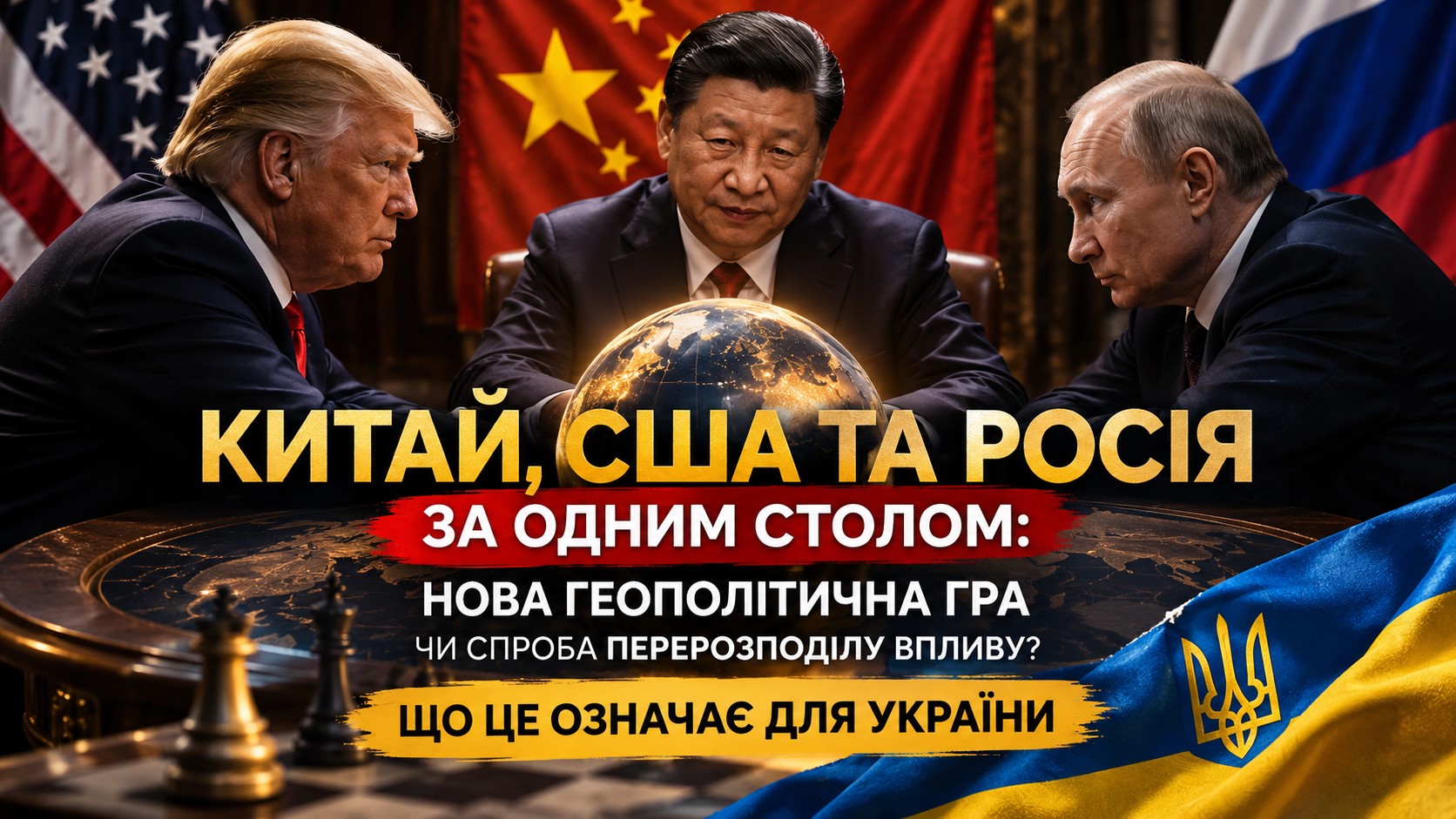
A critical analysis of the historic meeting between Xi Jinping, Donald Trump and Vladimir Putin in Shenzhen on 19 November 2026. Are the major powers negotiating a new world order? Will Russia receive sanctions relief? Why is China not stopping the war, and what should Ukraine expect from this diplomatic manoeuvre?
INTRODUCTION. THREE LEADERS, ONE TABLE AND VERY DIFFERENT INTERESTS
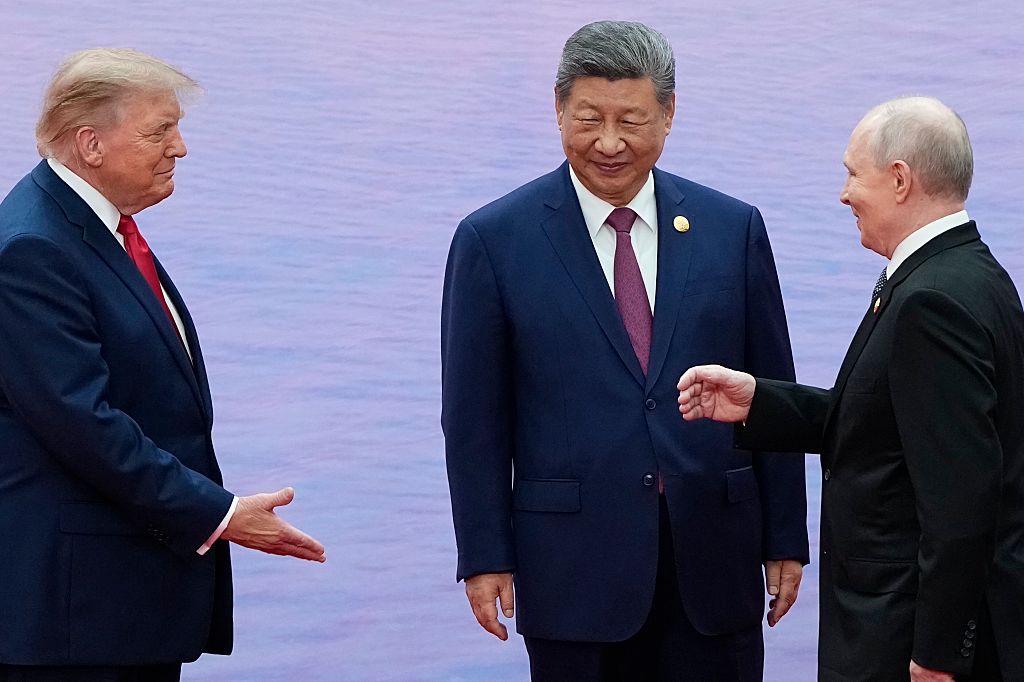
On 19 November 2026, an event took place in the Chinese city of Shenzhen that has already become part of contemporary diplomatic history: for the first time in this format, the leaders of China, the United States and Russia — Xi Jinping, Donald Trump and Vladimir Putin — met at the same table.
The meeting took place on the sidelines of the Asia-Pacific Economic Cooperation (APEC) summit. China hosted and organised the talks, which were officially presented as discussions on global peace, international security and strategic stability.
At first glance, this may look like an ordinary diplomatic event: three nuclear powers discussing dialogue, risk reduction and cooperation.
But there is an important nuance. The three countries sitting at this table were not simply states with different interests. They represented:
- The United States — a country that for decades remained a key guarantor of the security of the Western world, but which, under Donald Trump’s administration, is reassessing its role in international conflicts.
- China — an economic and technological giant seeking to strengthen its global influence and gradually reshape the balance of power on the international stage.
- Russia — a country waging a full-scale war against Ukraine, subject to extensive international sanctions and attempting to avoid strategic defeat.
For Ukraine, this configuration is particularly concerning.
Russia is interested in once again being perceived as a full-fledged partner of the world’s most influential powers rather than as an aggressor that must answer for violations of international law.
China wants to demonstrate that it is capable of bringing world leaders together at the same table and influencing the international agenda.
Donald Trump, meanwhile, is demonstrating his willingness to negotiate directly with authoritarian leaders, even when this raises concerns among the United States’ traditional allies.
Therefore, the main question is not whether the three presidents managed to agree on friendship.
The real question is this: what rules of international politics are they trying to establish, who benefits from this dialogue, and could Ukraine become one of those whose interests are discussed without its participation?
1. WHAT EXACTLY HAPPENED IN SHENZHEN?
1.1. Why the meeting became historic
Before this event, Xi Jinping, Donald Trump and Vladimir Putin had never held a formal trilateral meeting at the level of the heads of all three states.
Bilateral contacts between them had taken place on numerous occasions. Relations between China and Russia had remained particularly close.
However, a format involving the leaders of three countries with the world’s largest nuclear arsenals carries a different political significance.
This is not simply an opportunity to discuss individual conflicts. It is a demonstration that these three states claim a special role in shaping the future of international security.
Even before the meeting, China’s Ministry of Foreign Affairs described it as the first in-person meeting of the heads of China, Russia and the United States in this format. It also announced an intention to discuss the preservation of peace and strategic stability.
In other words, Beijing sought from the outset to present the event as something broader than negotiations about Ukraine or nuclear weapons.
1.2. What was included in the joint declaration
Following the talks, the Chinese side published a document entitled Declaration of the Heads of State of China, Russia and the United States on the Path to Peace.
It is important to note that this was a joint document published by the Chinese side and official Russian sources. The White House did not publish a separate declaration.
The document identified four main areas:
- Reforming the United Nations so that it can respond more effectively to global challenges.
- Increasing the production and supply of petroleum products and ensuring the stability of energy flows.
- Supporting the principle of state consent and the immunities of state officials. It also emphasised that the International Criminal Court and similar institutions should not abuse their jurisdiction.
- Dialogue on reducing nuclear risks and preventing the proliferation of nuclear weapons.
At the same time, the declaration makes no mention whatsoever of Ukraine, Russian aggression, the occupied Ukrainian territories or the conditions for ending the war.
It also contains no specific mechanism for ending hostilities, no security guarantees for Ukraine and no Russian commitment to withdraw its troops.
This is fundamentally important.
In effect, a document given the high-profile title of a declaration “on the path to peace” contains no concrete provisions addressing the largest war in Europe since the Second World War.
1.3. Why certain points in the declaration are concerning
The section concerning the International Criminal Court deserves particular attention.
Let us recall that in March 2023, the ICC issued an arrest warrant for Vladimir Putin over the alleged unlawful deportation and transfer of Ukrainian children from occupied territories.
The Russian president is therefore a person subject to this warrant.
Consequently, the joint statement by the three states on respecting the immunity of state officials and preventing the abuse of jurisdiction by international courts has an obvious political context.
It does not cancel the ICC warrant, amend the Rome Statute or automatically grant Putin legal immunity.
However, the political signal is clear: the three states are demonstrating a willingness to question the powers of international judicial institutions when their decisions conflict with the interests of these countries’ leadership.
This is a serious issue for the international legal order.
International justice must function not only when its decisions are convenient for the major powers.
1.4. What is missing from the declaration — and why it matters
In diplomacy, what is deliberately left out of a document can sometimes be just as important as what is written in it.
In this case, the declaration contains no:
- Recognition of Russia’s responsibility for its aggression against Ukraine.
- Requirement to respect Ukraine’s territorial integrity in the context of this specific war.
- Support for the principle of “nothing about Ukraine without Ukraine”.
- Commitments to stop Russian attacks.
- Conditions for restoring or strengthening the sanctions regime.
- Concrete steps to return deported Ukrainian children.
- Mechanism for international monitoring of a possible ceasefire.
At the same time, Donald Trump stated that he had raised the issue of Ukraine during the talks, while Vladimir Putin said that he had discussed the war in separate bilateral conversations with Trump and Xi Jinping.
This means that Ukraine may have been discussed in private conversations, but it did not become part of the joint written outcome.
This does not prove that a secret agreement exists. However, it shows that the three leaders were either unable or unwilling to establish a common position on Russia’s war.
2. WHAT WAS THE PURPOSE OF THE MEETING? EACH LEADER CAME FOR THEIR OWN REASONS
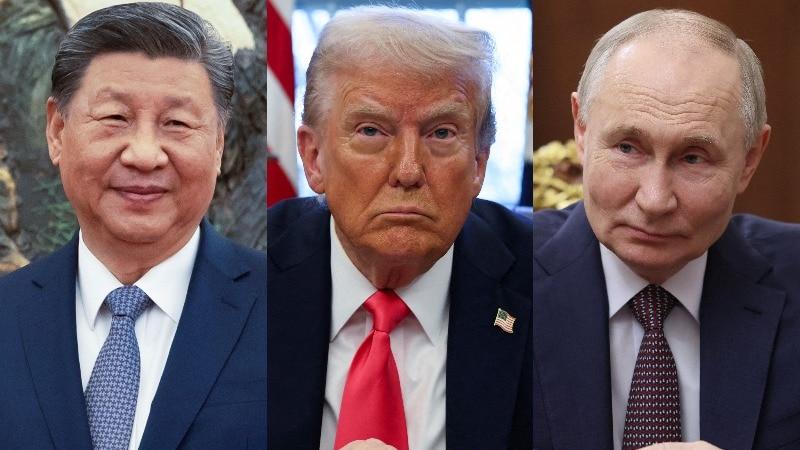
To understand the real significance of the summit, it is necessary to view it not as a joint project between three countries, but as a clash of three different strategies.
2.1. China’s interest: consolidating its status as a global power centre
For Xi Jinping, the meeting was primarily an opportunity to demonstrate China’s international weight.
Beijing wants the world to see it as more than the largest industrial centre, a technology exporter or a competitor of the United States.
China seeks to become one of the principal centres of global political decision-making.
Hosting such a meeting is a powerful symbolic step.
Imagine the situation: the presidents of the United States and Russia travel to China to discuss international security, nuclear risks, energy and the future of international institutions.
This demonstrates that Beijing has sufficient political influence to bring even countries with serious disagreements to the same table.
For China, this is also a way to present its own model of diplomacy: it does not have to join Western alliances or support every US decision, yet it can remain an indispensable partner in global negotiations.
Relations with the United States are another area of particular interest.
China has serious economic and technological disagreements with Washington, including:
- Tariffs and trade restrictions.
- Controls on exports of advanced semiconductors.
- Competition in artificial intelligence.
- Access to rare earth minerals.
- Taiwan and security in the Indo-Pacific region.
- Control over international production chains.
Beijing is therefore interested in stabilising relations with the United States, but not at the expense of abandoning its own strategic interests.
For Xi Jinping, it is important to preserve the partnership with Moscow while preventing an uncontrolled escalation with Washington.
2.2. Russia’s interest: regaining the status of an acceptable international partner
For Vladimir Putin, the meeting has particular symbolic value.
Following its full-scale invasion of Ukraine, Russia faced extensive international isolation, sanctions, trade and technology restrictions, as well as an International Criminal Court arrest warrant.
However, taking part in negotiations with the presidents of the United States and China allows the Kremlin to demonstrate to its domestic audience and the international community that Russia supposedly remains one of the world’s leading powers.
This is important for Russian propaganda, which seeks to show that the West has failed to isolate Russia.
There is also a practical interest.
Moscow wants to:
- Reduce American sanctions pressure.
- Restore economic contacts with the United States.
- Weaken international coordination in support of Ukraine.
- Promote its own terms for ending the war.
- Strengthen relations with China.
- Turn the issue of Russian aggression into part of broader negotiations about a “new security architecture”.
The last point is particularly dangerous for Ukraine.
Russia seeks to present the war not as the result of its own decision to attack a neighbouring country, but as part of a major confrontation between Russia, NATO and the United States.
This interpretation allows the Kremlin to demand concessions not only from Ukraine but also from Western countries.
In effect, Moscow is attempting to turn its own aggression into an instrument for reshaping the international order.
2.3. The United States’ interest: major agreements, economic benefits and control of nuclear risks
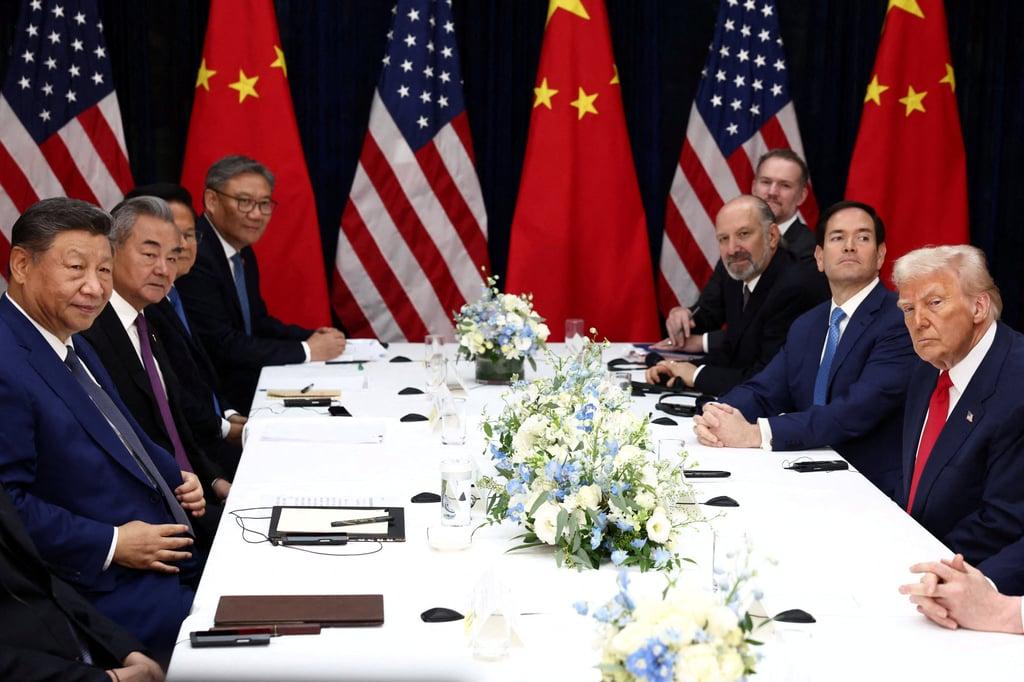
For Donald Trump, the meeting also has several dimensions.
The first is nuclear security.
The United States and Russia possess the world’s largest nuclear arsenals. Following the expiration of the last major US-Russian strategic arms treaty in February 2026, the issue of controlling nuclear risks has become particularly urgent.
Trump wants to be able to claim credit for contributing to new agreements on nuclear arms reduction.
But there is a problem: China’s nuclear arsenal is significantly smaller than those of the United States and Russia. Traditionally, Beijing has been unwilling to participate in trilateral disarmament negotiations on equal terms while the American and Russian arsenals remain much larger.
Therefore, a joint statement about future dialogue is not yet a disarmament treaty.
The second interest is economic.
The United States is interested in stabilising relations with China, which remains one of America’s largest trading partners.
The third concerns international politics.
Trump is demonstrating that he is willing to negotiate with the leaders of countries that have serious disagreements with the United States. He also seeks to position himself as a politician capable of reaching agreements where previous administrations failed.
However, there is a danger: the desire to achieve a high-profile diplomatic result quickly may encourage agreements that do not adequately take the strategic interests of America’s partners into account.
For Ukraine, this is not an abstract risk.
3. DOES THIS MEETING MEAN THAT RUSSIA IS BEING RELEASED FROM SANCTIONS?
This is one of the most important questions for Ukraine.
The answer is that the meeting itself does not mean sanctions have been lifted. However, even before the summit, US sanctions policy had shown signs of selective easing.
These two issues need to be considered separately.
3.1. What exactly did Trump do before the meeting?
On 18 September 2026, the United States adopted the Lindsey O. Graham Sanctioning Russia and Iran Act of 2026, a law providing for new sanctions mechanisms against Russia, its economic partners and those helping it circumvent sanctions.
However, on 16 October, Donald Trump issued Executive Order No. 14436, declining to apply some of the restrictions provided for by the law.
In the official document, the White House explained that applying the new sanctions provisions at that time could interfere with American efforts to negotiate a lasting peace between Ukraine and Russia.
What does this mean?
The US administration effectively chose a negotiating strategy in which the possibility of introducing new economic restrictions is used as an instrument of pressure or bargaining rather than being applied automatically.
At the same time, the order contains an important clarification: it does not cancel the existing sanctions imposed on Russia under previous presidential executive orders.
In other words, this is not a full amnesty for the Russian economy.
Nevertheless, it represents a real easing of some new sanctions mechanisms and should be assessed critically.
3.2. Was a decision to lift sanctions against Russia made in China?
The joint declaration of 19 November contains no provisions on lifting US sanctions against Russia.
Nor does it include an agreement to restore Russia’s access to the Western financial system, resume full-scale trade or end sanctions pressure.
Therefore, it would be incorrect to claim that Russia was “released from sanctions” at the summit in China.
But there is another problem.
When the US president meets Putin, publicly demonstrates a willingness to improve relations and has already declined to apply some new sanctions provisions, this creates a more favourable diplomatic environment for the Kremlin.
Even without the formal lifting of restrictions, Moscow gains an opportunity to promote the idea of gradually returning to international normality.
3.3. Why sanctions can remain in force but lose their effectiveness
Sanctions are more than a list of prohibitions.
Their strength depends on how consistently countries enforce them, whether they are prepared to pursue violators and whether they coordinate their actions.
Russia has already learned to circumvent some restrictions through intermediaries, third countries, alternative payment mechanisms and complex trade networks.
China has become one of the most important elements of this system.
According to the US-China Economic and Security Review Commission, in 2026 Chinese companies supplied approximately 90% of the controlled technology goods entering Russia within the specific category of sanctions-sensitive goods examined.
These include electronics, semiconductors, drone components, machine tools and other dual-use products.
This does not mean that China has officially announced that all these goods are being supplied to Russia for military purposes. However, trade-flow data, sanctions investigations and the use of Chinese components in Russian weapons systems point to a serious problem.
For Ukraine, it is therefore important to look not only at formal decisions on sanctions, but also at whether Russia’s actual ability to obtain the necessary technologies and finance the war is being reduced.
3.4. What should we expect next?
The most likely risk is not the immediate cancellation of all sanctions, but the gradual and selective easing of individual restrictions as part of negotiations.
This could concern:
- The energy sector.
- Certain financial transactions.
- Access to specific goods and technologies.
- Trade restrictions.
- Individual companies or categories of goods.
However, each such decision would require a separate legal document.
It is therefore important to monitor White House executive orders, decisions by the US Department of the Treasury and the Office of Foreign Assets Control (OFAC), rather than drawing conclusions solely from political statements.
4. DOES THIS MEAN THAT THE UNITED STATES NO LONGER SUPPORTS UKRAINE?
This question has no simple answer.
It would be incorrect to say that the United States has completely stopped supporting Ukraine.
But it would be equally incorrect to claim that American support remains the same as it was during the first years of the full-scale invasion.
4.1. The model of American assistance itself has changed
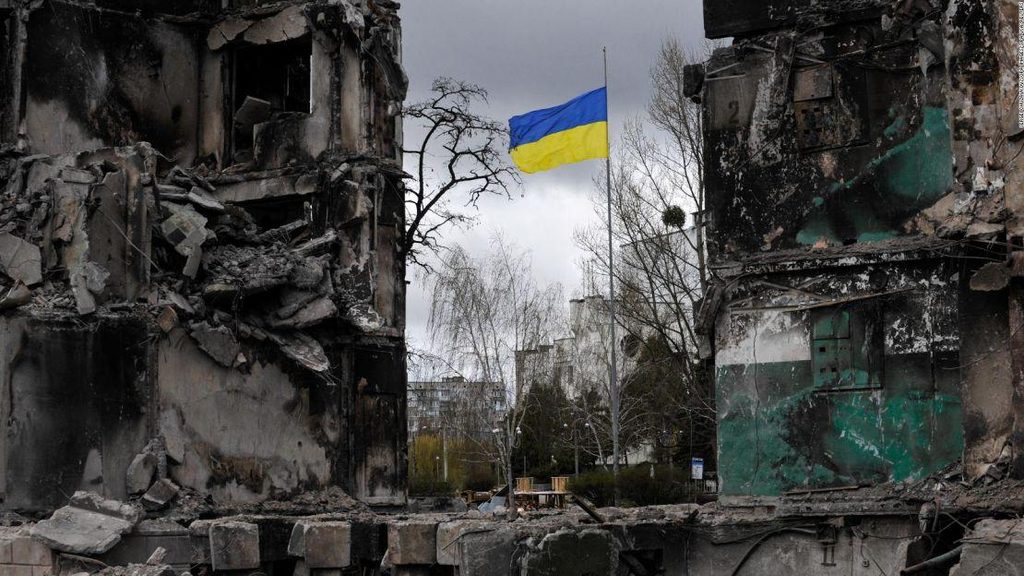
According to the US Inspectors General report on Operation Atlantic Resolve for the third quarter of 2026, since the beginning of Russia’s full-scale invasion, the US Congress has appropriated or made approximately $198.59 billion available for relevant programmes.
This amount includes not only direct military assistance to Ukraine, but also spending on support for US forces in Europe, replenishment of weapons stocks, humanitarian programmes and other measures.
It should therefore not be interpreted as an amount transferred directly to Ukraine’s accounts.
Something else is more important.
The report states that after 2024, Congress did not appropriate significant new special funding packages for the Ukrainian response to Russia’s invasion.
At the same time, the United States continues to fulfil some of its commitments, while European allies are increasingly taking responsibility for financing the supply of American weapons.
4.2. Europe is effectively assuming a larger share of the financial burden
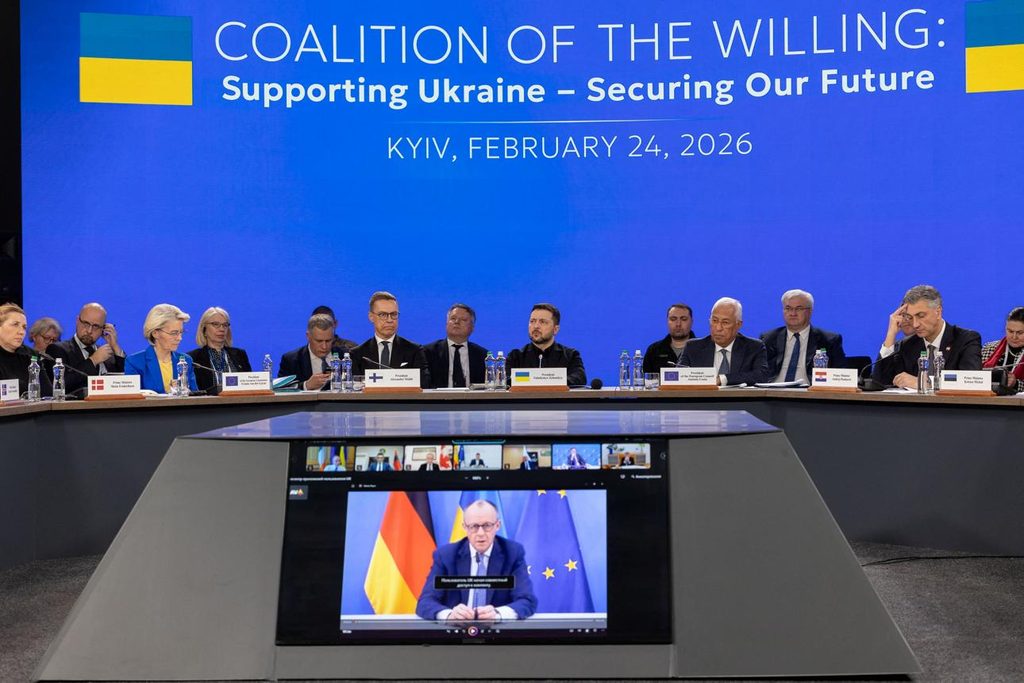
One of the key mechanisms is the Prioritized Ukraine Requirements List (PURL).
This programme allows NATO countries and partners to finance packages of American weapons that are subsequently transferred to Ukraine.
According to the US report, as of 30 September 2026, 27 NATO allies and partners had contributed or pledged approximately $6.8 billion through PURL.
Another mechanism is JUMPSTART, which allows international partners to finance the procurement of American military equipment, services and training for Ukraine.
Thus, American weapons continue to arrive, but European allies are paying an increasingly large share of their cost.
This is a fundamental change.
The United States is gradually moving away from a model in which it independently financed a significant portion of assistance towards one in which it remains a supplier, coordinator and military-technology partner, while the main financial burden is shifted to its allies.
4.3. Why this is dangerous for Ukraine
This model has both advantages and risks.
The advantage is that Europe is becoming more responsible for its own security and for supporting Ukraine.
The risk is that funding depends on the political will of many countries, their budgets, domestic crises and election cycles.
Furthermore, some of the most important military capabilities still depend on the United States:
- Intelligence information.
- Satellite data.
- Air defence systems.
- Missiles for certain American systems.
- Precision-guided munitions.
- Logistics and technical support.
Therefore, even if Europe is willing to pay more, it cannot immediately replace all American capabilities.
4.4. Could Trump’s meeting with Putin mean that Ukraine is being left alone to face Russia?
So far, no such legal or official decision has been made.
However, US diplomatic behaviour demonstrates that the Trump administration is prepared to seek agreements with Moscow even when Ukraine’s and Russia’s positions remain fundamentally different.
This creates a difficult situation for Kyiv.
Ukraine risks having to do more than convince Russia to end its aggression. It may also have to constantly explain to Washington why certain proposed terms of peace are unacceptable.
At the same time, on 19 November, the day of the meeting between the three presidents in China, Ukraine’s European allies gathered in Berlin to coordinate support for Kyiv and discuss security guarantees.
This shows that European states recognise the risk of decisions about Europe’s future being made without Europe’s full participation.
The answer, therefore, is this: the United States has not announced an end to its support for Ukraine, but the scale, mechanisms and political predictability of that support have changed.
This is something Ukraine’s strategy must take into account.
5. WHAT IS CHINA’S ACTUAL POSITION ON UKRAINE?
This is perhaps the most important part of the entire analysis.
China does not officially recognise Russia’s annexation of Ukrainian territories. Beijing regularly declares its respect for the sovereignty and territorial integrity of all states.
At the same time, however, China has not condemned Russia in the way Ukraine expects, has not joined Western sanctions and continues its strategic partnership with Moscow.
In other words, there is a noticeable gap between China’s official rhetoric and its practical policy.
5.1. The official position: Xi Jinping’s four principles
Chinese diplomacy has repeatedly referred to what are known as the “four principles” concerning Ukraine:
- Respect for the sovereignty and territorial integrity of all states.
- Adherence to the purposes and principles of the UN Charter.
- Consideration of the legitimate security interests of all countries.
- Support for all efforts aimed at a peaceful settlement of the conflict.
At first glance, these principles are entirely acceptable.
Ukraine is also interested in compliance with the UN Charter, respect for borders and a peaceful settlement.
The problem lies in how China applies these principles in practice.
For example, Beijing frequently speaks about the “legitimate security interests of all parties” but does not make a clear demand that Russia end its aggression and withdraw its troops from Ukrainian territory.
Instead, Chinese diplomacy regularly refers to the “root causes of the conflict”, the European security architecture and the need to take Moscow’s position into account.
Such wording effectively allows Russia to shift part of the responsibility for its own invasion onto the international security system.
5.2. China does not call Russia an aggressor
Beijing avoids directly condemning Russia’s invasion.
In its official statements, China most often uses expressions such as “the Ukraine crisis”, “the conflict in Ukraine” or “the Ukraine issue”.
This is not accidental.
The language of diplomacy matters. When a country avoids directly identifying who started a war, it effectively leaves room for the conflict to be portrayed as a confrontation between two sides with mutual grievances.
However, the actual sequence of events is not symmetrical: Russia occupied Crimea and launched its aggression in eastern Ukraine in 2014, and then carried out a full-scale invasion on 24 February 2022.
Therefore, Beijing’s neutral language should not change our understanding of who is responsible for starting the war.
5.3. China has not joined sanctions against Russia
Beijing consistently opposes unilateral sanctions that have not been approved by the UN Security Council.
China also criticises restrictions imposed by the European Union, the United States and other countries on Chinese companies suspected of supplying goods to Russia’s military-industrial complex.
At the same time, the Chinese side claims that it does not supply Russia with lethal weapons and that it controls exports of dual-use goods.
However, international investigations and export data indicate that Chinese companies play an important role in supplying Russian industry with components that can be used to manufacture weapons.
It is important not to confuse two different statements:
- There is no basis for automatically claiming that every Chinese product entering Russia is intended for military purposes.
- However, there is confirmed evidence that some Chinese goods and technologies reach Russia’s military-industrial complex and are used to support weapons production.
This is a significant distinction.
5.4. Why China does not want to lose Russia
For Beijing, Russia is an important strategic partner.
It supplies China with energy resources, raw materials, certain military technologies and political support on the international stage.
Furthermore, Russia remains a permanent member of the UN Security Council with veto power.
This gives Beijing another influential partner in international politics.
But there is a deeper strategic interest.
China sees the United States as its main geopolitical competitor. Russia, which is in conflict with the West, is therefore an important partner for Beijing in building an alternative centre of influence.
At the same time, China is not interested in Russia becoming so weak that it loses control or turns into a source of major instability along China’s borders.
Beijing needs a Russia that remains strong enough to be a partner but sufficiently dependent not to dictate the terms.
This is one of the main contradictions in their relationship.
6. CAN CHINA STOP RUSSIA?
The short answer is that China has significant potential influence over Russia, but there is no guarantee that it will want to use that influence to end the war on terms acceptable to Ukraine.
It is necessary to distinguish between the ability to act and the political will to do so.
6.1. Why China has leverage over Moscow
Since 2022, Russia’s economic dependence on China has increased significantly.
China has become one of Russia’s main trading partners.
It buys Russian oil, gas, coal and other resources. It supplies cars, industrial equipment, electronics, components, consumer goods and products that Russia has found increasingly difficult to obtain because of Western sanctions.
Russia’s defence industry is particularly dependent on Chinese dual-use goods.
These include:
- Microelectronics.
- Semiconductors.
- Electronic components.
- Computer numerical control machine tools.
- Optical equipment.
- Engines and components.
- Drone components.
According to the US-China Economic and Security Review Commission, in 2026 China supplied approximately 90% of the controlled technology goods from the relevant list entering Russia.
This estimate concerns a specific category of goods, not all Russian imports or all weapons components.
Nevertheless, it demonstrates the scale of the dependence.
If China genuinely decided to restrict the supply of these goods, Russia’s military industry would come under serious pressure.
6.2. Why Beijing has not yet used this influence to stop the war
Because Russia’s war against Ukraine does not necessarily contradict all of China’s strategic interests.
For Beijing, the prolonged conflict has mixed consequences.
On the one hand, it creates instability, risks to trade and worsening relations between China and Western countries.
On the other hand, it:
- Weakens Russia economically and increases its dependence on China.
- Diverts significant US and NATO resources towards Europe.
- Gives China’s military leadership an opportunity to study modern warfare, unmanned systems, air defence and logistics.
- Creates opportunities for Chinese companies to obtain energy resources on favourable terms.
- Increases Moscow’s dependence on the Chinese market, technology and financial mechanisms.
This does not mean that China necessarily wants the war to continue indefinitely.
However, Beijing may consider controlled instability and a dependent Russia more advantageous than a strong Moscow that is independent of China and has restored its relations with the West.
This is an analytical conclusion based on China’s behaviour and the structure of its relationship with Russia, not an officially declared goal of the Chinese government.
6.3. What would happen if China genuinely decided to pressure Russia?
China has several instruments at its disposal.
Economic pressure. Beijing could reduce its purchases of Russian energy resources or change the terms of its contracts.
Technology restrictions. Chinese companies could stop supplying certain components required by Russia’s defence industry.
Financial policy. Chinese banks could restrict transactions with Russian entities if Beijing decided that the risk of secondary sanctions outweighed the economic benefits.
Diplomatic pressure. Xi Jinping could directly demand that Putin stop certain military actions or agree to negotiations.
However, even such pressure would not necessarily force Russia to end the war immediately.
Moscow could attempt to find alternative sources of supply, expand domestic production or agree to negotiations only in exchange for concessions.
Therefore, China has the ability to significantly affect Russia’s capacity to continue the war, but it does not have a magic button that can automatically stop the Kremlin.
7. IS RUSSIA’S WAR AGAINST UKRAINE BENEFICIAL TO CHINA?
This is a more complicated question than it may seem.
It would be inaccurate to say that China simply wants Russia to win. It would be equally inaccurate to assume that Beijing is interested in a complete Ukrainian victory.
China is trying to gain strategic advantages from the situation without taking full responsibility for its consequences.
7.1. Russian energy resources at favourable prices
After Western sanctions were imposed, Russia lost a significant part of its European energy market.
China became one of the main buyers of Russian oil and other energy resources.
For Beijing, this creates an opportunity to obtain large volumes of raw materials on favourable terms.
Russia, with limited access to some Western markets, has become increasingly dependent on Chinese demand.
This strengthens China’s bargaining position.
7.2. Access to technology and military experience
Russia’s war against Ukraine has become one of the largest practical testing grounds for modern warfare.
The following are being tested:
- The large-scale use of unmanned aerial vehicles.
- Counter-drone systems.
- Electronic warfare.
- Satellite reconnaissance.
- Precision-guided weapons.
- New communication systems.
- Logistics under conditions of intense combat.
- Methods of striking critical infrastructure.
China is studying this experience closely.
For its military planning, lessons concerning a potential conflict in the Indo-Pacific region, particularly around Taiwan, are especially important.
The war in Ukraine has become an important source of lessons for many countries about what modern warfare between technologically advanced opponents looks like.
7.3. Reduced international attention to other regions
The prolonged war in Ukraine requires significant resources from the United States and European countries.
This affects their military budgets, production capacities, political priorities and diplomatic resources.
For China, this may create additional room to strengthen its influence in Asia.
However, it is important not to exaggerate this effect.
The United States remains a major military and economic power, and the war in Ukraine does not automatically mean that America is losing its influence in the Asia-Pacific region.
Nevertheless, the strategic dispersal of Washington’s resources is a factor that Beijing certainly takes into account.
7.4. Why China does not want an uncontrolled Russian defeat
The collapse or severe destabilisation of Russia would create serious problems for China.
These include:
- Instability along a long shared border.
- Risks involving control over nuclear weapons.
- Possible internal conflicts in Russia.
- Uncertainty about the future of Russian energy resources.
- The risk of new political forces emerging with unpredictable foreign policies.
Therefore, China may find it more beneficial to have not a strong Russia capable of dictating terms, but a dependent Russia that retains state control and remains a strategic partner.
This is one of the reasons why Beijing is in no hurry to distance itself openly from Moscow.
8. CAN THIS MEETING BE CALLED A NEW YALTA?
Following the announcement of the trilateral summit, discussions about the possibility of “Yalta 2.0” resurfaced in Ukraine and Europe.
The comparison has historical grounds, but it must be used carefully.
8.1. What happened in Yalta in 1945?
In February 1945, the leaders of three countries in the anti-Hitler coalition met in Yalta:
- Franklin D. Roosevelt — United States.
- Winston Churchill — United Kingdom.
- Joseph Stalin — Soviet Union.
They discussed the post-war organisation of Europe, the future of Germany, the creation of the United Nations and other international security issues.
The decisions made by the major powers had an enormous impact on the fate of the countries of Central and Eastern Europe.
Some of these countries effectively found themselves within the Soviet sphere of influence.
This is why the Yalta Conference became a symbol of agreements between major powers that could determine the fate of other nations without their full participation.
8.2. How the meeting in Shenzhen is different
The modern meeting has a very different context.
First, Ukraine is an independent state internationally recognised within its 1991 borders.
Second, it has its own Armed Forces, international partnerships and agency in international relations.
Third, there is no formal division of Europe into spheres of influence of the kind that characterised the post-war order.
Fourth, the declaration in Shenzhen contains no decisions on territories, borders or the division of spheres of influence.
Therefore, calling the meeting a new Yalta as an established fact would be an exaggeration.
But there is another danger.
If major powers begin discussing the future of a country that is not participating in the negotiations, this creates a risk of returning to the logic of spheres of influence.
And this is precisely what Ukraine must oppose.
8.3. Why the principle of “nothing about Ukraine without Ukraine” must remain non-negotiable
Ukraine cannot agree to having its future determined by other countries.
This applies to:
- Territorial integrity.
- State sovereignty.
- The choice of its security arrangements.
- International alliances.
- The future of occupied territories.
- Security guarantees.
- Accountability for war crimes.
No major power has the legal right to dispose of Ukrainian territory or determine Ukraine’s foreign policy without its consent.
This is not a matter of emotions or political sympathies.
It is a fundamental principle of international law.
9. HOW ARE CHINESE MEDIA PRESENTING THIS MEETING?
To understand the situation more fully, it is worth looking not only at Western publications but also at how the event is covered by China’s own information system.
However, one particular feature must be taken into account: Chinese state media are not independent of the political line of the Communist Party of China.
Their reports are therefore important primarily as a source for understanding Beijing’s official position.
9.1. The main emphasis: peace between major powers
China’s state news agency, Xinhua, presented the summit as a historic event demonstrating the responsibility of three major powers for international peace.
Xi Jinping emphasised the need for:
- Mutual respect.
- Peaceful coexistence.
- Mutually beneficial cooperation.
- Dialogue and consultations.
- Avoiding confrontation between major powers.
- Preserving the stability of the international system.
Chinese reports repeatedly emphasised the idea that major powers should abandon Cold War thinking.
This is a traditional position of Chinese diplomacy.
Beijing seeks to present itself as a force opposed to bloc confrontation and offering an alternative model of international relations.
9.2. Why China’s rhetoric about peace does not mean neutrality
It is important here to understand the difference between words and actions.
China speaks about respecting the sovereignty of all states but does not call Russia an aggressor.
China calls for negotiations but does not demand that Moscow end its invasion and withdraw its troops.
China opposes sanctions but continues trading with Russia and provides it with access to important goods.
China speaks about international stability but does not use all of its economic influence to stop Russia’s war.
In other words, China’s position is not entirely neutral.
It is aimed at preserving its strategic partnership with Moscow while avoiding direct confrontation with the West.
9.3. What the Chinese declaration reveals
Three particular priorities stand out in the joint document:
- Strengthening the role of the UN Security Council and reforming international institutions.
- Preserving the stability of energy supplies.
- Protecting the principle of state consent and the immunity of officials from international jurisdiction.
This is not an accidental combination of topics.
China is interested in strengthening the role of the UN Security Council, where it holds a permanent seat and veto power.
It is interested in stable energy flows because it is one of the world’s largest energy importers.
And the issue of immunity for state officials is consistent with its broader political position on limiting external interference and international judicial mechanisms.
At the same time, the declaration contains no specific commitments to end Russian aggression.
That is telling as well.
10. WHAT SHOULD UKRAINE EXPECT AFTER THIS SUMMIT?
The main mistake now would be to view the meeting either as a final verdict on Ukraine or, conversely, as an insignificant diplomatic formality.
In reality, it creates several potential scenarios.
10.1. Scenario One: Russia receives gradual diplomatic and economic relief
This is one of the risks.
Russia may use the summit as an argument in support of further efforts to normalise relations with the United States.
If Washington continues selectively easing sanctions mechanisms, Moscow will gain additional economic opportunities.
At the same time, Russia may try to obtain concessions concerning territory, restrictions on the Ukrainian army or Ukraine’s foreign policy.
For Ukraine, this will mean the need to pay particularly close attention to any proposals for a “compromise peace”.
Not every ceasefire is a just peace.
And not every agreement signed by major powers automatically guarantees Ukraine’s security.
10.2. Scenario Two: China becomes a more active mediator
In theory, Beijing could use its relations with Moscow to increase pressure on Putin.
This could include:
- Demanding an end to attacks on Ukrainian infrastructure.
- Supporting a genuine ceasefire.
- Controlling the supply of dual-use goods.
- Facilitating negotiations involving Ukraine.
- Supporting international security guarantees.
However, there are currently no grounds to believe that China is ready to take such a step.
Beijing has shown no willingness to sacrifice its strategic partnership with Moscow for the sake of Ukrainian interests.
It would therefore be naive to regard China as Ukraine’s future saviour.
10.3. Scenario Three: The United States continues negotiations with Russia while Europe increases support for Ukraine
This scenario is already partially unfolding.
The United States retains the option of negotiating with Moscow while gradually shifting a larger share of the financial burden onto its European allies.
Europe, for its part, is trying to strengthen its own defence industry, supply Ukraine with weapons and develop long-term security guarantees.
For Ukraine, this means that the European direction is becoming even more important.
However, it cannot fully replace cooperation with the United States.
Ukrainian diplomacy must therefore work simultaneously with Washington, Brussels, London, Berlin, Paris and other partners.
10.4. Scenario Four: Russia uses negotiations to prolong the war
This is also a real threat.
The Kremlin may agree to negotiations and demonstrate openness to dialogue while continuing military operations and putting forward demands that effectively amount to Ukraine’s capitulation.
In that case, negotiations become not an instrument for ending the war, but a means of gaining time.
Russia could use this time to:
- Replenish military stocks.
- Restore weapons production.
- Mobilise resources.
- Find new sources of funding.
- Increase diplomatic pressure on Ukraine.
Any ceasefire must therefore be accompanied by a monitoring mechanism, international guarantees and clear consequences for violations.
11. WHAT CAN AND MUST UKRAINE DO IN THIS SITUATION?
The most important thing is to prevent the diplomatic process from turning Ukraine from a participant into a bargaining chip.
11.1. Strengthen the European direction
Ukraine must deepen military, economic and political cooperation with the European Union and NATO.
This means not only declarations of support, but concrete mechanisms:
- Long-term defence contracts.
- Joint weapons production.
- Development of Ukraine’s defence industry.
- Joint air defence programmes.
- Funding for Ukrainian drone and missile production.
- Genuine security guarantees.
Ukraine needs not only partners who promise assistance, but also the infrastructure to provide for its own defence.
11.2. Maintain engagement with the United States
Even if the Trump administration’s policy is unpredictable, the United States remains an extremely important partner.
Ukraine must work not only with the presidential administration, but also with Congress, the defence sector, think tanks, individual states and American society.
US policy is not limited to the position of one person.
Furthermore, the defence industries of the United States and European countries are becoming increasingly integrated with Ukrainian experience and technologies.
This creates mutual incentives for cooperation.
11.3. Engage with China, but without illusions
Ukraine should not abandon diplomatic dialogue with Beijing.
China has considerable economic influence, a permanent seat on the UN Security Council and genuine opportunities to influence the Russian economy.
However, negotiations must be substantive.
Ukraine should demand concrete steps from China:
- Prevent Chinese companies from being used to circumvent sanctions.
- Strengthen controls on exports of dual-use goods.
- Avoid supporting Russian military programmes.
- Respect Ukraine’s territorial integrity.
- Help secure the return of Ukrainian children.
- Use its influence over Moscow to end the aggression.
Beijing must understand that its international standing depends not only on attractive declarations about peace, but also on real action.
11.4. Do not accept peace at any cost
A ceasefire is important, but it must not create conditions for another Russian aggression.
Ukraine needs:
- Reliable security guarantees.
- The ability to determine its own foreign policy.
- The preservation of its right to self-defence.
- No legal recognition of the occupation.
- International monitoring of the implementation of agreements.
- A genuine mechanism for responding to ceasefire violations.
Otherwise, there is a risk that Russia will use the pause to prepare a new offensive.
11.5. Develop Ukraine’s own defence capabilities
A country’s strongest diplomatic position is one backed by its ability to defend itself.
Ukraine already has significant experience in developing its own unmanned systems, missile programmes, electronic warfare capabilities and defence production.
This direction must be scaled up.
The less Ukraine depends on the political decisions of other countries in critical defence matters, the more room it has for independent diplomacy.
12. CONCLUSION: THIS IS NOT THE END OF THE WORLD, BUT IT IS MORE THAN JUST A PHOTOGRAPH OF THREE PRESIDENTS
The meeting between Xi Jinping, Donald Trump and Vladimir Putin in Shenzhen is an important event demonstrating changes in international politics.
However, it should neither be dramatised excessively nor dismissed as insignificant.
What do we have at this point?
First. China has strengthened its status as a global diplomatic centre. It has shown that it can organise negotiations between states with different and sometimes opposing interests.
Second. Russia has achieved an important symbolic result. Putin once again sat at the same table with the presidents of the United States and China, allowing the Kremlin to speak of Russia’s return to major international politics.
Third. The United States has demonstrated its willingness to engage in direct dialogue with Moscow and Beijing. At the same time, American policy on sanctions and support for Ukraine has already undergone changes that cannot be ignored.
Fourth. The joint declaration contains no concrete agreements concerning Ukraine. This means the summit has brought Ukraine no guarantees of peace, security or the restoration of its territorial integrity.
Fifth. China has considerable influence over Russia, but so far has shown no willingness to use it to end the war on terms that serve Ukraine’s interests.
Sixth. Europe is gradually assuming greater responsibility for Ukraine’s defence. This creates new opportunities but also requires even greater diplomatic and strategic efforts from Ukraine.
The main conclusion is that Ukraine must not perceive a meeting of major powers as a decision about its own fate.
Yes, the world is changing. Yes, major powers bargain, negotiate, compete and try to strengthen their positions.
But international law does not give them the right to dispose of the territory of an independent state.
Ukraine is not a bargaining chip in negotiations between Washington, Beijing and Moscow.
And it must never become one.
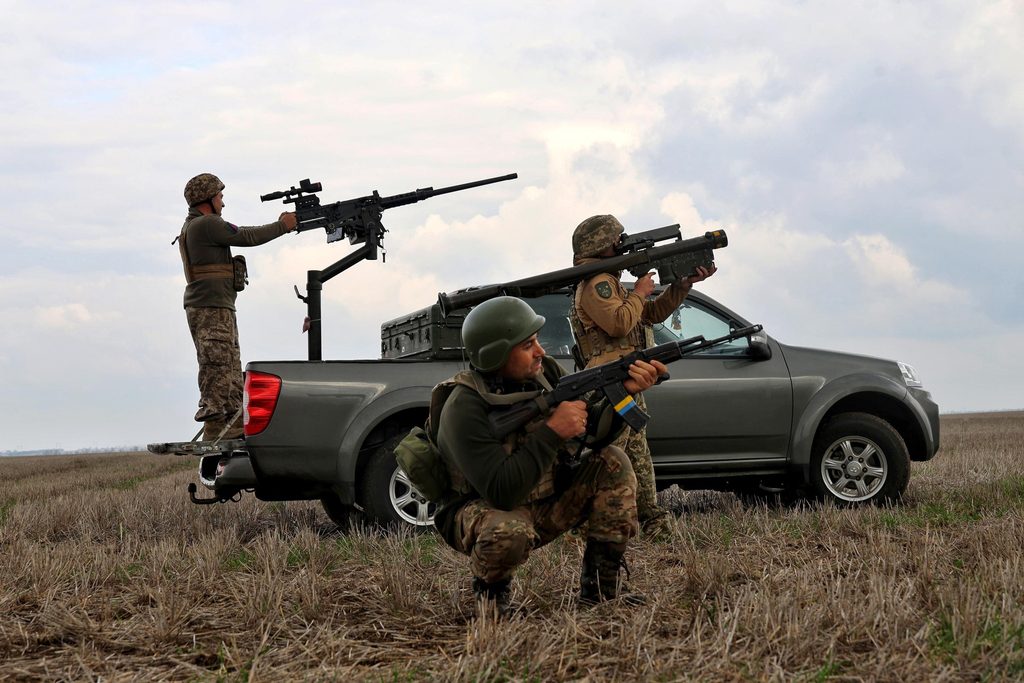
At the same time, declarations of sovereignty alone are not enough. Ukraine needs a strong army, domestic weapons production, economic resilience, genuine international alliances and diplomacy capable of defending national interests even under the most difficult circumstances.
We cannot know what the three presidents will discuss behind closed doors. But we can demand transparency regarding any agreements that affect our country’s security.
And, most importantly, we must not confuse a diplomatic photograph with peace, political promises with guarantees, or beautiful words about stability with real accountability for aggression.
The following sources include official documents, materials from international news agencies and independent analytical research. Chinese state sources are used to describe Beijing’s official position, not as independent verification of its claims.
SOURCES AND DOCUMENTS
Primary documents and official statements
- Ministry of Foreign Affairs of the People’s Republic of China — full text of the declaration by China, Russia and the United States, 19 November 2026.
- Ministry of Foreign Affairs of the People’s Republic of China — announcement of the trilateral meeting, 16 November 2026.
- Ministry of Foreign Affairs of the People’s Republic of China — press conference on expectations for the meeting, 16 November 2026.
- The White House — Executive Order No. 14436 concerning the implementation of sanctions provisions under the Graham Act, 16 October 2026.
- US Government — Inspectors General report on Operation Atlantic Resolve, July–September 2026.
- Ministry of Foreign Affairs of the People’s Republic of China — statement by China’s representative at the UN Security Council on Ukraine, 29 September 2026.
International news agencies and independent media
- Associated Press — results of the historic trilateral meeting, 19 November 2026.
- Associated Press — the three-country declaration and its main provisions, 19 November 2026.
- The Washington Post — analysis of the conflicting objectives of Trump, Xi and Putin, 19 November 2026.
- Reuters — Trump’s position on the possibility of a joint meeting with Xi and Putin, October 2026.
- Reuters — meeting of Ukraine’s allies in Berlin amid the summit in China, 19 November 2026.
China, Russia and the war against Ukraine
- US-China Economic and Security Review Commission — China’s position on Russia’s invasion of Ukraine, timeline through 31 August 2026.
- US-China Economic and Security Review Commission — overview of the strategic partnership between China and Russia, 20 August 2026.
- Council of the European Union — sanctions against Russia and Chinese companies involved in supporting Russia’s military-industrial complex.
- European Court of Auditors — Special Report on the effectiveness of trade sanctions against Russia, November 2026.
International law and security
- United Nations — Charter of the United Nations.
- International Criminal Court — arrest warrants in the situation in Ukraine, 17 March 2023.
- Stockholm International Peace Research Institute (SIPRI) — research on nuclear arsenals and international security.