

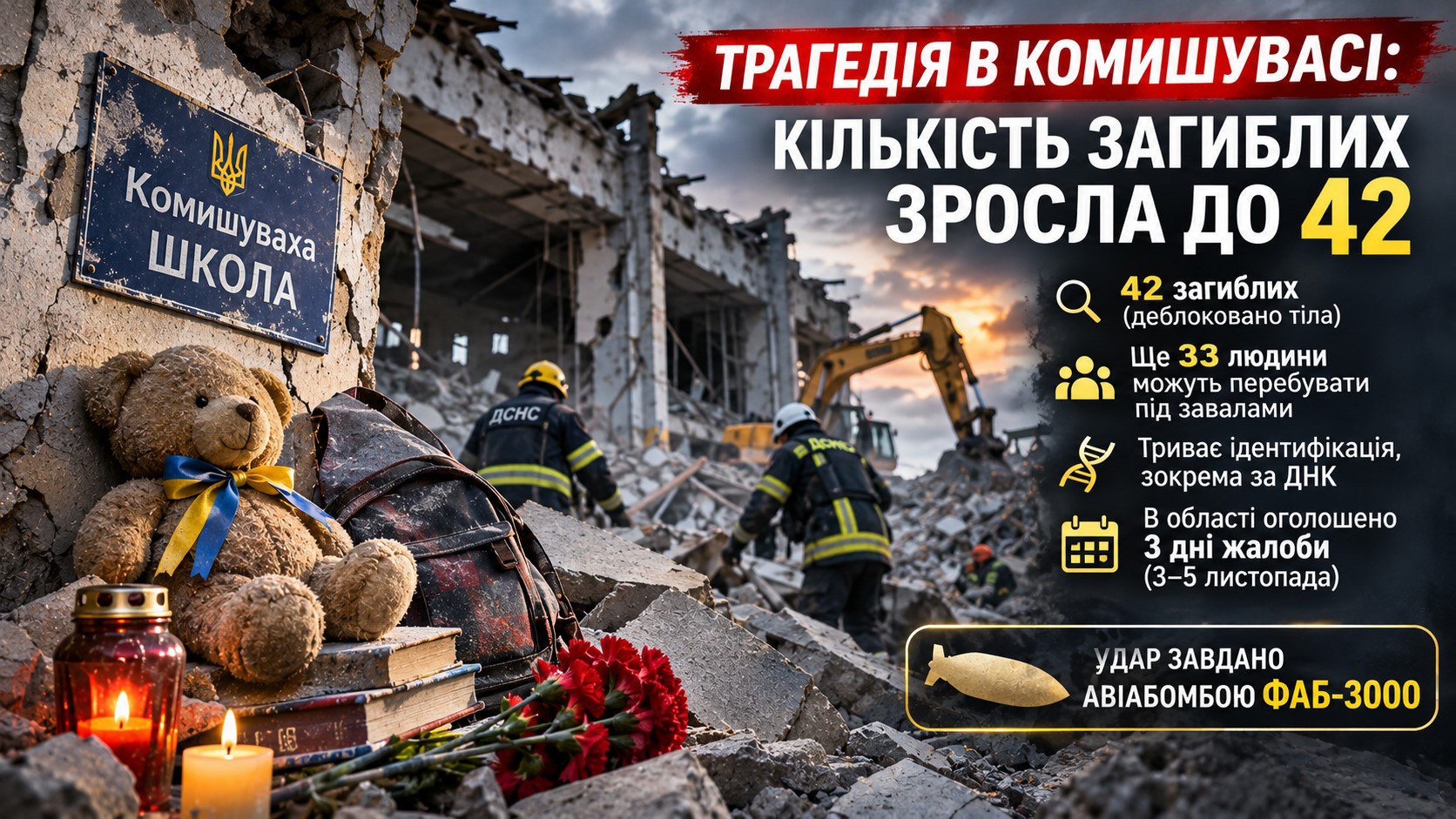
There are some news stories that cannot simply be read and scrolled past. Because behind them are not just numbers, official statements, and rescue service reports. There are people. People who came to collect humanitarian aid. People who sought shelter from shelling in an underground facility. People who never made it home that day.
On 2 November 2026, Russian aircraft struck Komyshuvakha in Zaporizhzhia region. The school grounds were hit. The building housed a humanitarian aid distribution point and an equipped shelter. The people who had come there hoping to find safety ended up trapped beneath the rubble.
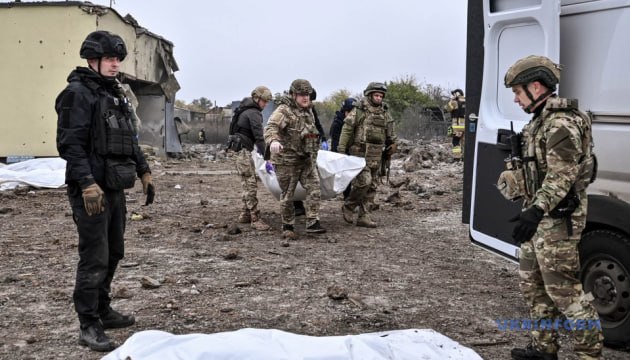
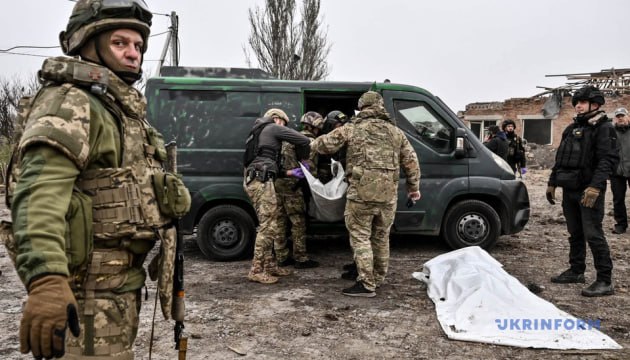
The rescue operation lasted several days. With each new update, the reported death toll increased. As of 5 November, the National Police had reported that 42 bodies had been recovered from the rubble. Another 33 people were believed, according to preliminary information, to possibly remain trapped beneath the ruins. These are horrifying figures, but it is important to remember what lies behind them: human lives, not statistics.
This article brings together what is currently known about the tragedy: the circumstances of the attack, the characteristics of the FAB-3000 aerial bomb, the ability of ordinary shelters to protect people from such a strike, and verified data on civilian deaths in Ukraine during Russia’s full-scale war.
We will distinguish between confirmed figures, preliminary reports, and estimates that cannot yet be independently verified. Because even in wartime, the truth matters. Especially when human lives have been lost.
1. Komyshuvakha: What Happened on 2 November and How Events Unfolded
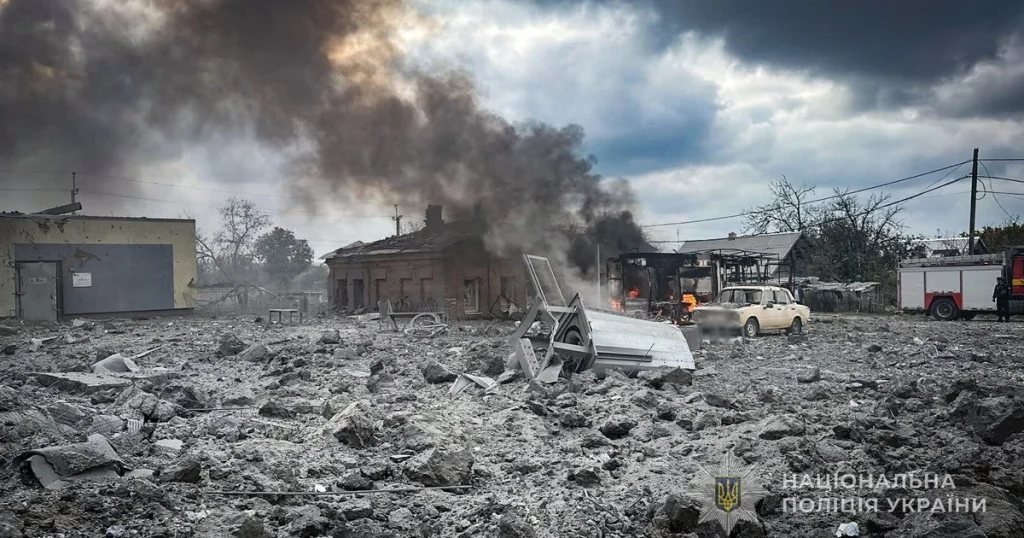
Komyshuvakha is a settlement in Zaporizhzhia region, located not far from the frontline. Its residents live under the constant threat of Russian shelling and air strikes.
On 2 November 2026, Russian forces launched a series of air strikes against the settlement.
The local school was being used for more than its original educational purpose. The building housed a Resilience Centre and a humanitarian aid distribution point where local residents and people from nearby communities could receive assistance.
According to Ukrainian sources, people had come there that day to collect aid, including bread. When the attack began, they were inside an underground facility being used as a shelter.
How did the attack unfold?
According to information released by Ukrainian officials and law enforcement agencies:
- On the morning of 2 November, Russian forces launched a series of air strikes against Komyshuvakha.
- According to Ukrainian reports, at least nine aerial bombs were used.
- The munitions reportedly included a FAB-3000 bomb.
- The grounds of the local school, which housed a humanitarian aid centre, came under attack.
- People were inside the underground premises being used as a shelter.
- Emergency services arrived at the scene after the initial strikes.
- According to Ukrainian sources, Russian forces carried out a follow-up strike while rescuers and police officers were already working at the site.
This last circumstance deserves particular attention.
Striking a location where civilians are present is already an extremely serious incident. However, a follow-up strike after emergency services have arrived, if the circumstances are confirmed, could indicate an even more serious violation of international humanitarian law.
At the same time, reaching a legal conclusion about whether people were deliberately targeted requires establishing what the intended target of each strike was, what information the attacker possessed, whether the presence of rescuers was known, and under what circumstances the subsequent strike occurred.
Ukraine’s Defence Intelligence Directorate described the attack as a deliberate strike on a civilian aid centre. This is the official position of Ukrainian intelligence. It is important to take it into account, but establishing all the circumstances and legal responsibility requires further evidence-based investigation.
Sources:
- Defence Intelligence of Ukraine — Russia’s War Crime in Komyshuvakha: The Aggressor Deliberately Attacked a Civilian Aid Centre with Aerial Bombs, 3 November 2026.
- Suspilne Zaporizhzhia — Komyshuvakha: 2 November Shelling and Search-and-Rescue Operation.
- Ukrinform — Russians Hit the Underground School in Komyshuvakha with the Same Type of Bomb Used to Destroy Azovstal.
2. How Many People Were Killed in Komyshuvakha? The Latest Figure as of 5 November
Information about the number of people killed changed almost every day. This was due to the scale of the destruction, the complexity of search operations, and the need to identify the bodies.
As of 5 November 2026, the latest confirmed statement from the National Police available when this article was prepared had been published at 10:40 a.m.
The bodies of 42 people had been recovered from beneath the rubble. Another 33 people, according to the police’s preliminary assessment, might still have been trapped under the ruins.
This was already the fourth day of emergency rescue operations.
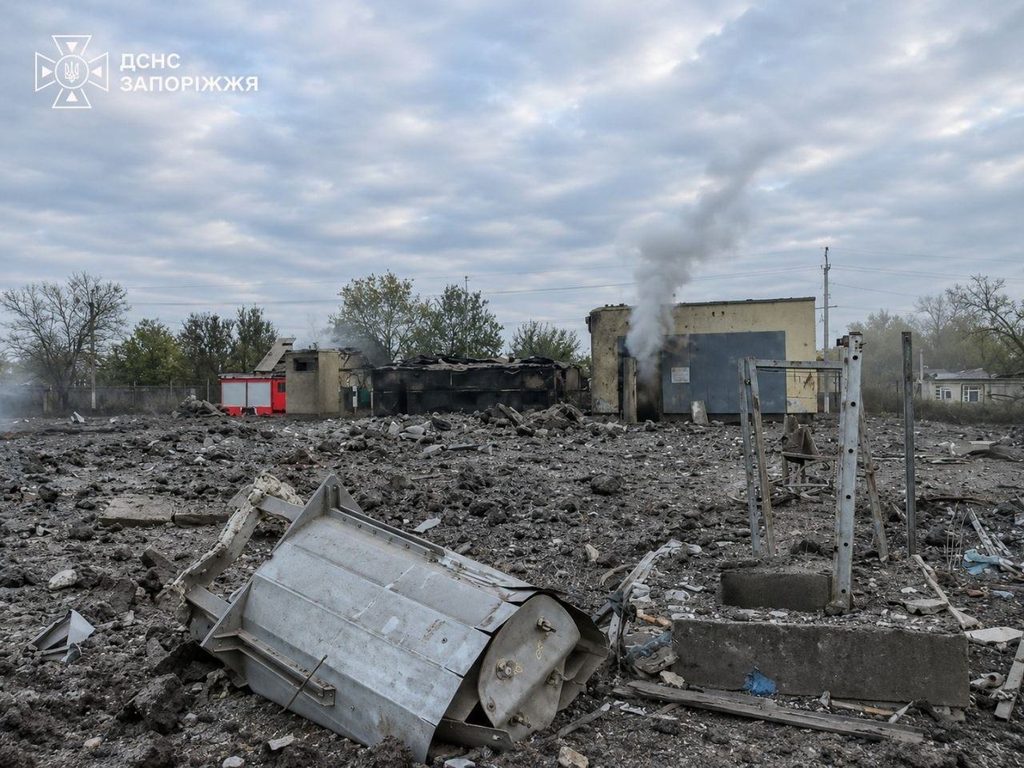
Timeline of the rising death toll
| Date | Information reported |
|---|---|
| 2 November | Russian air attack on Komyshuvakha |
| 3 November | Reports of 31 people killed, 5 injured, and nearly 50 missing |
| 4 November, morning | Death toll increased to 37 |
| 4 November, later | The President of Ukraine reported 40 people killed |
| 5 November, 10:40 a.m. | Police reported 42 bodies recovered; another 33 people might have remained under the rubble |
Sources: statements by the Zaporizhzhia Regional Military Administration, the President of Ukraine, and the National Police published on the dates indicated; Ukrainska Pravda — 37 people killed, 4 November; National Police of Ukraine — fourth day of emergency rescue operations, 5 November.
Why could the death toll still change?
There are three important categories that must not be confused:
- Bodies recovered from the rubble — the remains of people that rescuers have already retrieved from beneath the debris.
- Identified victims — people whose identities have been established.
- Missing persons or people who may still be trapped under the rubble — individuals whose whereabouts have not yet been established.
These categories are not interchangeable.
For example, recovering a body does not necessarily mean that the deceased person’s identity has already been established. Likewise, a person being listed as missing does not mean that their death has been confirmed.
This is why the number of bodies recovered from the rubble and the number of identified victims may differ.
Why is DNA testing used for identification?
Following powerful explosions and structural collapses, the bodies of victims may sustain extensive damage. In some cases, visual identification is impossible.
Specialists then use forensic DNA testing.
Biological samples are collected from relatives of missing people. DNA profiles are created and compared with samples obtained during the examination of human remains.
This is a complex process that takes time. However, it helps prevent mistaken identification and gives families the opportunity to bury their loved ones with dignity.
According to Ukrainian media reports, those killed included civilians, four police officers, and two rescuers.
This detail is particularly important: the tragedy claimed not only the lives of people who had come to collect humanitarian aid, but also those who arrived to save others.
Source: National Police of Ukraine — Komyshuvakha: Fourth Day of Emergency Rescue Operations.
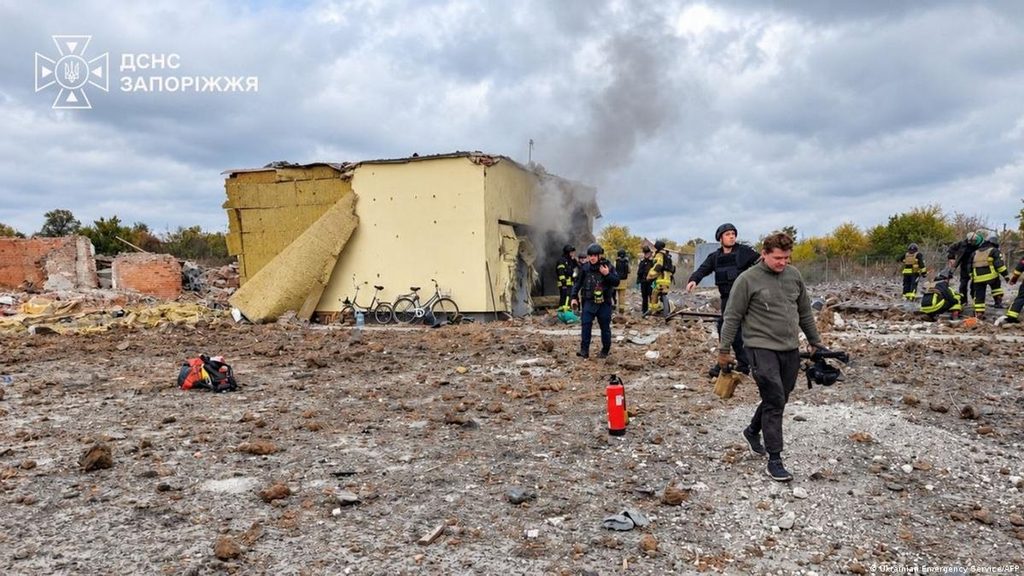
3. What Is the FAB-3000 and Why Is It So Destructive?
The FAB-3000 is a Soviet-designed high-explosive aerial bomb with a total weight of approximately three tonnes. It is important to understand that three tonnes refers to the weight of the entire bomb, not the explosive material alone. Its warhead contains approximately 1.4 tonnes of explosive material.
Russia uses these aerial bombs, including versions fitted with a Universal Planning and Correction Module (UMPK). This module gives the bomb wings and a guidance system, allowing it to glide towards its target from a distance rather than having to be released directly above it.
An explosion of this magnitude can cause extensive destruction: demolishing building structures, damaging ceilings and supporting elements, and causing fatal injuries even to people inside buildings. The actual consequences depend on the distance from the explosion, the structure of the building, and many other factors.
For this reason, an ordinary basement or underground school facility cannot be considered protection against a direct hit by a three-tonne aerial bomb. Such shelters can reduce the risk of injury from fragments and during less powerful attacks, but they are not designed as fortified structures capable of reliably withstanding a strike of this kind.
An important point: a shelter is still a significantly safer place than an open area during shelling. However, no ordinary shelter can guarantee protection against a direct hit from an extremely powerful aerial bomb.
4. Is There a Shelter Capable of Withstanding Such a Strike?
This is perhaps one of the most important questions raised by the tragedy in Komyshuvakha.
People went into a shelter. They did what they are advised to do during an air raid. Yet even an underground facility did not guarantee their survival.
Why?
Because the word “shelter” does not mean that every structure is capable of withstanding every type of weapon.
There is a fundamental difference between a room designed to protect people from fragments, small-arms fire, or a blast wave at a certain distance, and a specially engineered protective structure designed to withstand substantial explosive loads.
An underground school is not automatically a bomb shelter
Following the tragedy in Komyshuvakha, Ivan Fedorov, head of Ukraine’s State Agency for Restoration and Infrastructure Development, stated that the underground school had been built according to an approved design and in compliance with the applicable standards.
However, neither this facility nor other underground schools in Ukraine had been designed to withstand a direct hit from a three-tonne FAB-3000 aerial bomb.
This is an extremely important clarification.
An underground location can significantly increase the level of protection against certain threats. Soil and massive structural elements can absorb part of the energy released by an explosion, while being below ground can reduce the danger posed by fragments and secondary damaging effects.
However, a direct hit by an extremely powerful munition creates an entirely different level of stress.
If an explosion occurs directly above or close to a shelter, load-bearing structures, ceilings, entrances, and life-support systems may be destroyed.
Therefore, an underground facility cannot automatically be considered protected against a heavy aerial bomb.
Source: Ukrinform — The Underground School in Komyshuvakha Was Not Designed to Withstand Three-Tonne FAB Bombs, 3 November 2026.
Is there a structure capable of withstanding such an explosion?
Yes. Specially engineered underground protective structures can offer a significantly higher level of resistance to explosive loads.
However, it is important not to create a false sense of absolute safety.
The outcome depends on many factors:
- the design and materials used in the structure;
- the depth at which it is located;
- soil characteristics;
- the distance from the explosion;
- the direction and nature of the impact load;
- the presence of multiple protective layers;
- the condition of entrances, exits, and ventilation systems;
- the possibility of subsequent strikes.
Even a powerful protective structure is not necessarily capable of withstanding a direct hit from a munition of this class.
Another serious risk is surviving beneath the rubble but being unable to escape because exits are blocked, ventilation is damaged, or a fire breaks out.
Does it make sense to shelter in a basement or underground school?
Yes. But the level of protection must be assessed in relation to the specific threat.
During an ordinary air raid alert, staying in a proper shelter is significantly safer than remaining in an open area, outdoors, or near windows.
At the same time, when there is a threat of powerful aerial bombs, particularly near the frontline, it is necessary to consider the possibility of extensive damage even to underground structures.
There is no universal rule that can guarantee survival in the event of a direct FAB-3000 hit.
This does not mean that people should avoid shelters. On the contrary: shelters remain one of the most important ways to reduce the risk of death during attacks.
Society simply needs to understand the difference between a shelter designed to protect against fragments and a structure capable of resisting heavy aerial munitions.
5. Why Are Follow-Up Strikes on Rescue Sites Particularly Dangerous?
In the case of Komyshuvakha, particular attention has been drawn to reports of a follow-up strike after emergency services had arrived.
This is not merely an additional episode in an attack. It creates a threat to people who are already in danger, as well as to those who have arrived to help them.
International humanitarian law provides protection for civilians and personnel carrying out humanitarian and rescue activities.
What does international humanitarian law say?
The protection of civilians is based on the Geneva Conventions and Additional Protocol I.
The key principles include:
- Parties to a conflict must distinguish between civilians and combatants.
- Indiscriminate attacks are prohibited.
- Attacks in which the expected harm to civilians would be excessive in relation to the concrete and direct military advantage anticipated are prohibited.
- All feasible precautions must be taken to protect the civilian population.
Civilian rescuers carrying out humanitarian and emergency response functions are protected under international humanitarian law.
If it is established that the follow-up strike was directed against rescuers or other civilians who were not taking part in hostilities, it could constitute a serious violation of international humanitarian law.
However, a legal assessment requires examining the circumstances of the attack, the nature of the target, the information available about the presence of civilians and rescuers, and other evidence.
Not every civilian death automatically proves that a deliberate war crime has been committed. Nevertheless, every such attack must be properly investigated.
International legal framework:
- Geneva Conventions and Additional Protocols — International Committee of the Red Cross.
- Rome Statute of the International Criminal Court.
6. How Many Ukrainian Civilians Have Been Killed Since the Beginning of the Full-Scale Invasion?
The tragedy in Komyshuvakha raises a broader question: how many Ukrainian civilians have already been killed as a result of Russian aggression?
Here, it is important to rely on data collected using a clear methodology.
One of the most reliable sources is the United Nations Office of the High Commissioner for Human Rights (OHCHR) and the UN Human Rights Monitoring Mission in Ukraine (HRMMU).
These bodies document civilian deaths and injuries, verify reports, collect testimonies, and use available sources to establish the circumstances of each case.
The UN’s confirmed minimum
According to OHCHR/HRMMU data, as of 30 September 2026, the following figures had been confirmed:
| Category | Number |
|---|---|
| Civilians killed | 17,605 |
| Civilians injured | 55,846 |
| Children killed | 850 |
| Children injured | 3,373 |
| Total civilians killed and injured | 73,451 |
Children are already included in the overall figures for people killed and injured. They should not be added again.
These figures are not an estimate of all war victims. They represent the minimum number of cases that the UN has been able to verify according to its methodology.
Source: OHCHR / HRMMU — Civilian Casualties in Ukraine, figures as of 30 September 2026. The resource reproduces UN statistics; the original sources are reports and infographics published by the UN Human Rights Monitoring Mission.
Why is this figure not final?
The UN has repeatedly stressed that the actual number of people killed may be considerably higher.
There are several reasons.
First — temporarily occupied territories.
International monitoring organisations do not have full access to many territories under Russian control.
This means they cannot independently verify every report of deaths, the circumstances of those deaths, or the number of burial sites.
Second — destroyed settlements.
In areas affected by large-scale fighting, some people may have died beneath the rubble of buildings. Not all remains have been found, recovered, and identified.
Third — mass graves.
After settlements were captured by Russian forces, some victims were buried in mass graves or improvised burial sites.
In many cases, the names of the deceased, the exact number of bodies, and the circumstances of death remain unknown.
Fourth — lack of access to documents and witnesses.
A social media post alone is not sufficient to confirm a person’s death. Their identity, the circumstances, and the connection between the death and hostilities must be established.
This is why UN statistics are conservative: they include only cases that have been verified.
7. Mariupol: How Many Deaths Have Not Been Included in the Confirmed Statistics?
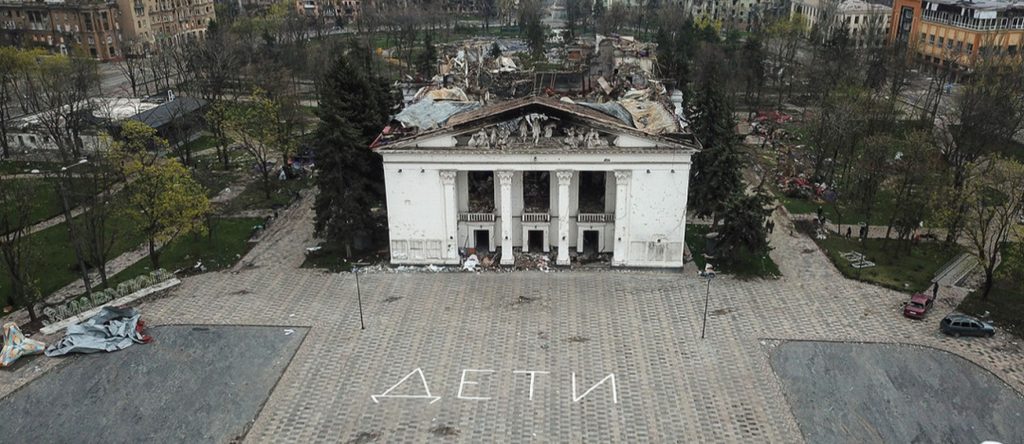
One of the most difficult cases when calculating civilian casualties is Mariupol.
During the Russian siege of the city in 2022, residential neighbourhoods, hospitals, schools, and other civilian infrastructure were destroyed.
Residents spent months without a reliable supply of water, electricity, or heating, and without a safe opportunity to evacuate.
Russian forces control the city, making independent verification of all reports of deaths extremely difficult.
What have independent researchers been able to establish?
In February 2024, Human Rights Watch, together with the research group SITU Research, published the findings of an investigation into deaths during the siege of Mariupol.
Researchers used satellite imagery, analysis of burial sites, information about destroyed buildings, and other available materials.
Their conclusion was that at least 8,000 people had died in Mariupol as a result of hostilities or war-related causes.
This is one of the most substantial independent assessments of the city’s losses.
At the same time, Ukrainian authorities had previously reported an estimate of more than 20,000 civilian deaths.
These figures are not automatically contradictory: they are based on different sources and methodologies. The Human Rights Watch estimate is an independent study based on specific available evidence. The Ukrainian authorities’ estimate reflects a broader assessment of the possible losses in the city, but it is not a fully verified list of named victims.
Some publications have mentioned even higher figures, including more than 100,000. However, such claims do not have a sufficient independent evidentiary basis to be presented as an established death toll.
Why is it impossible to give an exact figure?
Mariupol presents several problems that make a complete count impossible:
- Some people may have died beneath collapsed buildings.
- Human remains may have been removed together with construction debris.
- Burials took place under conditions of occupation and chaos.
- Some bodies may have been cremated or buried without proper identification.
- Independent experts have limited access to burial sites.
- The Russian side has not provided full transparency regarding all those who died.
Mariupol is therefore not simply a city with a large number of deaths. It is an example of how occupation and the absence of independent access can make it practically impossible to establish the true scale of a tragedy.
Sources:
- Human Rights Watch — Our Research Shows More Than 8,000 Killed During the 2022 Mariupol Siege.
- Reuters — More Than 8,000 Killed During 2022 Mariupol Siege, 8 February 2024.
- Ukrainian Parliament Commissioner for Human Rights — research on the situation of national minorities and indigenous peoples under occupation.
8. Confirmed and Possible Casualties: How Should the Statistics Be Read?
To avoid misleading readers, several different categories must be distinguished.
| Category | What can be stated |
|---|---|
| Confirmed civilian deaths according to the UN | 17,605 as of 30 September 2026 |
| Children among the confirmed deaths | 850 |
| Independent estimate of Mariupol casualties | At least 8,000 deaths, according to Human Rights Watch |
| Ukrainian authorities’ estimate for Mariupol | More than 20,000 deaths |
| Total number of deaths in occupied territories | Not established |
| Total number of all civilian war victims | Unknown; actual losses exceed the verified minimum |
An important clarification: the 8,000 deaths in Mariupol estimated by Human Rights Watch are not an additional figure that can simply be added to the 17,605 civilian deaths confirmed by the UN. Some of these cases may already be included in UN statistics, while others may not be.
Likewise, the estimate of more than 20,000 deaths in Mariupol cannot be added to the 8,000 figure. These are different estimates of losses in the same city.
Therefore, it is impossible to state the exact total number of Ukrainian civilian deaths at present.
The most responsible formulation is:
At least 17,605 civilian deaths had been confirmed by the UN as of 30 September 2026. The actual number is considerably higher, but the full scale of losses in occupied territories and areas of intense fighting has not yet been established.
This is more honest than quoting an impressive but unverified figure.
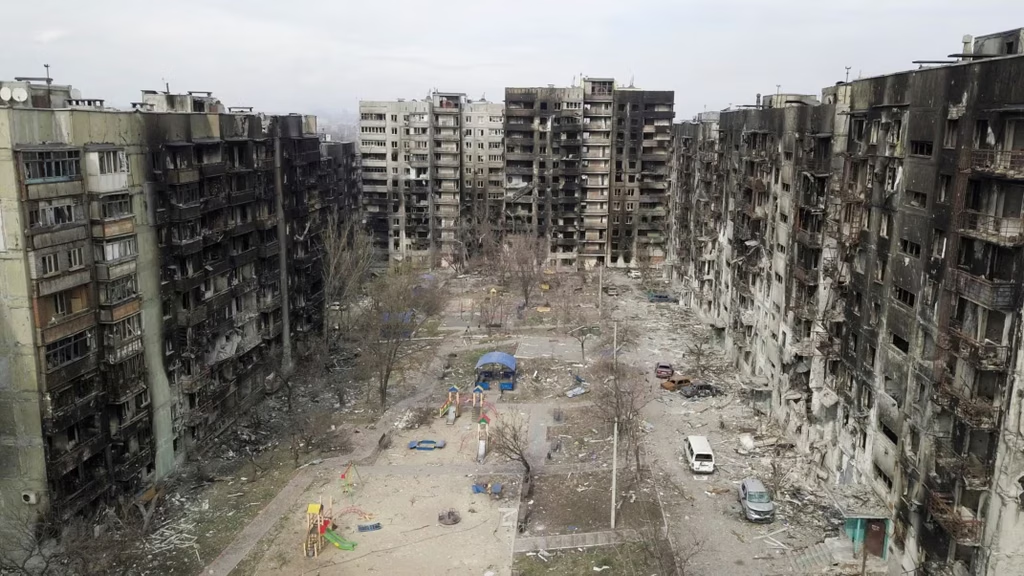
9. Why Does the Number of Civilian Casualties Continue to Rise?
According to the UN Human Rights Monitoring Mission, 2025 was the deadliest year for civilians in Ukraine since 2022.
During 2025, HRMMU confirmed 2,514 civilian deaths and 12,142 injuries.
For comparison:
- 2023 — 1,974 people killed and 6,651 injured;
- 2024 — 2,088 people killed and 9,138 injured;
- 2025 — 2,514 people killed and 12,142 injured.
According to the UN, 97% of the civilian casualties that could be confirmed in 2025 in territory controlled by the Ukrainian government resulted from attacks by Russian armed forces.
This indicates a deterioration in the security situation for civilians.
Particular threats include:
- large-scale missile attacks;
- attack drones;
- guided aerial bombs;
- artillery shelling;
- attacks on residential neighbourhoods and critical infrastructure;
- follow-up strikes on locations where rescuers are working.
The trend of high civilian casualties continued in 2026. According to the UN, 2,570 civilian deaths had been confirmed during the first nine months of the year alone.
This means that the war continues to claim lives far beyond the immediate frontline. Russia’s long-range weapons pose a threat to civilians in many regions of Ukraine.
Sources:
- UN Human Rights Monitoring Mission in Ukraine — 2025 Deadliest Year for Civilians in Ukraine Since 2022, 12 January 2026.
- United Nations in Ukraine — Civilian Casualties Soar in Ukraine in the First Half of 2026.
10. Information Manipulation Surrounding the Tragedy: How Not to Become Part of Propaganda
Major tragedies during wartime often become material for information operations.
Russian propaganda exploits real events to spread false conclusions, shift responsibility, or discredit Ukraine.
However, it is important to understand that manipulation does not always look like an outright fabrication. Often, it begins with a real fact to which a false interpretation is added.
Manipulation 1. “The underground school was a military base”
At present, the verified materials used for this article provide no evidence that the school in Komyshuvakha was a military facility.
Ukrainian sources report that it housed a civilian aid centre and that the underground premises were being used as a shelter.
If claims emerge that the facility was used for military purposes, they require separate verification.
Manipulation 2. “People are to blame because they did not evacuate”
This is an attempt to shift responsibility from the aggressor state onto people who remained in their own community.
It is important to remember that people may not have access to transport, money, the physical ability to leave, or a safe place to evacuate to.
Furthermore, receiving humanitarian aid is not a crime and does not deprive a person of protection under international humanitarian law.
Manipulation 3. “The shelter did not save them, so there is no point in taking shelter”
This is a dangerous conclusion.
The fact that a particular structure failed to withstand a direct hit from an extremely powerful aerial bomb does not mean that shelters are ineffective in general.
Different structures provide different levels of protection. A shelter can significantly reduce the risk of death or injury from fragments, blast waves, and other effects.
However, no structure offers an absolute guarantee in the event of a direct hit by a heavy munition.
Manipulation 4. “All casualty figures are fabricated”
Another form of manipulation is to deny confirmed losses on the grounds that the final number of victims is not yet known.
The absence of a complete count does not mean that no one has died.
There are verified records from the police, the State Emergency Service of Ukraine, the UN, human rights organisations, and independent media. These should be used with clear references to their sources and publication dates.
How should information be verified?
- Look for primary sources: the National Police, the State Emergency Service of Ukraine, the Zaporizhzhia Regional Military Administration, and the Office of the President.
- Check statements from the UN and international human rights organisations.
- Compare the publication date with the date of the event itself.
- Do not treat identical texts published on dozens of websites as dozens of independent confirmations.
- Verify photographs and videos: were they actually taken in Komyshuvakha, or have they been used previously in a different context?
- Do not share unverified lists of people killed or missing.
- Distinguish preliminary estimates, official statements, and the results of independent verification.
Particular attention should also be paid to websites that mass-produce content using AI or copy news reports without verification.
The use of artificial intelligence alone does not make a publication false. However, automatically generated text may contain incorrect dates, fabricated quotations, confused place names, and figures that are no longer up to date.
During the review of materials for this article, no evidence was established that would allow a specific publication about Komyshuvakha to be attributed to a Russian information operation or a particular website to be identified as part of a Russian network. Such conclusions require separate evidence concerning the origin of the content, the owners of the resources, and their infrastructure.
Critical analysis does not mean rejecting inconvenient information. It means verifying it independently, regardless of whom it may benefit.
Conclusion: 42 People Killed — More Than Just a Statistic
The tragedy in Komyshuvakha is a story about people who came to collect humanitarian aid, hoping to receive the essentials they needed.
They were inside an underground facility being used as a shelter. But the power of the Russian aerial munitions and the scale of the destruction were such that the structure could not protect them.
As of 5 November 2026, the bodies of 42 people had been recovered from beneath the rubble. Another 33 people might still have been trapped under the debris. Search operations were continuing, and the identification of the bodies was still underway.
This is not the final figure. And every subsequent report of an increasing death toll is not simply a statistical update. It may mean another family losing someone they love.
According to the UN, at least 17,605 Ukrainian civilians had been confirmed killed since the beginning of the full-scale invasion, as of 30 September 2026. The actual number of victims is considerably higher, but the full scale of losses remains impossible to establish because of occupation, the destruction of settlements, and the lack of access to many sites of tragedy.
Komyshuvakha reminds us once again that war is not only a frontline, military equipment, and battlefield reports. It is people standing in line for bread, rescuers arriving at an emergency, children, parents, neighbours, and entire families.
International law provides protection for civilians. That protection must not depend on how close a settlement is to the frontline.
Every person who has died had a name. Every family has the right to know the truth. And every war crime must be properly documented and investigated.
Sources and Documents
Ukrainian Official Sources
- National Police of Ukraine — Komyshuvakha: Fourth Day of Emergency Rescue Operations, 5 November 2026.
- Defence Intelligence of Ukraine — Russia’s War Crime in Komyshuvakha, 3 November 2026.
- Ukrinform — The Underground School in Komyshuvakha Was Not Designed to Withstand Three-Tonne FAB Bombs, 3 November 2026.
- Ukrinform — Air Strike on Komyshuvakha: Death Toll Rises to 42, 5 November 2026.
- Suspilne Zaporizhzhia — Search and Rescue Operation in Komyshuvakha.
- Ministry of Defence of Ukraine — The Era of Glide Bombs.
International Sources and Research
- OHCHR / HRMMU — Civilian Casualties in Ukraine.
- UN Human Rights Monitoring Mission in Ukraine — 2025 Deadliest Year for Civilians in Ukraine Since 2022.
- Human Rights Watch — More Than 8,000 Killed During the 2022 Mariupol Siege.
- Reuters / Swissinfo — More Than 8,000 Killed During the 2022 Mariupol Siege.
- RUSI — Russia’s Glide Bombs: Devastating Ukraine’s Cities on the Cheap.
- Janes — Russia’s Glide-Adapted Version of the FAB-3000 High-Yield Bomb.
- International Committee of the Red Cross — International Humanitarian Law Database.
- Rome Statute of the International Criminal Court.