

Publication date: October 26, 2026
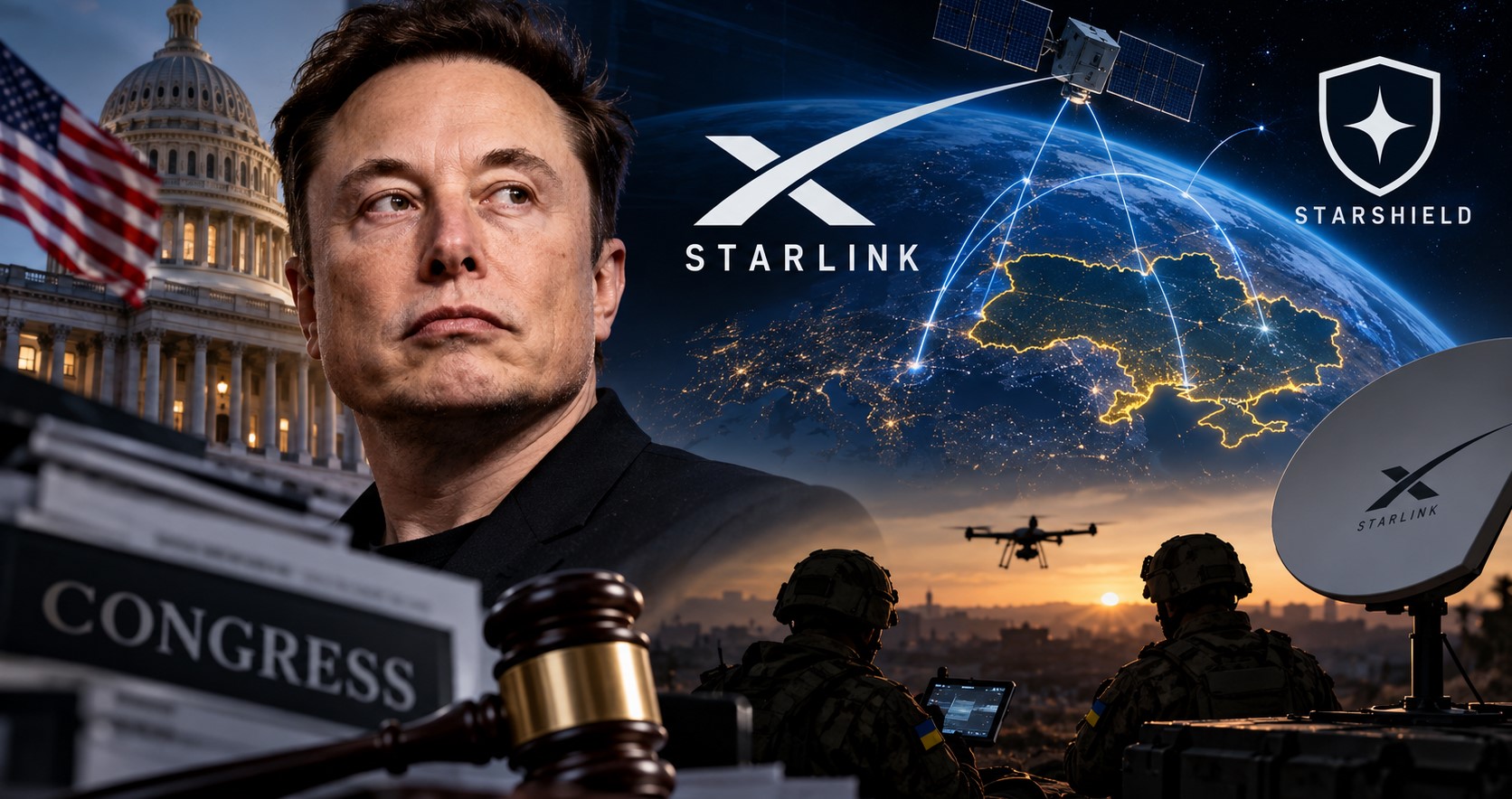
Restrictions on Ukrainian military access to Starlink and Starshield satellite communication systems have triggered a major political controversy in the United States. American lawmakers are demanding answers about who decided to restrict the systems on which Ukraine relies heavily to coordinate military operations during the war.
Elon Musk, the founder of SpaceX, the company operating these satellite networks, has come under scrutiny. According to The Wall Street Journal, Musk may have personally authorized restrictions affecting connectivity for Ukrainian military systems. However, the circumstances surrounding the decision and its implementation have yet to be fully established.
Members of Congress and senators are calling for investigations. They want to determine not only SpaceX’s role but also the responsibility of the US Department of Defense and the oversight mechanisms governing technologies that affect the security of Ukrainian military personnel and civilians.
What Happened to Starlink and Starshield in Ukraine?
According to reports by American media outlets and statements by US lawmakers, Ukrainian military forces encountered satellite communication restrictions in mid-October 2026. The measures reportedly affected equipment installed on unmanned aerial vehicles and other mobile platforms.
The situation escalated on October 13, when, according to information cited in an official statement by Senator Richard Blumenthal, Ukrainian forces lost full access to certain Starshield capabilities without prior notification.
Reports indicated that equipment could lose connectivity when moving at high speeds. This created difficulties for the use of unmanned systems, including some involved in intercepting Russian attack drones.
According to information published by US senators, the restrictions affected systems used to coordinate military operations and transmit data. However, the full extent of the impact, the precise technical parameters of the restrictions, and the circumstances surrounding their introduction still need to be established through an official review.
Sources:
- Senator Richard Blumenthal: Official announcement of an inquiry into Starlink and Starshield
- Senator John Cornyn: Call for an investigation into Starshield disruptions
What Is the Difference Between Starlink and Starshield?
To understand the significance of this situation, it is important to distinguish between the two satellite systems associated with SpaceX.
Starlink is a commercial satellite network that provides internet access in areas where traditional communications infrastructure is unavailable or damaged. In Ukraine, it has become an important communications tool for civilians, businesses, government institutions, and military units.
Starshield is a system designed to serve US government and military customers. It supports national security applications and can provide secure communications and other specialized military capabilities.
Although both systems are associated with SpaceX technologies, they are not fully interchangeable. They serve different purposes, and their operating conditions and oversight arrangements may be governed by separate contracts and agreements.
For Ukraine, access to satellite communications has practical implications. It helps maintain communication between military units, transmit data, coordinate unmanned systems, and support defensive operations.
The issue, therefore, extends beyond internet availability. It concerns the reliability of critical infrastructure during wartime.
Why Are US Lawmakers Calling for Elon Musk to Testify Before Congress?
Following the publication of a Wall Street Journal report suggesting that Musk may have played a personal role in imposing the restrictions, American lawmakers began demanding official explanations.
One of them was Republican Congressman Brian Fitzpatrick. In an interview with CNN, he said an investigation was necessary, including calling witnesses, compelling testimony where legally appropriate, and establishing who was responsible for the decision.
Fitzpatrick described the situation as too serious to be left without proper scrutiny. He also emphasized the need to determine whether a private company’s executive had the authority to influence the use of a military system connected to US national security.
It is important to distinguish between a demand for an investigation and a finding of wrongdoing. Calling for an inquiry does not establish that any individual has violated the law. The purpose of the investigation is to establish the facts, clarify the authority of those involved, and determine whether any legal consequences may follow.
Source: CNN transcript, October 20, 2026.
What Investigations Have Been Initiated in the United States?
As of October 26, 2026, the situation has become the subject of several formal requests by American lawmakers.
1. Investigation into the Roles of SpaceX and the Pentagon
On October 22, Senator Richard Blumenthal announced an inquiry through the US Senate Permanent Subcommittee on Investigations.
He sent letters to Elon Musk and US Secretary of Defense Pete Hegseth requesting information about restrictions on Ukraine’s access to Starlink and Starshield.
The key questions include:
- Who made the decision to restrict communications, and who implemented it?
- What technical and legal authority do SpaceX and the US Department of Defense have in this area?
- Was Ukraine notified in advance that access conditions would change?
- Were the restrictions consistent with the terms of government contracts?
- Does the Pentagon have alternative communications capabilities if SpaceX services become unavailable?
In his letter to Musk, the senator requested written responses and documents by November 5, 2026.
2. Calls to Examine Possible Responsibility Within the Department of Defense
On October 19, a group of US senators, including John Cornyn, Jeanne Shaheen, Thom Tillis, and Richard Blumenthal, called on the Department of Defense Inspector General to investigate Starshield disruptions and the related problems.
Lawmakers want to establish whether the restrictions resulted from decisions by Pentagon officials, contractor actions, changes in government policy, or technical failures.
They also raised concerns about whether communications disruptions and interruptions in the transmission of threat warnings could have affected the safety of US diplomatic, military, and law enforcement personnel in Ukraine.
3. Demands for Answers from Musk and Restoration of Full Access
On October 23, members of the House of Representatives and the Senate, led by Gregory Meeks and Peter Welch, issued a joint demand for explanations concerning Starshield restrictions.
Their letter raised questions about whether SpaceX acted independently, whether US administration officials were involved, whether Ukrainian military access had been fully restored, and who would oversee future changes to the systems.
Lawmakers also requested information about possible communications concerning restrictions on Ukraine’s access and the conditions under which service could be restored.
Official sources:
- US Senate — Richard Blumenthal’s investigation announcement
- US Senate — Call for an investigation into Starshield disruptions
- US House Foreign Affairs Committee — Lawmakers demand answers from Elon Musk
Why Are Satellite Communication Restrictions Dangerous for Ukraine?
Modern warfare depends on more than the number of weapons available. The speed of data transmission, coordination between units, and the ability to respond to threats in real time are equally important.
Satellite communications can play a critical role in several areas of defense.
Coordination between military units. Reliable communications help transmit orders, synchronize actions, and maintain cooperation between units.
Unmanned systems. Depending on the system, communications links may be used to transmit commands, telemetry, and other data. Losing or degrading the connection can limit the equipment’s capabilities.
Air defense and interception of aerial targets. Ukraine uses unmanned systems to counter Russian attack drones. Some of these systems depend on reliable data transmission while moving. Disrupted connectivity may reduce the effectiveness of the relevant operations.
Civilian safety. Communications infrastructure also supports emergency services responding to attacks, accidents, and other emergencies.
At the same time, it would be inaccurate to claim that every Starlink restriction automatically paralyzes Ukraine’s entire defense system. The consequences depend on which services are affected, which systems rely on those services, and whether alternative communications channels are available.
Nevertheless, the possibility of a sudden disruption to a critical technology during active hostilities creates serious risks.
Who Controls Starlink and Starshield? The Central Question Behind the Investigation
One of the most important aspects of this case is the division of authority between a private company and the US government.
Elon Musk has publicly stated that restrictions on the use of Starshield are determined by the US military and ultimately by the US president. Meanwhile, The Wall Street Journal has reported that Musk personally played a role in imposing restrictions.
These accounts raise questions that still require documentary evidence and official clarification.
In particular:
- Who had the legal authority to change the system’s access parameters?
- Who issued the relevant instructions, and who implemented them technically?
- Were the actions approved by the Pentagon?
- Did government contracts permit unilateral restrictions on the service?
- Was Ukraine properly notified of the changes?
- What safeguards are in place to ensure continuity of communications for critical military operations?
The answers matter beyond this particular incident. They could influence how the United States procures military technologies, oversees private contractors, and ensures reliable communications during future conflicts.
What Lessons Should the International Community Learn?
The controversy surrounding Starlink and Starshield raises a broader question: how safe is it to rely on a private company’s technology when critical government and defense functions depend on its continued operation?
Private companies are playing an increasingly significant role in national security. They develop satellite networks, data-processing systems, communications infrastructure, and other technologies that were once largely controlled by governments.
This approach can accelerate innovation and provide access to advanced capabilities. However, it also creates risks when the authority to restrict services, the responsibilities of each party, and the procedures for responding to a crisis are not clearly defined.
Several important lessons emerge from this situation:
- Critical communications require redundancy. Governments should develop alternative communications channels to avoid excessive dependence on a single provider.
- Access rules must be transparent to authorized parties. Procedures for changing the terms of critical services should be established in advance.
- Decisions affecting human safety require proper oversight. Clear limits on authority, documented decision-making, and accountability mechanisms are essential.
- International cooperation must account for technological dependencies. Partners should agree in advance on how to respond to technical failures or changes in a service provider’s policies.
What Happens Next?
As of October 26, 2026, American lawmakers continue to demand explanations concerning restrictions on Starlink and Starshield. The announced inquiries are intended to establish who made the decisions, what authority those individuals had, and what consequences Ukraine experienced.
At this stage, it would be premature to present Elon Musk’s personal responsibility or the involvement of specific US administration officials as conclusively established facts. Public reports contain different accounts of the events, and official investigations are needed to verify them.
For Ukraine, the outcome will matter not only because it may identify those responsible, but also because it could help prevent similar situations in the future. Reliable satellite communications, predictable decisions by service providers, and access to alternative communications channels are directly relevant to the country’s defense capabilities.
The central lesson is clear: technological superiority must be accompanied by accountability, clear rules, and safeguards for the continuity of critical services. During wartime, a communications disruption is not merely a technical problem. Its consequences can extend far beyond digital infrastructure.
Sources and Official Documents
- Senator Richard Blumenthal — Official announcement of an inquiry into Starlink and Starshield, October 22, 2026
- Senator John Cornyn — Call for an investigation into Starshield disruptions, October 19, 2026
- US House Foreign Affairs Committee — Lawmakers demand answers from Elon Musk, October 23, 2026
- CNN — Interview transcript with Congressman Brian Fitzpatrick, October 20, 2026
- The Wall Street Journal — Report on Musk’s alleged order to restrict Starlink service in Ukraine
This article is based on publicly available reporting and official statements by US lawmakers. Allegations and circumstances that remain under investigation are presented as reported claims or accounts requiring further verification.