

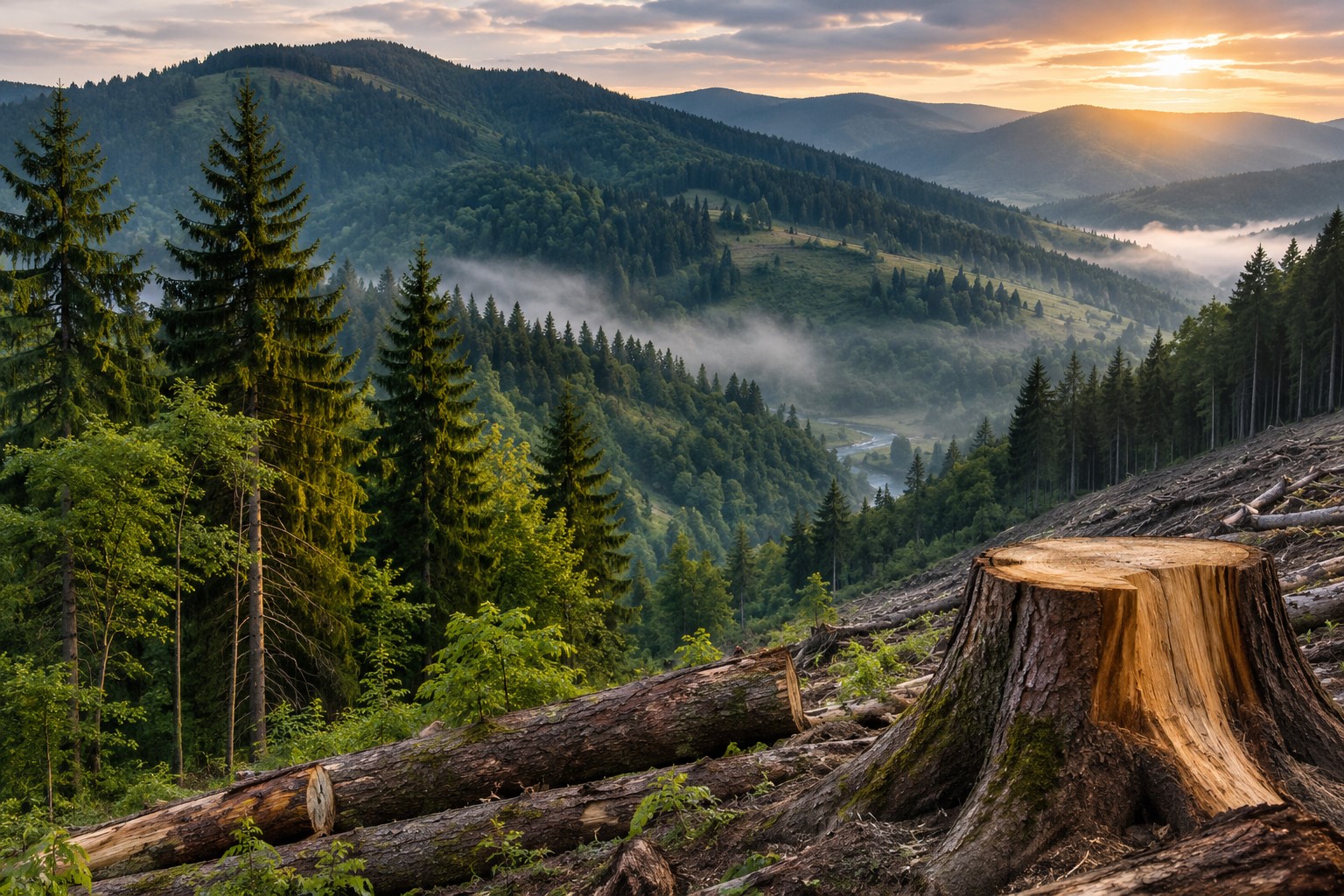
The Carpathians are often imagined as a place of strength and inspiration, a tourist symbol of Ukraine, a land of spruce forests, mountain meadows, streams and breathtaking landscapes. Yet behind this beauty lies a much more complex story.
The Carpathian forests are not simply expanses of trees. They are one of the most important natural systems in Central and Eastern Europe. They regulate river flows, protect soils from erosion, store carbon, provide habitats for hundreds of animal and plant species, and preserve the genetic heritage of forests that existed here long before modern states emerged.
At the same time, the Carpathians are a region shaped by centuries of interaction between people and nature. Forests were cleared for construction, livestock grazed on mountain pastures, timber was floated down rivers, railways were built, forestry enterprises were established, and natural landscapes were transformed. During the twentieth and twenty-first centuries, traditional forest use was joined by industrial-scale logging, transport infrastructure, tourism development and climate change.
Today, the Carpathians face a difficult question: can this mountain region preserve its natural integrity if economic interests, illegal logging, intensive forest exploitation and insufficient oversight continue to put pressure on forest ecosystems?
To understand the scale of the problem, we need to see the Carpathians not merely as a beautiful landscape, but as a living natural system on which much more depends than the tourist appeal of Ukraine’s western regions.
1. THE CARPATHIANS: MOUNTAINS THAT REMEMBER PREHISTORIC OCEANS
1.1. How the Carpathian Mountains were formed
The Carpathians belong to the vast Alpine–Himalayan mountain belt, which stretches from the Atlantic region of Europe through the Alps, the Balkans and the Caucasus to the Himalayas.
Their formation is linked to the movement of tectonic plates, the convergence of continental masses and the gradual closure of ancient ocean basins, including parts of the Tethys Ocean.
The processes that formed the Carpathians unfolded over tens of millions of years. The main stages of Carpathian mountain building took place during the Cenozoic Era, while the mountains acquired much of their present-day structure during the Oligocene and Miocene epochs.
What we see today as mountain ranges was once the seabed.
Enormous layers of sedimentary rock accumulated across the territory of the present-day Carpathians. Sand, clay, silt and the remains of marine organisms settled on the floors of ancient seas, became compacted and eventually turned into rock.
Over time, tectonic forces compressed these deposits, folded them, pushed geological layers over one another and uplifted them above sea level.
That is why the Carpathians contain numerous sedimentary rock formations, traces of ancient marine basins, fossilised remains of organisms and geological structures that tell the story of the region.
1.2. Flysch — the geological hallmark of the Carpathians
One of the characteristic geological features of the Ukrainian Carpathians is flysch.
It consists of thick sequences of sedimentary rocks in which layers of sandstone, siltstone and argillite alternate. These formations developed in ancient marine basins, partly as a result of underwater flows that transported and deposited sediment.
Flysch formations can be seen in many mountain areas. They create distinctive geological structures, influence the shape of slopes and determine how groundwater and surface water move through the landscape.
But there is another side to this geological heritage.
Many flysch formations have a complex structure, and some types are easily weathered and eroded by water. Combined with steep slopes, heavy rainfall and the disturbance of vegetation cover, these conditions can contribute to landslides and erosion.
In other words, the geology of the Carpathians creates natural risks, while human activity can intensify them.
1.3. The Carpathians are not a uniform mountain system
The Carpathian mountain range stretches for approximately 1,500 kilometres across several countries in Central and Eastern Europe.
The Ukrainian Carpathians form part of the Eastern Carpathians. They extend across the Lviv, Ivano-Frankivsk, Zakarpattia and Chernivtsi regions of Ukraine.
The Ukrainian Carpathians cover approximately 24,000 square kilometres. Their highest peak, Hoverla, reaches 2,061 metres above sea level.
As elevation increases, temperature, precipitation, soil composition and the length of the growing season change. As a result, a relatively small area contains a wide variety of natural conditions.
From the foothills to the high mountains, several natural zones can be found — from broadleaf forests to coniferous woodlands, subalpine krummholz and high-altitude meadows.
This vertical diversity is one of the reasons for the Carpathians’ extraordinary biological richness.
2. CARPATHIAN FORESTS: HOW NATURE HAS CHANGED OVER THOUSANDS OF YEARS
2.1. After the Ice Age
The history of the Carpathian forests is much older than the history of modern states and even many human civilisations.
During the last Ice Age, Europe’s climate was considerably colder. Forest ecosystems retreated, while some tree species survived in more favourable natural areas known as refugia.
After the end of the last Ice Age, approximately 11,000 years ago, the climate gradually became warmer. Forest vegetation began spreading into new territories.
European beech played a particularly important role in this process. It is one of the most characteristic tree species of the Carpathians.
Its expansion after the Ice Age became one of the most important examples of the natural migration of tree species across Europe.
Today, the primeval European beech forests of the Carpathians are internationally significant because they allow scientists to study the natural development of forests without intensive human intervention.
2.2. How people changed the Carpathian forests
Humans have influenced Carpathian landscapes for thousands of years.
Early settlements, agriculture, livestock grazing and the use of timber for construction and heating gradually changed the natural structure of forests.
These changes became particularly pronounced over the last few centuries.
Mountain regions developed a range of activities:
- Logging;
- Wood processing;
- Charcoal production;
- Livestock farming;
- Traditional high-mountain pasture farming;
- Road and railway construction;
- Timber rafting along mountain rivers.
Forests became an important economic resource.
2.3. The nineteenth century: the beginning of large-scale industrial exploitation
During the nineteenth century, industrial development and the expansion of railway transport significantly changed the way Carpathian forests were used.
Timber was needed for construction, railway sleepers, mine supports, furniture production, paper manufacturing and many other products.
Railways made it possible to transport much larger volumes of timber than before. Logging was no longer merely a local activity; it became an important part of the regional economy.
In some areas, forest roads, narrow-gauge railways and other transport routes were actively developed.
During this period, pressure on natural forests increased, particularly in mountain areas that were relatively easy to access.
2.4. The twentieth century: industrial forestry
During the twentieth century, forestry in the Carpathians underwent further large-scale changes.
After the First World War, Carpathian territories belonged to different states. Following the Second World War, most of the Ukrainian Carpathians became part of the Soviet Union.
Forests became a strategic resource for industry.
During the Soviet period, logging enterprises expanded, roads were built and industrial facilities were established.
One important consequence was not only the reduction of some natural forest areas, but also a change in their structure.
Over extensive areas, natural forests of different ages were replaced with artificial or compositionally simplified plantations.
Monocultures of Norway spruce became particularly widespread.
At first glance, this seemed like an efficient solution: rapid timber growth, relatively uniform stands and easier management.
But a natural forest and an industrial plantation are not the same thing.
Monoculture plantations can be significantly more vulnerable to pests, diseases, droughts, windthrow and large-scale disturbances than mixed forests containing trees of different ages.
Modern scientific research in the Carpathians confirms that even-aged spruce plantations can suffer substantial damage when several unfavourable factors occur together.
3. WHAT MAKES CARPATHIAN FORESTS UNIQUE?
3.1. Primeval forests — natural laboratories that cannot be recreated in a few decades
A primeval forest is a forest ecosystem that has developed naturally and retained the structure and processes characteristic of a natural forest, without substantial transformation by humans.
In a primeval forest, trees of different ages, sizes and conditions grow alongside one another.
There are young trees, ancient giants, trees gradually reaching the end of their life cycle and fallen trunks that remain part of the ecosystem.
To an outside observer, this may sometimes look like disorder.
But in a natural forest, every element has a role.
Old trees develop cavities that provide homes for birds and bats. Deadwood becomes a habitat for fungi, insects and microorganisms. The soil accumulates organic matter. The varied age structure allows the forest to regenerate naturally.
These ecosystems contain complex relationships that cannot be fully recreated simply by planting trees.
That is why primeval forests are important not only for nature conservation but also for scientific research.
3.2. The Carpathian beech primeval forests — a heritage of global importance
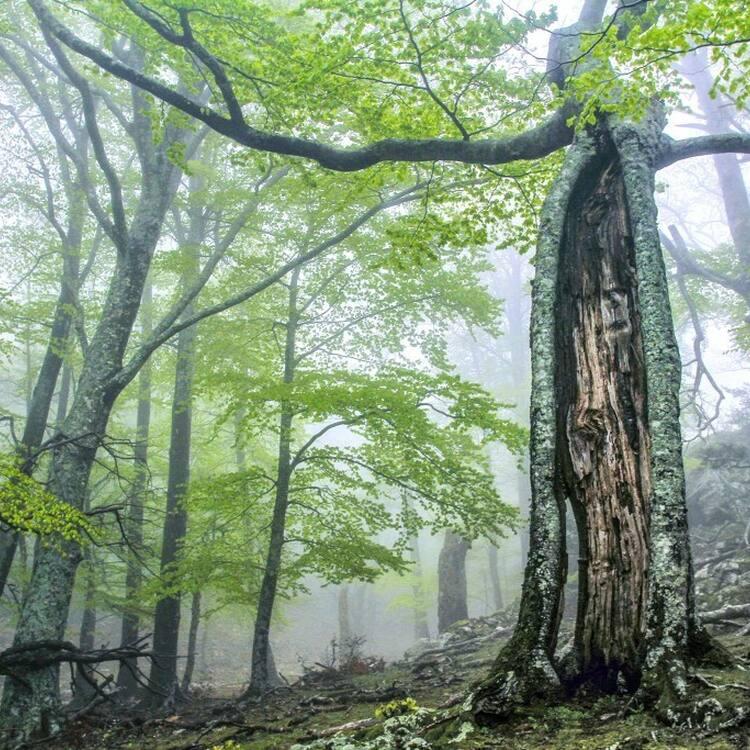
In 2007, the primeval beech forests of the Carpathians in Ukraine and Slovakia were inscribed on the UNESCO World Heritage List.
The property was subsequently expanded and became a transnational natural heritage site known as the Ancient and Primeval Beech Forests of the Carpathians and Other Regions of Europe.
Today, this World Heritage property comprises 93 component parts in 18 countries.
The Ukrainian part includes, among other areas, forest complexes within the Carpathian Biosphere Reserve and other primeval forest territories.
Why are these forests so important?
They demonstrate the natural history of European beech, its ability to adapt to different climatic conditions and its capacity to form complex forest ecosystems.
They are a living genetic reservoir.
These forests preserve natural processes that have already been disrupted by centuries of human activity in many other parts of Europe.
UNESCO specifically identifies deforestation, habitat fragmentation and climate change among the main threats to this World Heritage property.
Logging near protected areas can be particularly dangerous because it changes microclimatic conditions, water regimes and the connectivity of natural habitats.
3.3. Carpathian forests are not just trees — they are complex systems
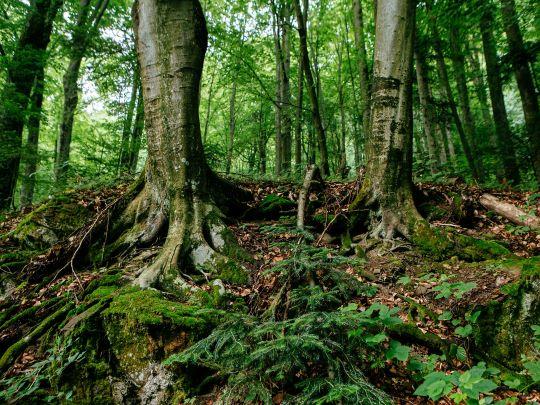
A natural forest consists of many interconnected elements:
- The tree canopy;
- Shrubs;
- Ground vegetation;
- Mosses and lichens;
- Fungi;
- Soil organisms;
- Insects;
- Birds;
- Mammals;
- Microorganisms.
Each of these components contributes to maintaining ecological balance.
For example, fungi help trees obtain water and nutrients through mycorrhizal relationships. Pollinating insects support plant reproduction. Birds and mammals disperse seeds. Deadwood provides habitat for many invertebrate species.
If only part of this system is destroyed, the consequences may not become apparent immediately.
However, the gradual simplification of forest structure reduces its resilience to external pressures.
4. WHAT TREES GROW IN THE CARPATHIANS?
Carpathian vegetation changes according to elevation, climate, moisture, soil composition and slope orientation.
4.1. European beech — one of the main symbols of Carpathian forests
European beech (Fagus sylvatica) is one of the most important broadleaf tree species in the Carpathians.
It forms extensive forest stands, particularly in the lower and middle mountain zones.
Beech can develop dense crowns that influence the amount of light reaching lower forest layers and create specific conditions for other plants.
Its natural forests have a complex structure, while old trees provide habitats for many species of fungi, insects, birds and mammals.
The beech primeval forests of the Carpathians are among Europe’s most valuable natural ecosystems.
4.2. Norway spruce — beauty that needs the right conditions
Norway spruce (Picea abies) is a characteristic species of mountain forests.
It is widespread at higher elevations, where lower temperatures and more humid conditions provide a suitable environment.
Spruce forests are an important part of the Carpathian landscape.
However, problems arise when spruce is planted in areas where it would not naturally be the dominant species, or when large even-aged monocultures are created.
Such plantations can be vulnerable to drought, bark beetles, windthrow and other disturbances.
The issue is not that spruce is a bad tree. The problem lies in planting it in unsuitable locations and excessively simplifying forest ecosystems.
4.3. Silver fir — an important component of a resilient forest
Silver fir (Abies alba) is another characteristic tree species of Carpathian forests.
It often grows alongside beech and other tree species.
Mixed beech–fir forests can be more resilient to various natural disturbances than uniform plantations.
Fir plays an important role in creating the multi-layered structure of a forest.
4.4. Other trees of the Carpathians
In addition to beech, spruce and fir, the Carpathians are home to:
- Sycamore maple (Acer pseudoplatanus);
- Norway maple (Acer platanoides);
- Other maple species;
- European hornbeam (Carpinus betulus);
- Pedunculate oak (Quercus robur);
- Sessile oak (Quercus petraea);
- Wych elm (Ulmus glabra);
- Small-leaved lime (Tilia cordata);
- Silver birch (Betula pendula);
- Grey alder (Alnus incana);
- Mountain pine (Pinus mugo);
- Scots pine (Pinus sylvestris);
- European larch (Larix decidua) — in natural high-altitude habitats and cultivated plantations.
In the upper mountain zones, krummholz formations and shrub communities play a particularly important role.
These include mountain pine, locally known as zher ep, and green alder.
These plants do more than decorate the highlands. They protect the soil, retain snow and influence the movement of water down mountain slopes.
5. THE PLANT LIFE OF THE CARPATHIANS: MORE THAN JUST FORESTS
The Ukrainian Carpathians are among Ukraine’s most important centres of plant diversity.
According to scientific estimates, the region’s vascular flora includes more than 2,500 species and subspecies.
This represents almost half of the flora of the entire Carpathian mountain range and a significant share of Ukraine’s plant diversity.
5.1. Rare and endemic plants
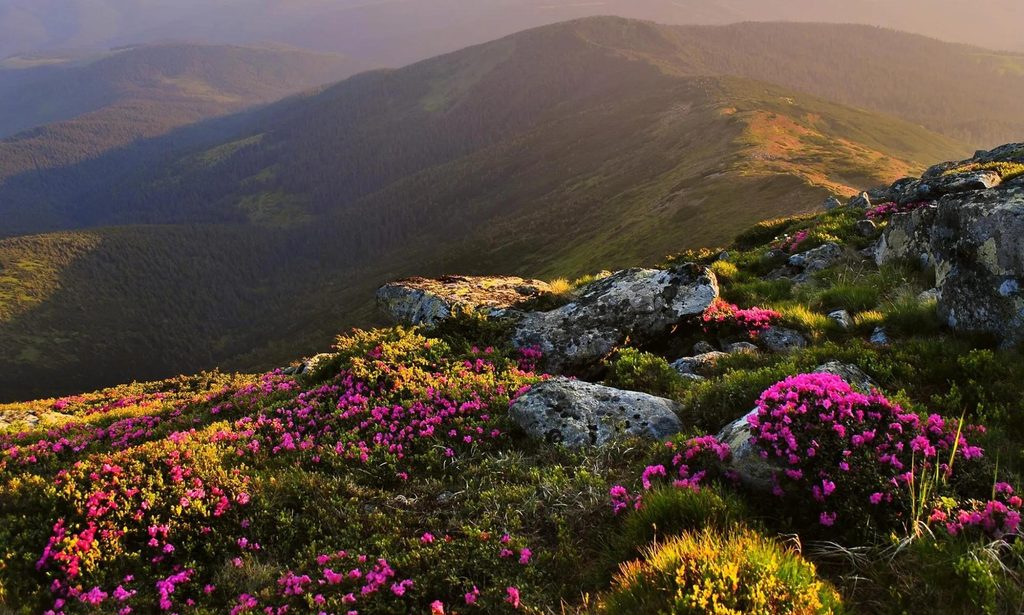
The Carpathians are particularly important for the conservation of rare, relict and endemic plants.
Endemic species are those that occur naturally only within a geographically restricted area.
Plants characteristic of the Carpathian region include:
- East Carpathian rhododendron, also known as Carpathian red rue (Rhododendron myrtifolium);
- Yellow gentian (Gentiana lutea);
- Mountain arnica (Arnica montana);
- Narrow-leaved narcissus (Narcissus angustifolius);
- Alpine edelweiss (Leontopodium alpinum);
- Swiss stone pine (Pinus cembra);
- Various species of bellflowers, carnations, primroses and other mountain plants.
Not all of these species are endemic exclusively to Ukraine. Some have wider ranges across the Carpathians or other European mountain systems.
Nevertheless, they are important elements of the natural heritage of the Ukrainian Carpathians.
5.2. Mountain meadows — the high-altitude grasslands of the Carpathians
Mountain meadows, known locally as polonyny, are one of the most recognisable features of the Carpathian landscape.
They are high-altitude grasslands located above or near the upper forest limit.
Their origins are both natural and cultural.
Some high-altitude open areas developed under the influence of climatic conditions, while many of today’s mountain meadows have been maintained through traditional livestock grazing and other human activities.
These areas are home to:
- Mountain grasses;
- Sedges;
- Various bellflower species;
- Primroses;
- Gentians;
- Mountain buttercups;
- Mosses and lichens.
Mountain meadows provide important habitats for insects, birds and small mammals.
But they also need protection.
Overgrazing, construction, road building, mass tourism and climate change can alter the natural structure of high-altitude grasslands.
6. THE WILDLIFE OF THE CARPATHIANS: WHO LIVED HERE AND WHO LIVES HERE TODAY?
The Carpathians are one of Europe’s most important natural strongholds for large predators.
Populations of brown bears, wolves and lynx still survive here, alongside numerous species of birds, amphibians, fish and invertebrates.
6.1. The brown bear — a symbol of Carpathian wilderness
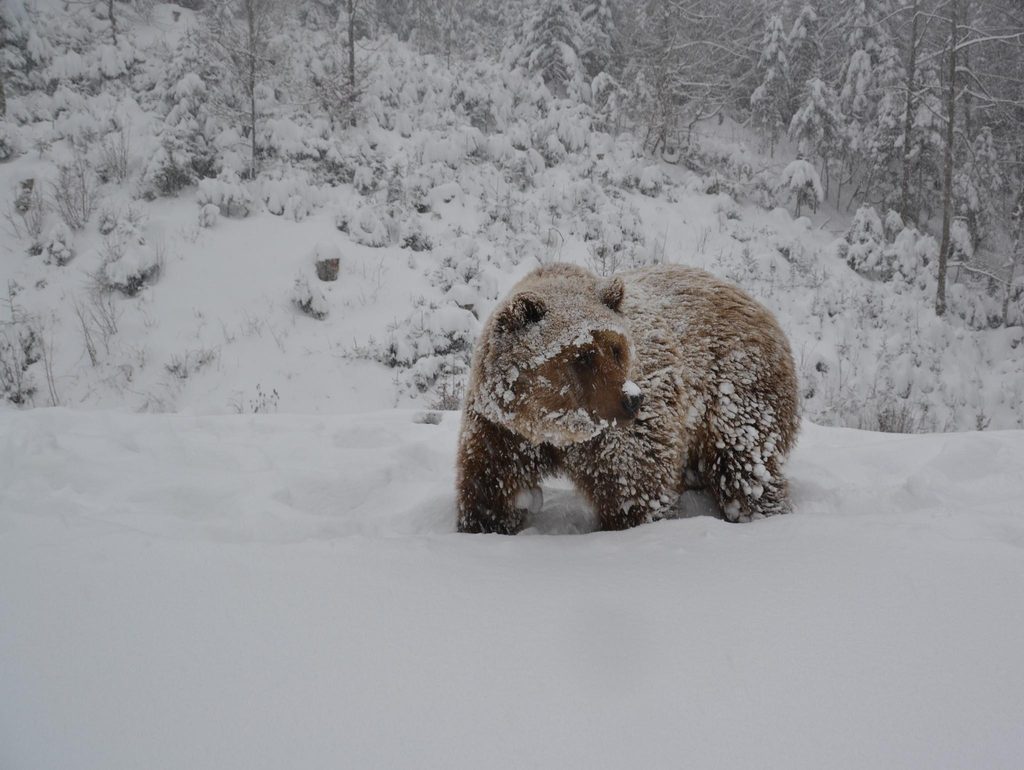
The brown bear (Ursus arctos) is the largest terrestrial predator in the Carpathians.
It primarily inhabits extensive forest areas where there is sufficient food, shelter and room for seasonal movement.
Bears are omnivores. Their diet includes berries, fruit, roots, insects, small animals and other available food sources.
They need large natural territories to survive.
That is why forest fragmentation caused by roads, construction and intensive economic activity can create serious problems for them.
6.2. The wolf — an important regulator of the ecosystem
The wolf (Canis lupus) is a natural predator that influences the numbers and behaviour of hoofed animals.
It hunts deer, roe deer, wild boar and other available prey.
The presence of wolves helps maintain the natural structure of animal populations and influences interactions between species.
At the same time, wolves can come into conflict with people, particularly where human activities take place close to their natural habitats.
6.3. The lynx — one of the most elusive inhabitants of the mountains
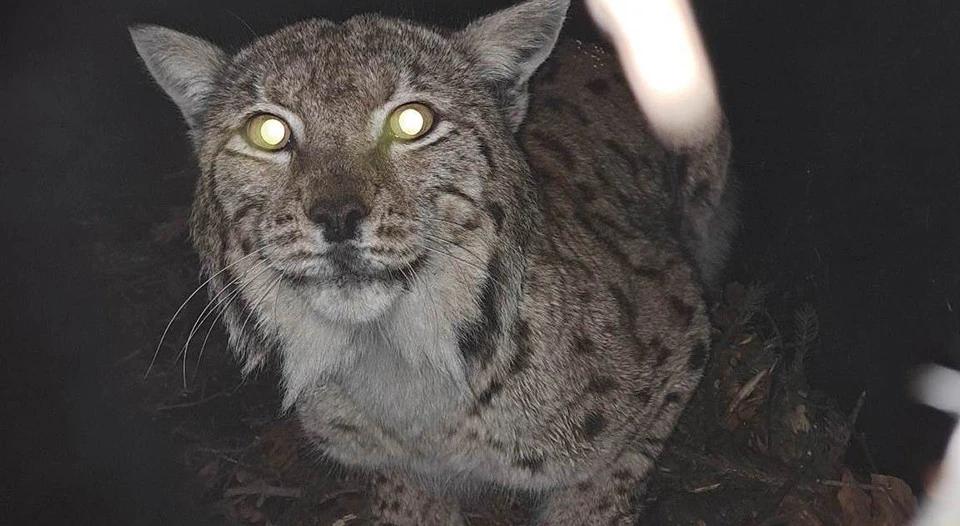
The Eurasian lynx (Lynx lynx) is a rare and extremely elusive predator.
It needs extensive forest territories with sufficient prey and suitable places for shelter.
Lynx mainly hunt roe deer, hares and other animals of an appropriate size.
Their secretive lifestyle makes them difficult to observe, but this does not diminish their importance.
Preserving large, connected forest areas is one of the key conditions for the survival of the lynx.
6.4. Other mammals of the Carpathians
Animals found in Carpathian forests and mountain valleys include:
- Red deer;
- European roe deer;
- Wild boar;
- European wildcat;
- European badger;
- Red fox;
- Beech marten;
- Eurasian otter;
- Eurasian red squirrel;
- Edible dormouse;
- White-breasted hedgehog;
- Numerous bat species.
Some of these species have wide ranges across Europe, while others require specific conservation measures.
Large, continuous forest areas are particularly important because they allow animals to move between separate natural habitats.
6.5. Birds of the Carpathians
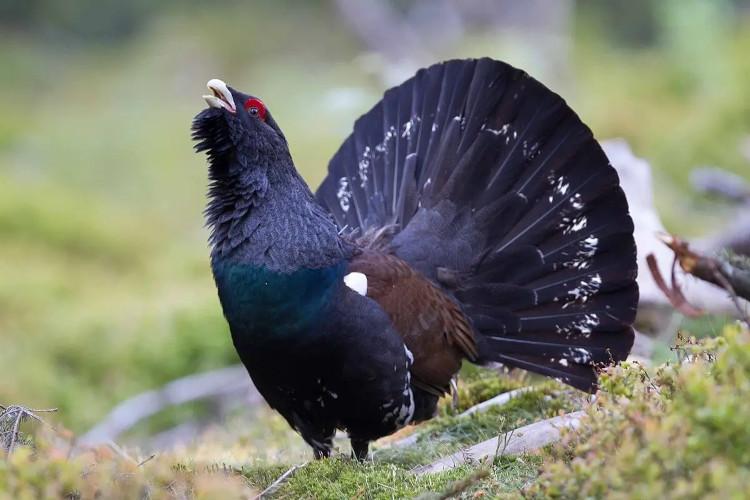
The Carpathians provide important habitats for many forest and mountain bird species.
These include:
- Western capercaillie (Tetrao urogallus);
- Black grouse (Lyrurus tetrix);
- Hazel grouse (Tetrastes bonasia);
- Black stork (Ciconia nigra);
- Golden eagle (Aquila chrysaetos);
- Eurasian eagle-owl (Bubo bubo);
- Ural owl (Strix uralensis);
- Eurasian three-toed woodpecker (Picoides tridactylus);
- Black woodpecker (Dryocopus martius);
- Eurasian treecreeper;
- Alpine accentor.
Old trees, deadwood and natural cavities are particularly important for many forest birds.
For example, woodpeckers create tree cavities that are later used by other bird species and small mammals.
Removing old trees and completely clearing forests of deadwood can therefore deprive animals of nesting sites and shelter.
6.6. Amphibians, reptiles and inhabitants of mountain streams
Carpathian streams, humid forests and high-altitude water bodies provide habitats for many amphibians.
These include:
- Fire salamander;
- Carpathian newt;
- Alpine newt;
- Yellow-bellied toad;
- Frogs and other amphibians.
The region is also home to reptiles, including the grass snake, common adder and various lizard species.
Mountain rivers and streams provide habitats for brown trout, European grayling and other fish species.
One particularly important species is the Danube salmon, or huchen (Hucho hucho) — a rare large fish of the Danube basin that requires clean, well-oxygenated river water.
6.7. Are all these animals safe?
No.
The main threats to wildlife include:
- Loss of natural habitats;
- Forest fragmentation;
- Illegal hunting;
- Poaching;
- Noise pollution;
- Tourism-related construction;
- Forest roads;
- Disruption of natural migration routes;
- Climate change;
- Water pollution.
The isolation of individual forest areas is particularly dangerous for large predators.
Even if a particular area technically remains forested, it may lose much of its ecological value if roads, built-up areas and other barriers cut through it.
7. WHY CARPATHIAN FORESTS MATTER TO ALL OF UKRAINE
The Carpathians are not merely a natural heritage site belonging to Ukraine’s four western regions.
Their importance extends far beyond the region itself.
7.1. Forests regulate water flows
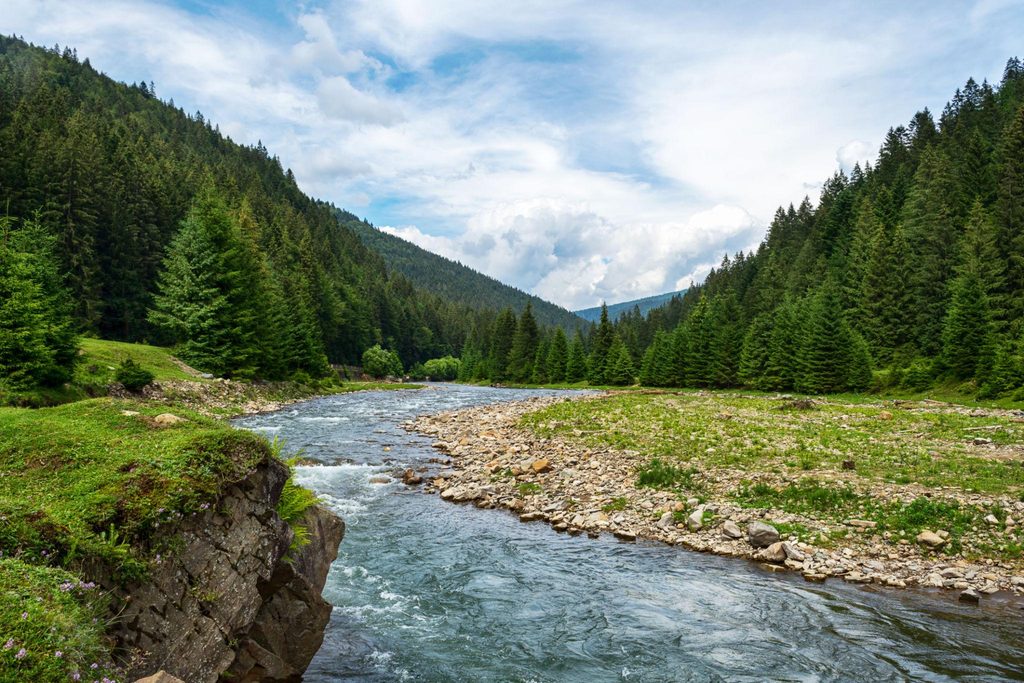
Carpathian forests play an important role in maintaining the water balance of mountain river basins.
Tree canopies intercept some precipitation. Forest litter and soil help water infiltrate into the ground. Root systems help maintain soil structure.
All of this affects how quickly rainwater and melting snow reach streams and rivers.
Forests cannot completely prevent floods, especially during extreme rainfall events.
However, natural forest cover can moderate some hydrological processes and reduce erosion.
7.2. Carpathian rivers are part of Europe’s wider water system
Important river systems originate or develop within the Ukrainian Carpathians.
These include:
- The Tisza;
- The Prut;
- The Cheremosh;
- The Stryi;
- The Svicha;
- The Limnytsia;
- The Opir;
- The Uzh;
- The Dniester and its numerous tributaries.
Some of these waters belong to the Danube basin, while others belong to the Dniester basin.
This means that the ecological condition of the Carpathians affects water systems extending far beyond Ukraine.
It is also a matter of international responsibility, since these rivers cross national borders.
7.3. Forests protect mountain soils
Mountain soils develop slowly and can be highly vulnerable to damage.
The roots of trees and shrubs help hold soil masses together, while forest litter reduces the impact of raindrops and surface runoff.
When forests are cleared, particularly on steep slopes, the structure of the ground surface changes.
The risks increase of:
- Loss of the fertile topsoil layer;
- Gully formation;
- Damage to forest roads;
- River siltation;
- Local landslides;
- Mudflows and debris flows.
These processes do not depend solely on whether trees are present. Geological structure, slope steepness, rainfall patterns, soil type, road conditions and logging methods are also important.
Nevertheless, disturbance of forest cover can significantly worsen the situation.
7.4. Forests store carbon and influence the climate
Trees absorb carbon dioxide through photosynthesis and store carbon in their wood, roots and other parts.
Some carbon is also stored in soil and dead organic matter.
When a forest is destroyed or degraded, some of the stored carbon can be released back into the atmosphere.
It is important to understand that forests are not a magical mechanism that can solve global warming on their own.
However, conserving natural forests is one of the important tools for mitigating climate change.
7.5. The Carpathians are a natural bridge between European regions
The Ukrainian Carpathians form part of a large ecological system connecting natural areas in Romania, Poland, Slovakia and other countries.
For large mammals, including bears, wolves and lynx, individual nature reserves are not enough. They also need the ability to move between them.
When forest areas become isolated, animal populations can lose genetic diversity and their ability to recover.
That is why protecting the Carpathians must be not only a Ukrainian priority, but also an international responsibility.
8. DEFORESTATION IN THE CARPATHIANS: WHAT IS REALLY HAPPENING?
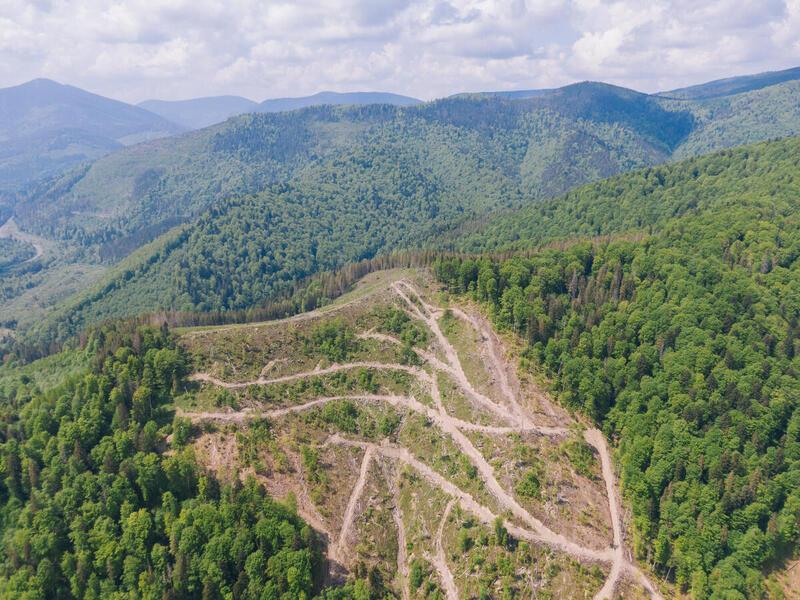
This is one of the most important and complex issues.
Several different concepts need to be distinguished from the outset:
- Legal timber harvesting;
- Illegal logging;
- Sanitary logging;
- Selective logging;
- Clear-cutting;
- Forest degradation;
- Fragmentation of forest ecosystems.
Not every logging operation is illegal. Forestry can be necessary for the economy, timber supplies and the management of certain types of forest stands.
But the fact that logging is legal does not automatically mean that it is ecologically appropriate.
Conversely, the absence of an obvious clear-cut on a satellite image does not prove that a forest has not been damaged.
8.1. What scientific research shows
In 2020, the scientific journal Forests published a study by British researchers Benedict and Dominic Spracklen entitled Old-Growth Forest Disturbance in the Ukrainian Carpathians.
The researchers analysed satellite images from 2010 to 2019 and assessed disturbances in old-growth forests in the Ukrainian Carpathians.
According to the study, 1,335 hectares of old-growth forest disturbance were detected during this period. This represented approximately 1.8% of the old-growth forest area examined in the region.
The average annual disturbance rate during 2015–2019 was 0.34%.
The study also found that disturbance levels within protected areas were seven to eight times lower than outside them.
This is an important finding.
It demonstrates that protected status and effective oversight can have a significant positive impact.
At the same time, it shows that old-growth forests outside protected areas remain vulnerable.
It is important to note that the study covered a specific period, from 2010 to 2019. It cannot be used as an exact description of the condition of all Carpathian forests in 2026.
8.2. What monitoring in 2024–2025 revealed
In January 2026, the Ukrainian non-governmental organisation ForestCom presented the results of a two-year monitoring project covering forests in the Carpathian region.
The research combined satellite analysis with field inspections.
According to the published results:
- Satellite data identified 2,744 areas showing changes in forest cover;
- Signs of illegal logging were recorded at 33 of the 152 sites inspected by experts in the field;
- The estimated damage caused by the identified illegal logging amounted to approximately UAH 6.97 million;
- Evidence concerning the 33 cases was submitted to the State Environmental Inspectorate and law enforcement agencies;
- According to ForestCom, only seven criminal proceedings had been opened.
These figures need to be interpreted correctly.
The 2,744 areas showing changes in forest cover do not represent 2,744 proven cases of illegal logging. Changes can have different causes, ranging from forestry operations to natural disturbances.
Likewise, the 33 cases showing signs of illegal logging refer specifically to sites inspected in the field, not to all changes detected by satellite monitoring.
This was a study conducted by a non-governmental organisation, not a complete state census of all Carpathian forests.
Nevertheless, its findings highlight an important problem: there is a significant gap between detecting violations, submitting evidence and obtaining an effective legal response.
8.3. Why illegal logging is only part of the problem
Focusing exclusively on illegal logging would be misleading.
Even legal timber harvesting can cause significant damage if it:
- Takes place on unstable slopes;
- Destroys the natural structure of old-growth forests;
- Creates large open areas;
- Involves the construction of new roads;
- Disturbs mountain stream channels;
- Destroys important habitats of rare species;
- Breaks up ecological corridors.
The combination of logging and poorly designed forest road construction is particularly dangerous.
A road changes natural water runoff, can cut across a slope, disturb soil layers and create additional pathways for erosion.
Therefore, the impact on a forest must be assessed not only by the number of trees felled, but also by how the entire ecosystem has changed.
8.4. Sanitary logging: a necessity or an opportunity for abuse?
Sanitary logging is carried out to remove trees that have died, been damaged or become infected by diseases or pests.
In certain circumstances, it may be necessary.
However, problems arise when healthy trees are removed under the guise of sanitary measures or when excessive logging takes place in areas of high conservation value.
Scientific studies of old-growth forests in the Ukrainian Carpathians have specifically drawn attention to the risk of abuses involving sanitary logging.
This does not mean that all sanitary logging is a cover for illegal activity.
It does mean that independent expert assessments, open documentation, on-site inspections and public access to information are essential.
8.5. Why it is important to look beyond the number of trees and consider forest quality
Imagine two areas of equal size.
The first contains a natural, uneven-aged forest with beech, fir and sycamore maple, old trees, young growth and deadwood.
The second is an even-aged plantation consisting of a single tree species.
On a satellite image, both areas may look like green forest landscapes.
But their ecological value, resistance to drought, ability to support biodiversity and capacity to maintain soil processes may differ substantially.
That is why the total area of forest cover does not provide a complete answer to the question of what condition the Carpathians are in.
9. WHAT HAPPENS WHEN MOUNTAIN FORESTS ARE CLEARED?
9.1. Disruption of the water regime
Forests influence how water enters the soil and how quickly it flows into rivers.
After logging, the conditions for rainfall interception by tree canopies change, as do the state of the forest litter and the properties of the upper soil layer.
If roads are also built, slopes disturbed and the ground surface compacted, water may become concentrated in streams more quickly.
This increases the risk of local surface runoff, erosion and the silting of watercourses.
However, it is important not to oversimplify the issue: forests cannot completely stop extreme flooding caused by prolonged or exceptionally intense rainfall.
Their role is to reduce some of the risks and maintain the natural ability of the landscape to regulate water.
9.2. Floods: why neither rainfall nor logging alone should be blamed
The Carpathians are naturally prone to flooding.
The reasons include mountainous terrain, steep slopes, geological structure, the characteristics of river valleys and intense precipitation.
However, human activity can change the scale of the consequences.
Factors affecting flood risk include:
- Deforestation;
- Soil compaction;
- Road construction;
- Building in floodplains;
- Straightening river channels;
- Destruction of natural riverbanks;
- Development within catchment areas;
- Inadequate maintenance of hydraulic structures.
Therefore, it is incorrect to claim that every flood in the Carpathians is caused by logging.
But it is equally wrong to ignore the impact of human activity on the ability of mountain landscapes to absorb and drain water.
9.3. Landslides and debris flows
The Carpathians have a complex geological structure, and some slopes consist of rock formations that are particularly susceptible to failure.
In 2026, the journal Landslides published a study examining geological and tectonic factors contributing to landslide hazards in the Outer Carpathians of Ukraine.
The authors confirmed the important role of geological structures, fault zones and rock characteristics in landslide formation.
At the same time, the study noted that human activities — including deforestation, urbanisation and infrastructure development — can increase the susceptibility of certain areas to landslides.
This is an important distinction: landslides have natural causes, but human activity can create additional conditions that trigger or intensify them.
9.4. Destruction of biodiversity
When an old forest is cut down, it is not only the trees that disappear.
The habitats of many organisms are destroyed or altered.
Animals may lose:
- Nesting sites;
- Feeding grounds;
- Shelter;
- Breeding areas;
- Natural movement routes.
For rare species, this can be critical.
It is particularly dangerous when individual forest areas become isolated islands surrounded by roads, buildings and open land.
9.5. Loss of the forest’s natural ability to regenerate
An old natural forest has a complex internal structure.
It contains different generations of trees, natural gaps, deadwood, microhabitats and soil processes that have developed over decades and centuries.
After large-scale disturbance, this structure can be lost.
Even if new trees are planted on a cleared site, that does not mean the original primeval forest will return.
Young plantations can restore some forest functions, but they cannot quickly recreate the original complexity and biodiversity of an ancient natural forest.
10. HOW CLIMATE CHANGE IS TRANSFORMING THE CARPATHIANS
Deforestation is not the only threat.
Carpathian forests are already experiencing the effects of climate change.
The main processes include:
- Rising average temperatures;
- Changes in precipitation patterns;
- More frequent or prolonged periods of drought in certain seasons;
- Changes in the elevation ranges of tree species;
- Increased risks of pest damage to forest stands;
- Changes in the water balance;
- Changes in the conditions for natural forest regeneration.
10.1. Why spruce monocultures are particularly vulnerable
Spruce is naturally adapted to certain climatic and elevation conditions.
However, in the past it was often planted in areas where the natural forests had a different species composition.
This resulted in large, uniform stands.
When such forests are exposed to drought, windthrow or mass outbreaks of bark beetles, damage can spread rapidly.
This does not mean that all spruce forests are doomed.
Natural spruce forests growing within their appropriate elevation zones are important ecosystems.
The problem lies in the large-scale creation of even-aged plantations outside the species’ natural distribution conditions.
10.2. Which forests may be more resilient in the future?
The review study Carpathian Forests: Past and Recent Developments, published in 2024, analysed 251 scientific papers on the history, current condition and future of Carpathian forests.
The authors concluded that broadleaf tree species are likely to become more important in many parts of the Carpathians.
They also emphasised the importance of maintaining beech forests and mixed beech–fir forests.
Such stands may provide greater ecological stability, biodiversity and economic resilience under changing climatic conditions.
However, there is no universal solution for all mountain areas.
Forest restoration must take into account elevation, soil conditions, natural species composition, water regimes and local climatic conditions.
11. THE HISTORICAL AND CULTURAL SIGNIFICANCE OF CARPATHIAN FORESTS
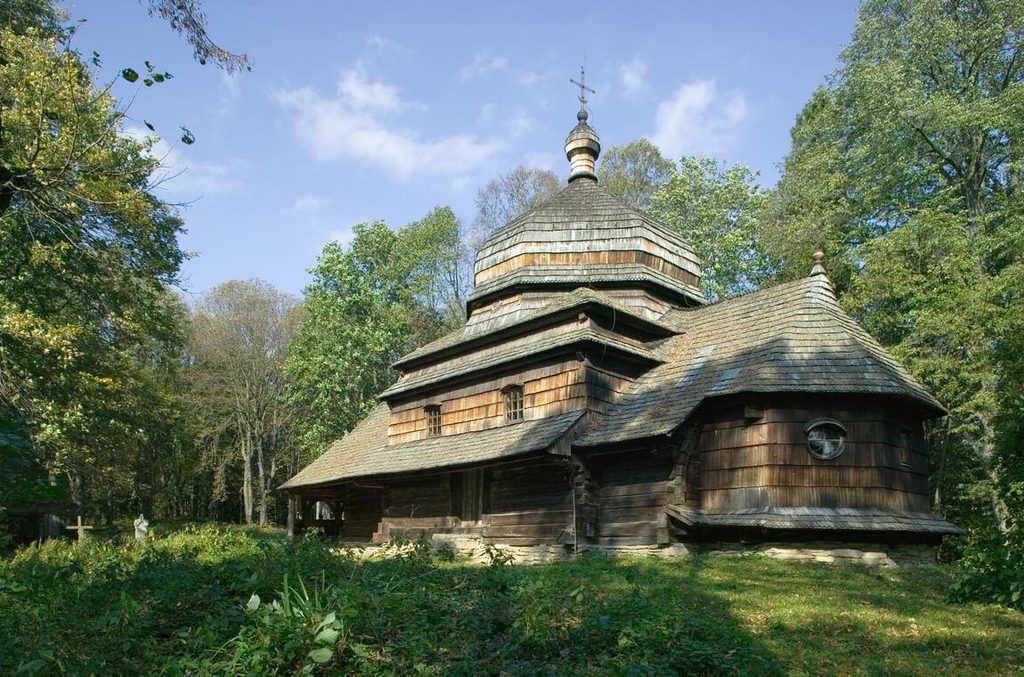
The Carpathians are not only a natural environment. They are also a region shaped by human history, traditions, crafts and cultural heritage.
11.1. Forests as the foundation of life in mountain communities
For centuries, forests provided Carpathian residents with:
- Timber for building homes;
- Materials for farm buildings;
- Fuel;
- Raw materials for crafts;
- Fodder and forest fruits;
- Natural resources for traditional livelihoods.
Wood was used to build churches, houses, bridges, farm buildings and everyday household items.
Woodworking crafts, cooperage, carving and the production of wooden tools held a particularly important place in local life.
11.2. Boykos, Hutsuls and Lemkos: cultures shaped by the mountains
Different ethnocultural communities developed historically in the Carpathians, among which the Hutsuls, Boykos and Lemkos hold a special place.
Their traditions reflect adaptation to the mountain environment.
Wooden architecture, mountain pasture farming, traditional livestock husbandry, crafts, music, rituals and local knowledge of nature are all part of the region’s cultural heritage.
The forest was not merely a source of material resources; it was also part of the local worldview.
Mountains, trees, springs, mountain meadows and particular natural places held symbolic and spiritual significance.
11.3. Timber rafting and the history of forest industries
In the past, timber from mountain areas was transported along rivers.
Rafts and special structures were used to control and guide the movement of timber downstream.
Rafting was dangerous and physically demanding work that required specialised knowledge of currents, water levels and the characteristics of river channels.
Today, historical evidence of timber rafting is preserved in museums, archives and local cultural memory.
It is an important part of the history of economic development in the Carpathians.
But it also reminds us how profoundly the timber industry transformed natural landscapes.
11.4. Wooden churches and architectural heritage
The Carpathian region is renowned for its wooden religious architecture.
Wood was not simply a building material; it was the foundation of a distinctive local architectural tradition.
The wooden churches of the Carpathian region have exceptional historical and cultural value. Some of them are included on the UNESCO World Heritage List.
This is another example of how forest nature and human culture have shaped a shared regional heritage.
12. CAN THE CARPATHIANS DISAPPEAR?
No, the mountains will not disappear because trees are cut down.
But they can lose part of their natural integrity.
Individual primeval forests may disappear, populations of rare animals may decline, forest species composition may change, soils may degrade and natural water processes may be disrupted.
The most dangerous aspect is that these changes can accumulate gradually.
There does not necessarily have to be one major catastrophe after which everyone suddenly understands the scale of the problem.
A much more likely scenario is the gradual deterioration of individual areas, becoming visible only when some of their natural functions are already difficult to restore.
12.1. Scenario One: responsible management and restoration
With effective oversight, the protection of primeval forests and a transition to ecologically sound forestry, the Carpathians can preserve their natural value.
This requires:
- Expanding protected areas where scientifically justified;
- Ensuring the effective protection of primeval and old-growth forests;
- Restoring natural species composition;
- Reducing forest fragmentation;
- Controlling road construction;
- Introducing transparent monitoring of logging;
- Supporting local communities;
- Developing environmentally responsible tourism.
This scenario does not mean completely abandoning the use of timber.
It means that economic activity must respect the ecological limits of the mountain system.
12.2. Scenario Two: gradual degradation
If intensive logging, illegal activities, uncontrolled construction and inadequate oversight continue, some natural forests may lose their structure.
Possible consequences include:
- A reduction in the area of old-growth forests;
- Isolation of animal populations;
- The spread of unstable even-aged plantations;
- Increased erosion;
- Degradation of mountain soils;
- Deterioration of water quality;
- Higher costs of restoring damaged areas.
This does not mean that every logged site will necessarily experience a landslide or flood.
The issue is the cumulative increase in risk and the declining ability of natural systems to withstand extreme events.
12.3. Scenario Three: climate pressure and declining resilience
Even with proper management, the Carpathians will not remain unchanged.
Climate will continue to influence the distribution of tree species, the length of seasons, the water balance and the frequency of natural disturbances.
Some species may gradually shift to higher elevations or lose part of their suitable habitats.
Conditions for spruce forests, mountain meadows and high-altitude ecosystems will change.
The task for the future is therefore not to freeze the Carpathians in one particular state, but to preserve their ability to adapt naturally to change.
13. WHAT NEEDS TO BE DONE TO PROTECT THE CARPATHIANS
13.1. Strengthen the protection of primeval and old-growth forests
The most valuable natural areas must receive appropriate protected status.
But protected status alone is not enough.
Clearly defined protected-area boundaries, control over economic activity, independent monitoring and accountability for violations are essential.
13.2. Make information about logging publicly available
The public and independent experts must have access to information about:
- Logging locations;
- Permits and authorisation documents;
- The size of logging areas;
- Types of logging operations;
- Inspection results;
- Volumes of harvested timber;
- Detected violations;
- The outcomes of investigations.
Open data make it possible to scrutinise decisions made by forest users and identify violations before they develop into large-scale problems.
13.3. Control forest roads and construction
A new road in the mountains is not simply a transport convenience.
It can alter the water regime of a slope, provide access to previously inaccessible forest areas and create additional pressure on nature.
That is why every infrastructure project must undergo an appropriate environmental assessment.
This is particularly important in areas of high conservation value and on unstable slopes.
13.4. Move towards close-to-nature forestry
Modern forest management must take the natural structure of forests into account.
This means:
- Preserving uneven-aged stands;
- Supporting natural regeneration;
- Conserving mixed forests;
- Using native tree species;
- Retaining deadwood where it is safe and ecologically appropriate;
- Minimising soil disturbance;
- Limiting clear-cutting on vulnerable slopes.
The goal is not simply to grow the next generation of timber, but to preserve a functioning forest ecosystem.
13.5. Support local communities
Protecting the Carpathians cannot succeed if local residents see conservation restrictions only as a loss of opportunities to earn a living.
Communities must be able to gain economic benefits from nature conservation.
This can include:
- Responsible tourism;
- Local environmental services;
- Value-added timber processing;
- Traditional crafts;
- Support for local producers;
- Nature-based entrepreneurship;
- Environmental education.
Forest conservation must be not only an obligation, but also an economically viable model for the people who live there.
13.6. Fulfil international commitments
Ukraine is a Party to the Framework Convention on the Protection and Sustainable Development of the Carpathians.
The Protocol on Sustainable Forest Management is also in force and provides for cooperation among countries in the Carpathian region.
This matters because natural processes do not stop at national borders.
Protecting ecological corridors, monitoring biodiversity, managing river basins and conserving forests all require international coordination.
14. THE CARPATHIANS ARE NOT A RESOURCE THAT CAN BE RESTORED WITHIN A SINGLE BUDGET YEAR
Forests have economic value.
Timber is needed by people, the construction industry, manufacturing and local communities.
But natural forests have another kind of value that cannot be fully measured by the price of a cubic metre of timber.
This value includes clean water, soil stability, biodiversity, carbon storage, erosion protection, the conservation of rare species and the preservation of natural landscapes.
This is particularly true of primeval forests.
A tree can be planted in a single day. But developing a complex natural forest ecosystem takes decades and sometimes centuries.
Even well-organised forest restoration cannot quickly bring back all the functions of a destroyed primeval forest.
That is why the best strategy is to prevent the loss of the natural areas that still remain.
CONCLUSION. THE CARPATHIANS ARE A SHARED HERITAGE FOR WHICH WE ARE ALL RESPONSIBLE
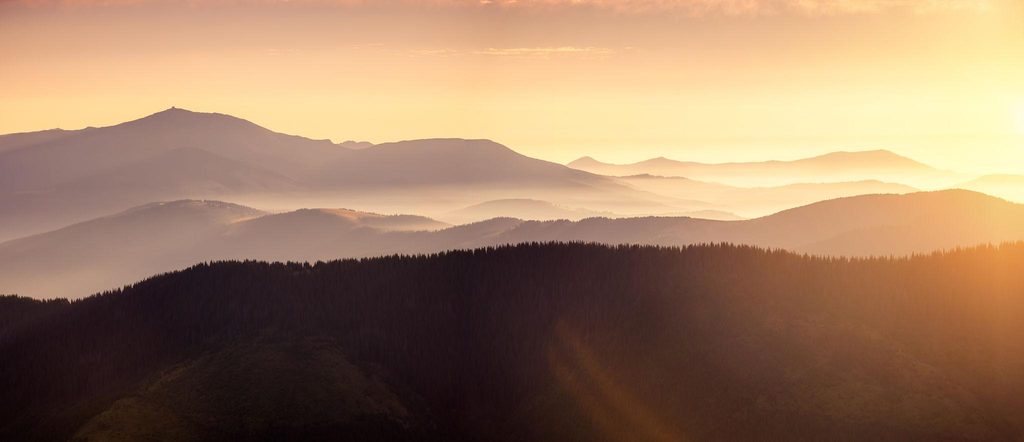
The Carpathians are much more than beautiful mountains on tourist postcards.
They are the result of millions of years of geological history, thousands of years of natural forest development and centuries of interaction between people and the mountain environment.
Primeval forests of global significance have survived here. Large predators, rare birds, amphibians and numerous plant species live here. Rivers begin here, carrying water that connects Ukraine with other European countries.
Carpathian forests protect soils, influence water regimes, store carbon and support natural balance.
But this system is not invulnerable.
Excessive human intervention, illegal logging, poorly designed infrastructure, forest fragmentation and climate change are creating threats that cannot be postponed.
At the same time, it is important not to reduce this issue to a simplistic conflict between people and nature. Carpathian communities have lived alongside forests and used their resources for centuries. The question is whether this use will be responsible, transparent and based on sound scientific principles.
Ukraine needs forestry, jobs and community development. But all of this must take place within limits that do not destroy the natural foundations of the region itself.
The Carpathians do not belong solely to the tourism industry, forestry enterprises, local communities or the state. They are part of a natural heritage that we have inherited from previous generations and must pass on to those who come after us.
There is a simple but important thought here: if we assess the Carpathians today only by the amount of timber that can be extracted from them, tomorrow we may discover that we have lost far more than we gained.
Protecting the Carpathians means protecting not only trees. It means protecting water, soils, animals, plants, history, culture and the natural resilience of an entire part of Ukraine.
SOURCES AND SCIENTIFIC RESEARCH
The following sources were used in preparing this article. Priority was given to scientific publications, international organisations, Ukrainian research institutions and materials from environmental monitoring projects.
Geology and the natural history of the Carpathians
- Encyclopedia of Ukraine — Carpathian Mountains. Geological structure, mountain formation, natural features and biodiversity.
https://www.encyclopediaofukraine.com/display.asp?linkpath=pages\C\A\CarpathianMountains.htm - Hnylko O. M. et al. — Tectonic and structural control of landslide hazards in the Outer Carpathian Mountains, Ukraine. Journal Landslides, 2026.
https://doi.org/10.1007/s10346-026-02820-y - Hnylko O. M., Hnylko S. R. — Tectono-sedimentary evolution of the Dukla Nappe, Ukrainian Carpathians. Geological Journal, 2024.
https://doi.org/10.30836/igs.1025-6814.2024.4.299015 - Kovalchuk I., Kravchuk Y., Mykhnovych A., Pylypovych O. — Recent Landform Evolution in the Ukrainian Carpathians. Springer, 2012.
Forests, primeval forests and changes in forest ecosystems
- Kholiavchuk D., Gurgiser W., Mayr S. — Carpathian Forests: Past and Recent Developments. Forests, 2024, 15(1), 65.
https://doi.org/10.3390/f15010065 - Spracklen B. D., Spracklen D. V. — Old-Growth Forest Disturbance in the Ukrainian Carpathians. Forests, 2020, 11(2), 151.
https://doi.org/10.3390/f11020151 - Swiss Federal Institute for Forest, Snow and Landscape Research (WSL) — Primeval forest structures and biodiversity: A Swiss-Ukrainian research cooperation.
https://www.wsl.ch/en/forest/biodiversity-conservation-and-primeval-forests/primeval-forests/ - German Environment Agency — History of Research and Protection of Old-Growth and Virgin Forests in the Ukrainian Carpathians.
https://www.umweltbundesamt.de/ - ForestCom — Results of a two-year comprehensive monitoring of the forests of the Carpathian region, 2026.
https://forestcom.org.ua/en/news-post/two-year-comprehensive-monitoring-forests - ForestCom — Monitoring changes in old-growth forests in the Ukrainian Carpathians, 2024.
https://forestcom.org.ua/en/news-post/monitoring-report-old-growth-forests-changes-carpathians-may-2024 - Drebot O., Kostiuk V., Sakharnatska L. — Use of satellite data and GIS in land cover change monitoring. 2025.
https://doi.org/10.33730/2310-4678.4.2025.346196 - Korinets Y. et al. — Changes in the properties of mountain forest soils in the mixed beech forest zone of the Ukrainian Carpathians under the influence of water erosion. 2024.
https://doi.org/10.31734/agronomy2024.28.027
Biodiversity and protected natural areas
- UNESCO World Heritage Centre — Ancient and Primeval Beech Forests of the Carpathians and Other Regions of Europe.
https://whc.unesco.org/en/list/1133/ - UNESCO — Decision concerning the inscription of the Carpathian beech primeval forests on the World Heritage List.
https://whc.unesco.org/en/decisions/1314/ - Carpathian National Nature Park — Flora.
https://karpatskyi-park.in.ua/en/for-explorers/nature/4052-2/ - Carpathian National Nature Park — Fauna.
https://karpatskyi-park.in.ua/en/for-explorers/nature/fauna/ - An annotated nomenclatural checklist of endemic vascular plants distributed in the Ukrainian Carpathians. Scientific publication available through PubMed Central.
https://pmc.ncbi.nlm.nih.gov/articles/PMC10848708/ - Council of Europe — Carpathian Biosphere Reserve, materials relating to the Bern Convention.
https://www.coe.int/en/web/bern-convention/ukraine
International protection of the Carpathians
- Ministry of Environmental Protection and Natural Resources of Ukraine / State Forest Resources Agency — materials on the Carpathian Convention.
https://forest.gov.ua/en/areas-activity/international-cooperation/carpathian-convention - Framework Convention on the Protection and Sustainable Development of the Carpathians.
- Protocol on Sustainable Forest Management to the Carpathian Convention.
Editorial note: The monitoring figures cited in this article relate to specific studies and time periods. They should not be interpreted as a complete statistical account of all forests in the Ukrainian Carpathians. Likewise, natural floods, landslides and changes in forest cover have multiple causes. This article distinguishes between scientifically supported facts, findings from individual monitoring projects and forecasts concerning the future of the region.