
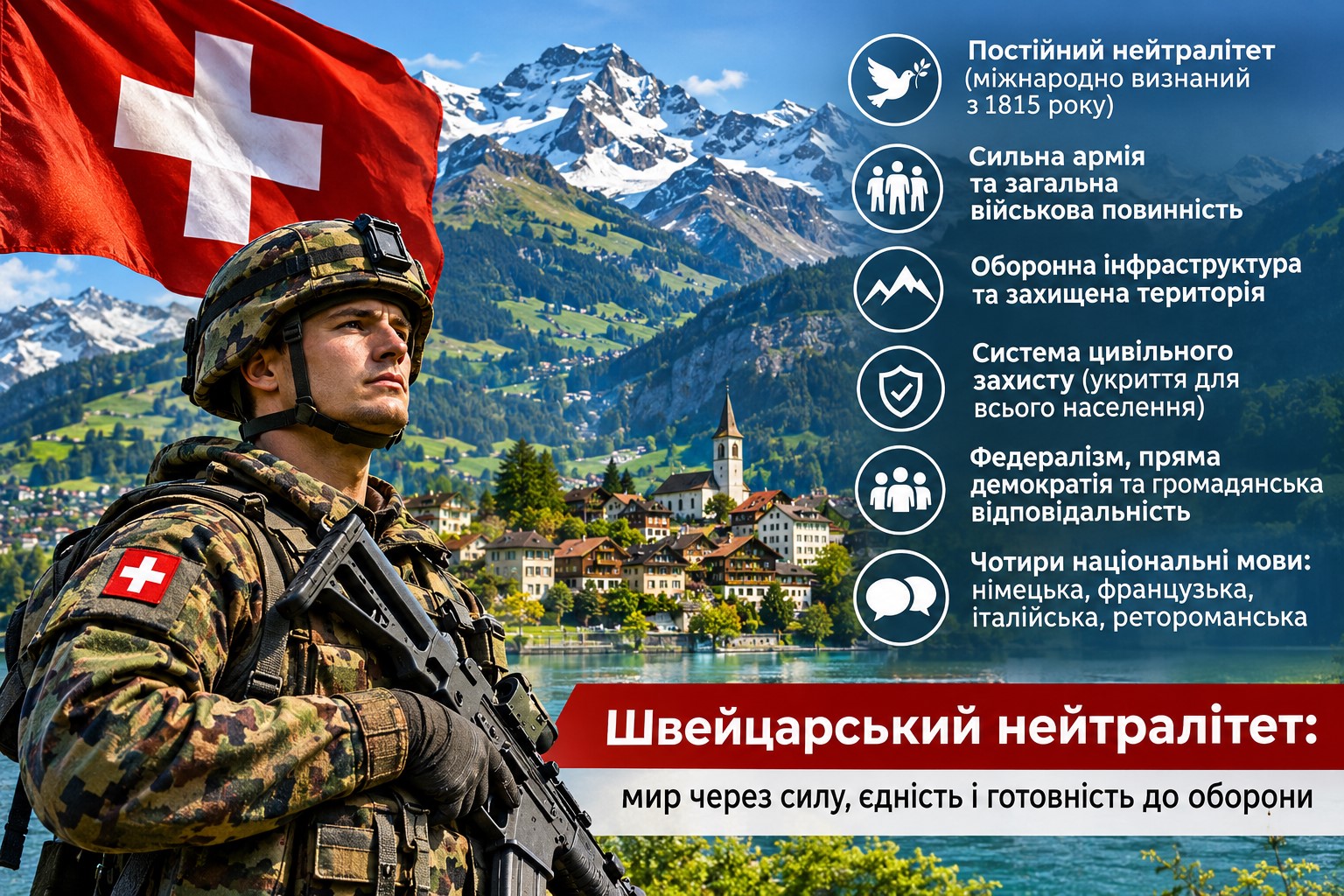
Switzerland is one of the countries most frequently mentioned in discussions about Ukraine’s possible future neutral status. It is held up as an example: four national languages, no NATO membership, centuries of independence, a high standard of living, and relative security. This leads to a seemingly simple conclusion: if Switzerland has managed to build a successful state based on neutrality, why can’t Ukraine do the same?
But this argument overlooks the most important point. Swiss neutrality is not synonymous with being defenceless, abandoning the armed forces, or having a guarantee that other states will automatically respect the country’s independence. It is a complex historical, political, legal, and military model that has evolved over centuries.
Switzerland did not simply declare itself neutral and start living in peace. It built its own system of statehood, developed strong defence institutions, maintained political unity within a multilingual society, and established a deterrence system designed to make any attack on the country prohibitively costly and risky.
To understand whether the Swiss experience can serve as a model for Ukraine, it must be examined without romanticising it — from the emergence of the Swiss Confederation and the development of its neutrality to its modern armed forces, civil protection system, language policy, and actual security mechanisms.
1. How Switzerland emerged: statehood built around neither a single nation nor a single language
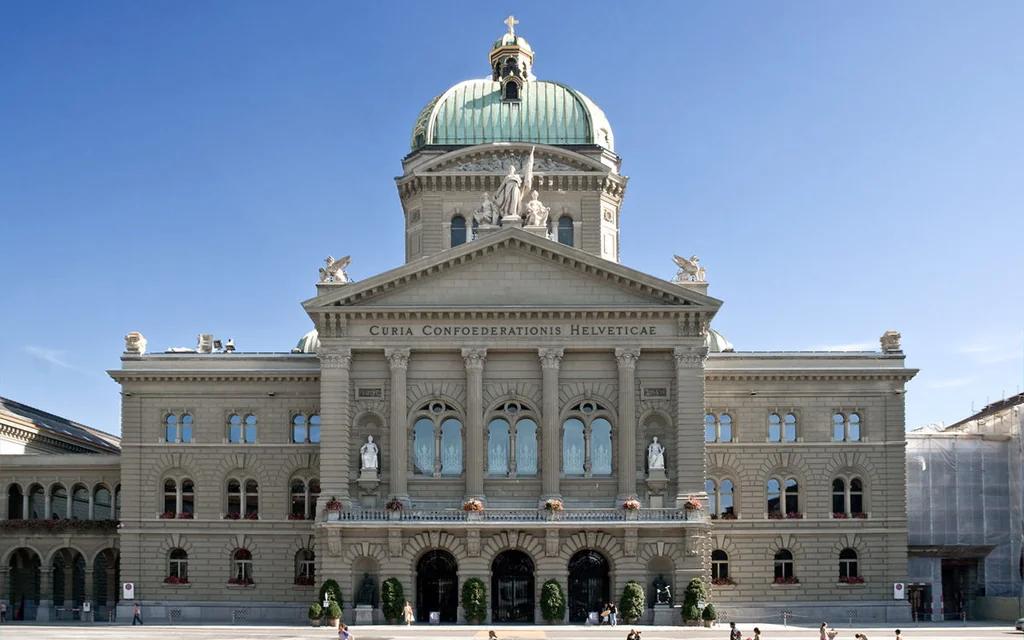
The history of modern Switzerland began long before its neutrality was officially recognised.
The Federal Charter of 1291 is traditionally regarded as the starting point of Swiss state history. In early August, three Alpine communities — Uri, Schwyz, and Unterwalden — entered into an alliance, pledging to support one another in the event of an external threat, resist violence, and resolve internal disputes according to agreed rules.
The document established more than just mutual military assistance. It set out principles of shared responsibility, justice, and conflict resolution between the communities.
An important clarification is needed: the Federal Charter of 1291 was officially regarded as the founding document of the Swiss Confederation only towards the end of the nineteenth century. In other words, the modern national tradition was built around a sense of historical continuity; it did not emerge fully formed in the thirteenth century.
Over the following centuries, the Confederation expanded. New territories, cities, and cantons joined it. Switzerland did not, however, develop as a centralised state with a single language, culture, or ethnic origin.
On the contrary, its territory historically lay at the crossroads of Germanic, Romance, and Italian cultural spheres.
1848: the birth of the modern federal state
A crucial period in Swiss history was 1798–1848. During these years, Switzerland experienced French intervention, political transformations, a struggle between supporters of centralisation and cantonal autonomy, and the internal conflict of 1847 known as the Sonderbund War.
In 1848, the Federal Constitution was adopted, establishing the modern Swiss federal state.
It introduced:
- a federal system of government;
- a division of powers between the Confederation, cantons, and communes;
- federal political institutions;
- representative democracy;
- principles of civil rights;
- mechanisms for public participation in decision-making.
Switzerland became a federation in which the cantons retained substantial autonomy while agreeing to share common state institutions and rules.
This is a fundamental feature of the Swiss model: its unity is based not on the forced linguistic or ethnic homogenisation of society, but on shared political rules, federalism, citizenship, and institutions.
That is why Switzerland is often described as a Willensnation — a nation formed by political will, meaning a community of people united not necessarily by ancestry or language, but by their decision to live together in one state.
At the same time, this process should not be idealised. Modern Swiss national identity developed gradually, and different regions and social groups did not always enjoy equal political rights. For example, women gained the right to vote at the federal level only in 1971.
Thus, Swiss statehood is the result of a long process of political development, compromise between cantons, and the creation of common institutions.
2. When and why Switzerland became neutral
Swiss neutrality did not emerge overnight, nor was it the result of an agreement with one particular state.
Its historical roots are associated with military conflicts in Europe, the country’s geographical position, and the experience of the Swiss cantons in international wars.
1515: a defeat that influenced foreign policy
One of the important dates in the history of Swiss neutrality is the Battle of Marignano in 1515.
Swiss forces were defeated by the French army. This event marked a turning point in the Confederation’s expansionist foreign policy.
Afterwards, Switzerland gradually moved away from active participation in major European military campaigns.
However, it would be inaccurate to claim that neutrality was officially proclaimed in 1515. This was the historical beginning of a gradual shift in political direction.
The Thirty Years’ War and 1648
In the seventeenth century, Europe was engulfed by the Thirty Years’ War of 1618–1648. Religious, political, and territorial disputes devastated large parts of Central Europe.
The Swiss Confederation managed to remain outside direct participation in this conflict.
In 1647, the Swiss Confederates formally recorded principles of neutrality. After the war, the Peace of Westphalia in 1648 finally confirmed Switzerland’s international recognition as independent from the Holy Roman Empire.
However, the international recognition of Switzerland’s neutrality itself came later.
1815: international recognition of neutrality
The decisive stage came with the Congress of Vienna of 1814–1815, which redrew the political map of Europe after the Napoleonic Wars.
On 20 March 1815, the major European powers recognised Switzerland’s perpetual neutrality and guaranteed respect for it. This status was confirmed by the Treaty of Paris of 1815.
From that point on, neutrality became an important element of Switzerland’s internationally recognised status.
But one crucial detail must be emphasised: Switzerland received international recognition of its neutrality not as a substitute for statehood, but as an already established political community with its own territory, institutions, and interests.
International recognition of neutrality did not create Switzerland. It confirmed the country’s special foreign policy status.
3. What Swiss neutrality actually means
Swiss neutrality has both legal and political dimensions.
It is important to distinguish between:
- The international law of neutrality — which defines a state’s rights and obligations during an international armed conflict.
- The policy of neutrality — which determines how a state conducts its international relations in order to maintain confidence in its neutral status.
- Permanent neutrality — a commitment not to participate in wars between other states and not to join military alliances that could draw the country into such conflicts.
The main international legal rules governing neutrality are set out in the 1907 Hague Conventions.
A neutral state must:
- refrain from participating in wars between other states;
- refrain from providing military assistance to one of the parties to a conflict;
- prevent its territory from being used for military operations;
- observe impartiality towards belligerent parties in matters governed by the law of neutrality;
- protect the inviolability of its own territory.
There is, however, an important nuance: neutrality does not mean political indifference to international events.
Switzerland may condemn violations of international law, participate in international organisations, impose economic restrictions, and support humanitarian initiatives, provided these actions do not conflict with its international legal obligations.
Switzerland is not required to remain silent about aggression
Following Russia’s full-scale invasion of Ukraine in 2022, Switzerland joined a substantial part of the European Union’s sanctions against Russia.
This became the subject of domestic debate about the limits of neutrality.
However, the Swiss authorities explain that economic sanctions do not, in themselves, constitute participation in a war and do not automatically violate the international law of neutrality.
Switzerland also supports humanitarian initiatives, provides assistance to Ukraine, and participates in international diplomatic processes.
At the same time, it is not a NATO member, but it cooperates with the Alliance through the Partnership for Peace programme, particularly in the areas of training, interoperability, and security dialogue.
Switzerland joined the Council of Europe in 1963 and became a member of the United Nations in 2002.
In other words, Swiss neutrality does not mean isolationism. The country actively cooperates with international institutions but does not undertake military alliance obligations that would conflict with its permanent neutral status.
4. The main guarantee of neutrality: the ability to defend it by force
This is where the most important part of the Swiss experience begins — a part that is often overlooked in discussions about Ukraine.
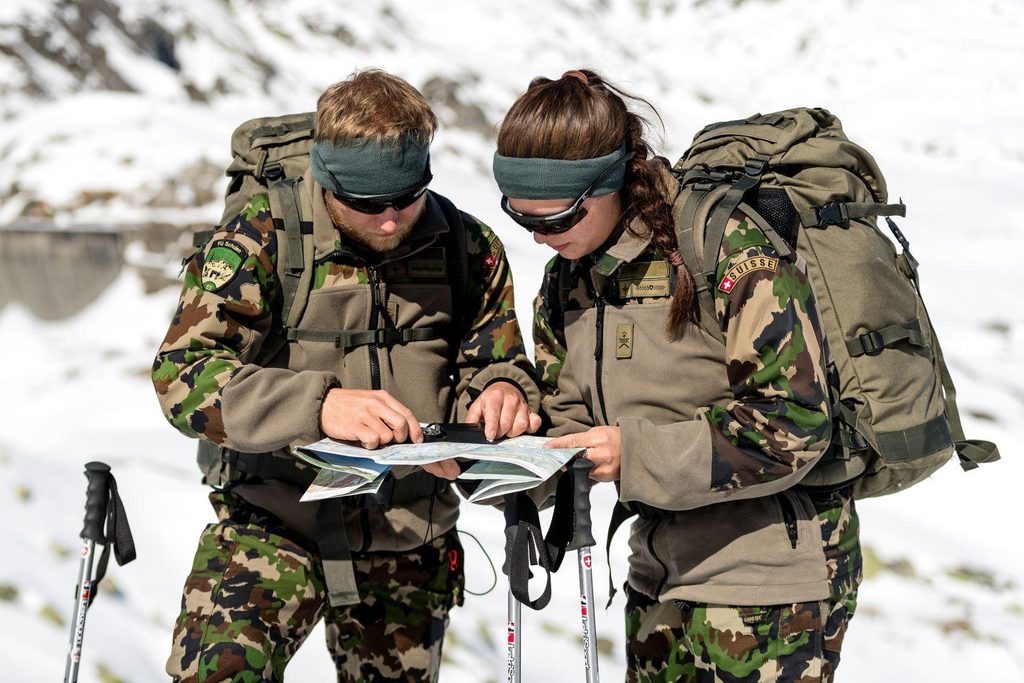
Swiss neutrality is commonly described as armed neutrality.
This means that the state does not simply declare that it has no intention of participating in other countries’ wars. It maintains its own armed forces and prepares to defend its territory, population, and independence.
Neutral status does not abolish the right to self-defence. On the contrary, the ability to repel an attack is an important condition for making neutrality effective in practice.
The Swiss security model is based on the idea that any potential aggressor must understand that an invasion of Swiss territory would not encounter an unarmed population or a defenceless state.
Why Switzerland has an army
The Swiss Armed Forces have a long history, but the modern national army emerged as part of the country’s political unification.
Before that, defence depended primarily on individual cantons and cities. After the creation of the modern federation, there was a need to establish a common army capable of defending the entire country.
Since then, national defence has become one of the central responsibilities of the state.
The Swiss army has several distinctive features:
- a militia-based system of recruitment;
- compulsory military service for men;
- regular training exercises;
- a substantial reserve of trained personnel;
- a developed territorial defence system;
- integration of military and civilian security.
How many military personnel does Switzerland have?
According to the official Swiss Army count as of 1 March 2026:
- the authorised army strength was approximately 100,427 personnel;
- the actual recorded strength was 147,017 service members;
- a further approximately 20,000 recruits were counted separately, as they were still undergoing initial training and had not yet been included in the main force.
These figures do not mean that all 147,000 personnel are permanently on active duty or could be deployed simultaneously in combat formations. They reflect a recruitment and personnel system in which a substantial proportion of the armed forces consists of reservists.
For comparison, Switzerland has a population of approximately nine million. Even this relatively small country therefore maintains a large-scale system of military training and reserves.
Universal military service
Under the Swiss Constitution, male citizens are required to perform military service.
Women may serve voluntarily and have equal status within the military service system, but compulsory service does not apply to them.
After reaching conscription age, men undergo selection and military training. Following their initial training, service members return to civilian life but are required to attend periodic refresher courses over the following years.
Under the Swiss system, a service member may be an entrepreneur, engineer, doctor, programmer, or public-sector employee. Nevertheless, they remain part of the country’s defence system and are required to maintain their military readiness.
This is fundamentally different from an army made up exclusively of professional soldiers.
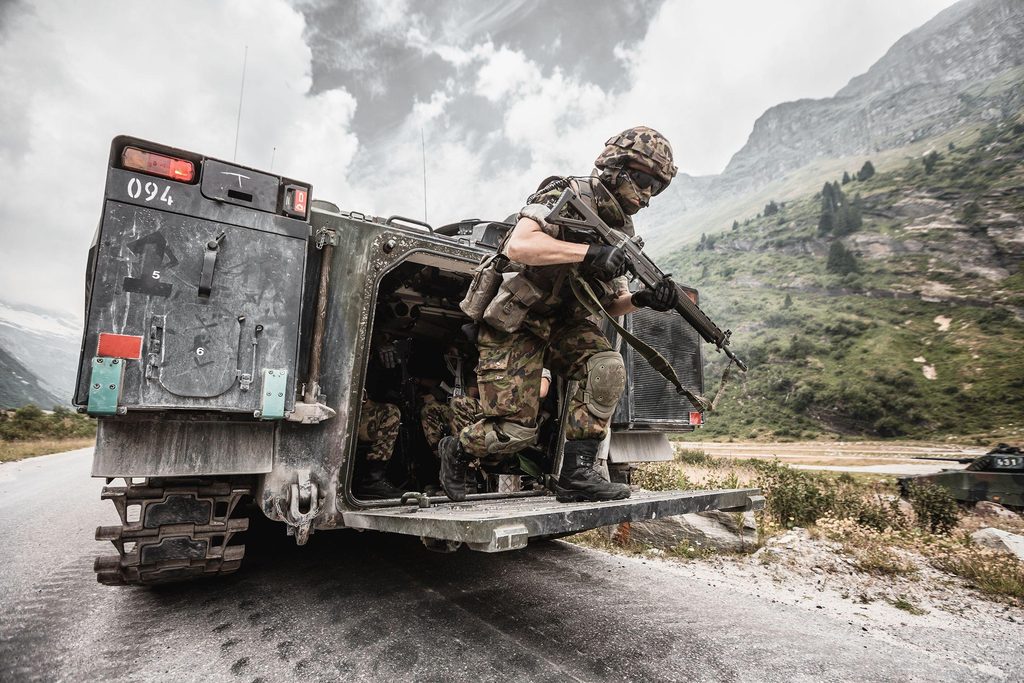
The army as part of society
In Switzerland, military service has historically been regarded as an element of civic responsibility.
Military personnel regularly appear in public wearing uniforms, take part in training exercises, and participate in shooting drills.
This does not mean that the entire population consists of professional soldiers. However, a significant proportion of the male population has military training experience and understands the principles of mobilisation.
Military readiness is not limited to the moment a war begins. It is maintained systematically.
5. Swiss defence: not just soldiers, but territory, fortifications, and civil protection
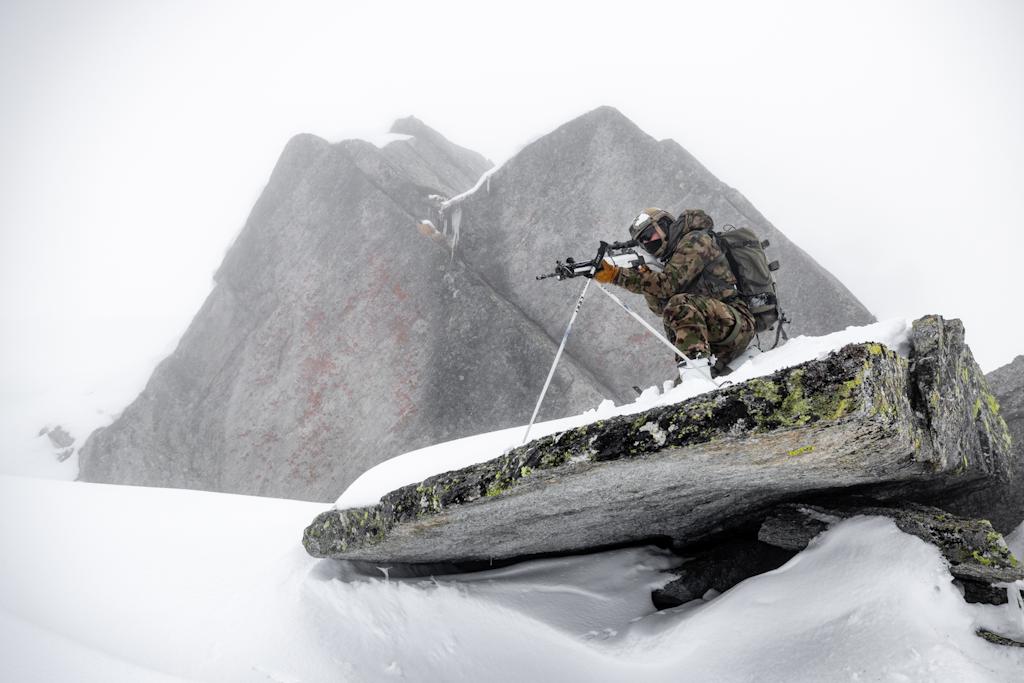
Switzerland is a mountainous country. Its geography has historically influenced military planning.
The Alps create natural obstacles to the movement of large military formations. Mountain passes, tunnels, narrow valleys, and transport corridors are of strategic importance.
Swiss defence doctrine has taken these characteristics into account.
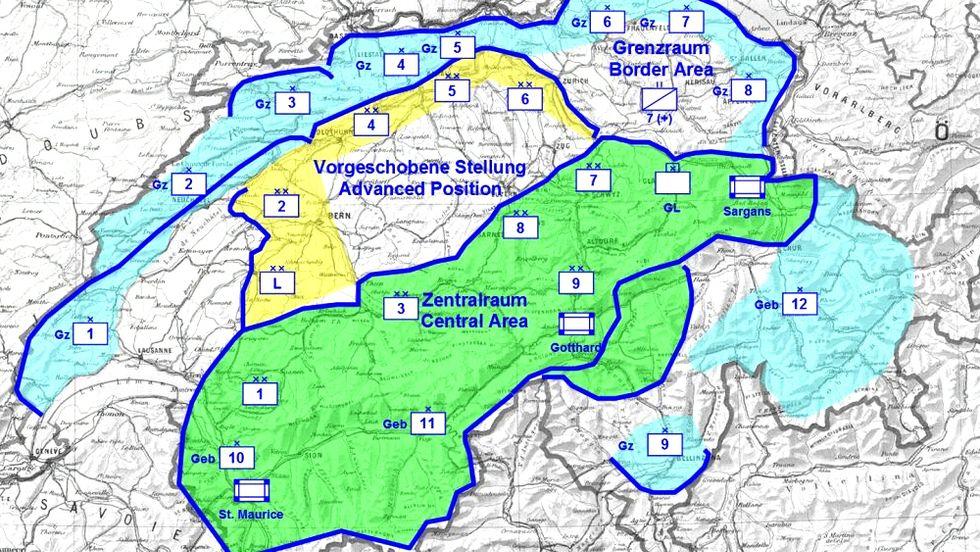
The National Redoubt
During the Second World War, when Europe faced the threat of Nazi expansion, Switzerland developed a defence concept known as the Réduit national — the National Redoubt.
In 1940, General Henri Guisan announced the concentration of the country’s defences in the Alpine region.
The idea was that, in the event of a large-scale invasion, Swiss forces would withdraw to fortified mountain areas, control strategic passes and transport routes, and make occupation of the country as difficult as possible.
Bunkers, artillery positions, fortified installations, supply depots, and protected command posts were built throughout Switzerland.
Engineering preparations played an important role: roads, bridges, and tunnels could be prepared for demolition in order to impede an enemy advance.
This was not simply a plan to defend individual cities. It involved preparing the entire national territory for a possible invasion.
Civil protection: shelters for the population
Another important element of Switzerland’s security system is civil protection.
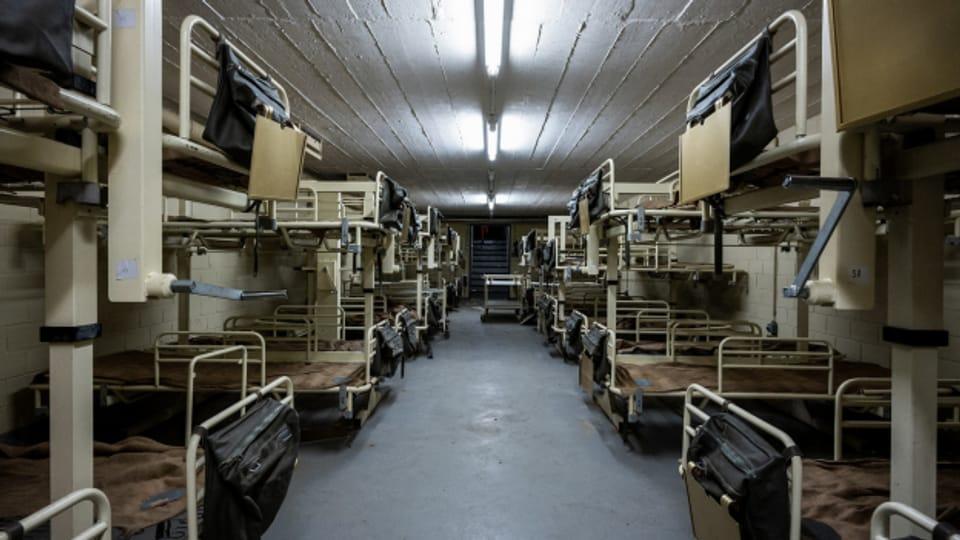
According to the Swiss Federal Office for Civil Protection, the country has approximately 365,000 private and public shelters, with capacity for around nine million people.
This provides coverage for more than 100% of the population.
Most of these shelters are used in peacetime as basements, storage areas, or spaces for other purposes. However, they can be prepared for their intended use when necessary.
The shelters are designed to accommodate people for periods ranging from several hours to several days.
This system did not emerge by chance. It developed during the Cold War, when the threat of a nuclear conflict in Europe was very real.
Switzerland prepared not only to repel a military attack, but also to protect its population from the consequences of a large-scale war.
Thus, the country’s neutrality is supported not only by its army, but also by a comprehensive civil defence system.
6. Did Germany attack Switzerland during the World Wars?
Claims sometimes appear in public discussions that Germany attacked Switzerland during the First World War and that the Swiss army independently defeated the German forces.
This claim is historically incorrect.
The First and Second World Wars must be considered separately.
The First World War: Switzerland mobilised its army, but Germany did not invade
After the outbreak of the First World War on 1 August 1914, Switzerland declared mobilisation.
Within one week, approximately 220,000 service members had been called up.
The federal authorities were granted powers to defend the country’s independence and neutrality. General Ulrich Wille was appointed commander of the army.
Switzerland had serious reasons to fear being drawn into the war. German and French general staffs considered the possibility of manoeuvres through Swiss territory, including as a way of bypassing enemy fortifications.
However, none of these plans was implemented.
The German army did not invade Switzerland, and Swiss troops did not defeat German forces in combat.
Throughout the war, approximately 50,000 service members were continuously deployed to guard the country’s borders.
Mobilisation, readiness to defend the country, and the internationally recognised status of neutrality were important factors in preserving Switzerland’s territorial integrity.
The Second World War: a real threat of German invasion
In 1939, following the outbreak of the Second World War, Switzerland mobilised its army once again.
This time, the threat was considerably more serious.
After France’s defeat in the summer of 1940, Switzerland found itself almost entirely surrounded by Axis powers or territories under their control.
Germany considered plans for a military invasion of Switzerland. The best-known of these was Operation Tannenbaum.
However, historians continue to debate the Nazi leadership’s ultimate intentions, the specific timing, and the degree to which the plan was ready for implementation.
The Swiss Federal Archives confirm that German invasion plans existed and that the Swiss General Staff regarded the threat as serious. At the same time, the question of why Germany ultimately did not attack remains a subject of historical research.
Why did Germany not invade?
Among the factors historians consider as potentially influencing the Nazi leadership’s decision are:
- the difficult mountainous terrain;
- the preparedness of the Swiss army;
- the National Redoubt defence concept;
- the possibility of destroying key transport links;
- the need to commit substantial military resources;
- Germany’s strategic priorities on other fronts;
- economic and political considerations.
It is important not to reduce the failure to carry out an invasion to a single factor. There is insufficient evidence to claim that Germany abandoned the idea solely because it feared the Swiss army.
Likewise, it is inaccurate to claim that Switzerland defeated the German army in a war that never actually took place.
The correct conclusion is different: Switzerland preserved its independence during both World Wars by combining neutral status with military readiness and preparations for armed defence.
That is a far more important historical lesson than the myth of victory over the German army.
7. Four national languages: does Switzerland have an “indigenous Swiss population”?
The language issue is one of the most frequently used arguments in discussions about possible Ukrainian neutrality.
Supporters of this approach often argue that Switzerland has several national languages, with its citizens speaking German, French, Italian, and Romansh. Therefore, Ukraine could also recognise Russian as a state language while retaining Ukrainian.
However, this comparison overlooks the history of Swiss society, the legal status of its languages, and the principles underpinning the country’s political system.
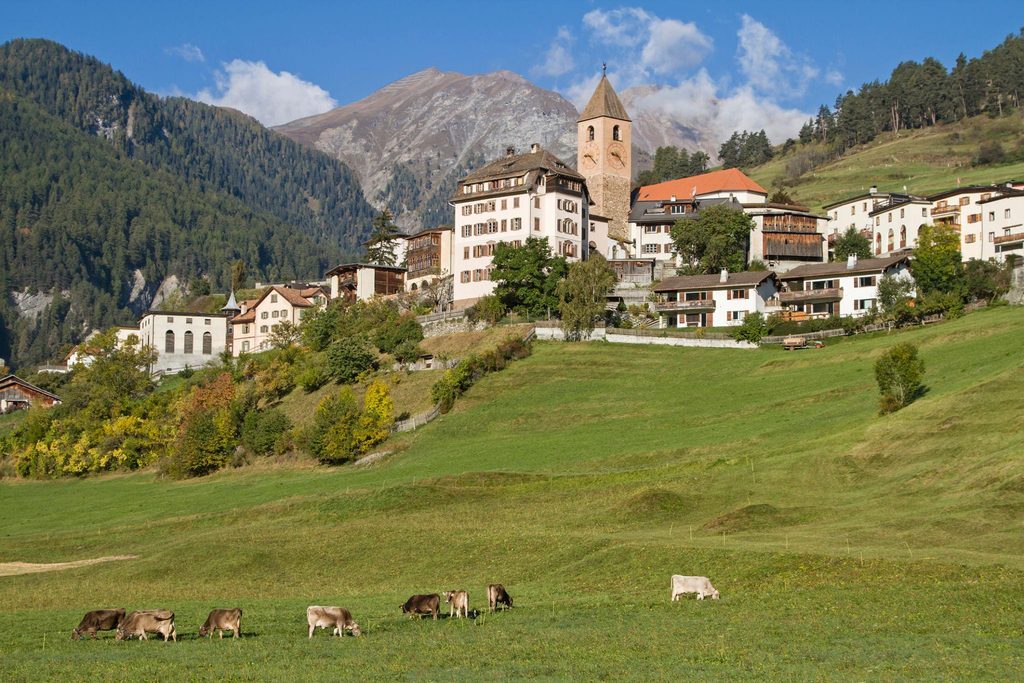
What are Switzerland’s official languages?
Switzerland has four national languages:
- German;
- French;
- Italian;
- Romansh.
However, the legal status of these languages has certain specific features.
At the federal level, German, French, and Italian are official languages.
Romansh also has official status in communication between Romansh-speaking citizens and the federal authorities.
This means that the claim that all four languages have exactly the same status at every level of government is inaccurate.
Each canton determines its own official languages, taking into account the traditional linguistic distribution of its territory.
Most cantons have one official language. There are bilingual cantons, while the canton of Graubünden is trilingual.
The Federal Constitution requires the state to support linguistic diversity and take the interests of linguistic minorities into account.
Romansh: a language with ancient roots
Particular attention should be paid to Romansh.
It is a Romance language of Latin origin that developed in the Alpine region and has a long history.
It is not a variety of German, French, or Italian. Romansh belongs to a distinct branch of the Romance languages and has five main regional varieties:
- Sursilvan;
- Sutsilvan;
- Surmiran;
- Puter;
- Vallader.
In 1938, the Swiss people held a nationwide vote on recognising Romansh as the fourth national language. The proposal was supported by 91.6% of voters.
In 1996, Romansh was granted official-language status in communication with the federal administration.
According to Swiss authorities, approximately 0.5% of the country’s population have Romansh as one of their main languages.
This is an example of how a state can recognise and support a small linguistic community without undermining national unity.
Are Romansh speakers the “indigenous Swiss”?
Here, it is important to avoid oversimplification.
The Romansh are a historical linguistic and cultural community that developed within the territory of present-day Switzerland. Their language has deep local roots, and their cultural heritage is part of Swiss history.
However, describing them as the sole “indigenous people of Switzerland” and setting them apart from other Swiss communities would be inaccurate.
Switzerland historically developed from different communities: German-speaking, French-speaking, Italian-speaking, and Romansh-speaking. None of them is the single ethnic group on which the modern state is based.
Swiss national identity developed as a shared political identity among citizens of different backgrounds.
That is why the country has no single ethnic criterion by which one could determine who is a “real Swiss person”.
Does Switzerland have nationalism and privileges for ethnic Swiss people?
The answer is more complex than a simple “yes” or “no”.
Switzerland has a strong national identity, regional traditions, and cultural differences. It also has political debates about immigration, citizenship, integration, and the preservation of national culture.
However, its legislation does not establish separate privileges for citizens solely on the basis of ethnic origin.
Swiss citizenship can be obtained through naturalisation. For ordinary naturalisation, applicants generally need to have lived in the country for ten years, hold a C residence permit, be integrated into Swiss society, be familiar with local living conditions, and demonstrate the required level of proficiency in one of the national languages.
Cantons and communes may establish additional requirements, including the length of residence in the relevant area.
Thus, the citizenship system is indeed quite demanding. However, its requirements concern residence, integration, language proficiency, and compliance with the law — not membership of a particular ethnic group.
At the same time, it would be incorrect to claim that Switzerland has no social or cultural barriers for migrants. Debates about integration, immigration, and identity exist there, as they do in many other European countries.
Why the Swiss language experience cannot be mechanically transferred to Ukraine
Swiss multilingualism developed historically. Its linguistic regions existed long before the emergence of the modern federal state.
German, French, Italian, and Romansh are not instruments of the foreign policy of neighbouring states aimed at denying Swiss statehood.
Ukraine’s history is different.
The Russian Empire and later the Soviet Union systematically pursued policies of Russification in Ukrainian territories, restricted the use of the Ukrainian language, persecuted the Ukrainian intelligentsia, and attempted to displace Ukrainian cultural identity.
Modern Russian aggression has also been accompanied by attempts to impose the Russian language in occupied territories, destroy Ukrainian educational and cultural infrastructure, and persecute Ukrainian teachers and cultural workers.
Therefore, the demand to grant Russian a special state-language status as a supposed “condition for peace” is not a neutral language-policy issue. In the context of Russian aggression, it can become an instrument of political influence.
The Swiss experience shows that multilingualism can form the basis of national unity, but only when it rests on the voluntary coexistence of linguistic communities, equality among citizens, and respect for the state’s sovereignty.
8. Does Switzerland really refuse to join international organisations?
Another common argument is that Switzerland does not join military alliances, is not a NATO member, and therefore preserves its independence.
This is only partly true.
Switzerland is not a NATO member, but this does not mean that it avoids international organisations or refuses to cooperate with other countries on security matters.
It is a member of:
- the United Nations;
- the Council of Europe;
- the European Free Trade Association (EFTA);
- the Organization for Security and Co-operation in Europe (OSCE);
- a number of international financial and economic organisations.
Switzerland also participates in NATO’s Partnership for Peace programme.
This programme does not involve NATO membership or automatic collective defence obligations. However, it provides opportunities for cooperation in military training, security, interoperability, and the exchange of experience.
In other words, neutrality does not isolate Switzerland from the world.
On the contrary, the country is actively integrated into the international system, maintains economic ties with the European Union, cooperates with international institutions, and participates in diplomatic processes.
Not joining a military alliance is not the same as rejecting international cooperation or remaining without partners.
9. Switzerland today: neutrality is also a subject of political debate
It is important to understand that Swiss neutrality is not an unchangeable dogma that society never questions.
Following Russia’s invasion of Ukraine in 2022, debate intensified in Switzerland over how flexible its neutrality policy should be.
Some political forces believe the country should adhere to the strictest possible interpretation of neutrality, avoid joining sanctions, and refrain from deepening cooperation with military alliances.
Others argue that neutrality should not prevent Switzerland from defending international law, supporting sanctions against aggressor states, and strengthening its own defence capabilities.
The referendum of 27 September 2026
This debate took a concrete form in September 2026.
On 27 September, Swiss citizens voted on the popular initiative entitled “Safeguarding Swiss Neutrality”.
The initiative proposed strengthening the constitutional provisions on neutrality. In particular, it sought to restrict cooperation with military alliances and prohibit participation in sanctions against belligerent states, with exceptions for UN sanctions and measures against sanctions evasion.
The voting results were:
- 29.84% — supported the initiative;
- 70.16% — voted against it.
The initiative was rejected.
This result is highly revealing. The majority of Swiss voters did not want to turn neutrality into an even stricter system of restrictions on the state.
In other words, even a country with centuries of neutrality does not believe that this status should prevent it from cooperating with other states or supporting international sanctions.
The Swiss people chose to preserve room for political manoeuvre, allowing the state to combine neutral status with the protection of its own interests and the international legal order.
10. What actually guarantees Switzerland’s independence?
If we summarise the history and modern security system of Switzerland, several key factors can be identified.
1. Established statehood
Switzerland has a centuries-old tradition of political self-organisation, while the modern federal state has existed since 1848.
Its independence did not emerge as the result of a recent agreement between great powers.
2. International recognition
Switzerland’s permanent neutrality was recognised by the European powers in 1815 and confirmed by international legal instruments.
This is an important component of its international status, but it is not an automatic guarantee against attack.
3. Its own armed forces
Switzerland has a militia-based system with compulsory military service for men, a trained reserve, and regular exercises.
Neutrality does not replace the army. It exists alongside it.
4. Prepared territory
The mountainous terrain, fortifications, strategic passes, tunnels, and defence infrastructure are all incorporated into the country’s military planning.
5. Civil protection
Shelters, warning systems, public preparedness, and emergency planning are all part of the overall security system.
6. Political stability and domestic consensus
Switzerland has a federal system, developed direct democracy, strong local institutions, and mechanisms for representing linguistic communities.
This allows different regions to preserve their own identities while remaining part of a single state.
7. Economic capacity
Switzerland has a developed economy, powerful financial institutions, a high level of technological advancement, and substantial resources to finance defence and civil security.
This is also an important part of its resilience.
Thus, Switzerland’s independence is not guaranteed by a single document or by the word “neutrality”. It is supported by a combination of interconnected factors that reinforce one another.
11. Can Ukraine become “another Switzerland”?
This question requires a practical rather than emotional answer.
Ukraine is often urged to adopt neutrality based on the Swiss model. These arguments usually focus on several points:
- Switzerland is not a NATO member;
- Switzerland has several national languages;
- Switzerland does not participate in other states’ wars;
- Switzerland has maintained its independence for a long time;
- Switzerland enjoys a high standard of living.
But this is only part of the picture.
Ukraine and Switzerland have different histories of neutrality
Switzerland developed its neutrality over several centuries and received international recognition in 1815.
Ukraine, by contrast, declared independence in 1991 and signed the Budapest Memorandum in 1994, receiving security assurances in exchange for giving up its nuclear arsenal.
In 2014, Russia violated Ukraine’s territorial integrity by occupying Crimea and launching armed aggression in the Donbas.
In 2022, Russia launched a full-scale invasion.
In other words, Ukraine has already experienced security arrangements that failed to protect it from aggression.
Swiss neutrality does not mean abandoning the army
This is one of the most important points.
If Ukraine is offered neutrality based on the Swiss model, the discussion must simultaneously address:
- the size and quality of its armed forces;
- a trained reserve;
- regular military exercises;
- domestic defence production;
- air defence;
- a territorial defence system;
- fortifications and engineering preparations of the territory;
- civil protection;
- adequate defence funding;
- real mechanisms of international support.
Neutrality without defence capabilities is not the Swiss model.
It is merely a renunciation of potential collective security mechanisms without creating an adequate alternative.
Can neutrality guarantee Ukraine’s security?
No. Not by itself.
International law requires respect for the sovereignty and territorial integrity of neutral states. However, neutral status does not mean that no other country will ever dare to attack them.
History provides examples of neutral states that were invaded. Belgium, for example, had neutral status, but Germany invaded its territory in 1914.
Thus, even international recognition of neutrality is not a physical shield against an aggressor.
For Ukraine, it is particularly important to remember that Russia has already violated Ukraine’s internationally recognised borders, disregarded previous commitments, and used military force to change the territorial status of a neighbouring state.
Therefore, any proposal for neutrality must answer one central question: who will guarantee, and by what means, that Russia will not attack again?
Can the language situations in Ukraine and Switzerland be compared?
No — not without taking historical context into account.
Switzerland’s linguistic communities developed historically as parts of a multilingual society. Their coexistence became the foundation of the country’s political model.
In Ukraine, the Russian language has a complex history associated with imperial Russification policies, Soviet repression of the Ukrainian language, and modern Russian aggression.
This does not mean that Ukrainian citizens who speak Russian have fewer rights. Ukrainian legislation protects citizens’ rights regardless of the language they use in everyday communication.
However, protecting the rights of Russian-speaking citizens and granting Russian a special state-language status are two different issues.
Citizens can be guaranteed the right to use a language in private communication, preserve cultural traditions, and receive protection against discrimination without turning these rights into an instrument of external political influence.
The Swiss experience itself demonstrates that linguistic diversity can coexist with a strong common state. But this requires equality among citizens, respect for historical linguistic communities, and the absence of coercion.
12. Which lessons from Switzerland can genuinely benefit Ukraine?
The Swiss experience should be studied not as a ready-made recipe, but as a system of principles that can be adapted to Ukrainian realities.
The first lesson: neutrality does not replace defence capabilities.
Switzerland maintains an army, reserves, fortifications, and civil protection. It does not rely exclusively on the goodwill of its neighbours.
The second lesson: independence must be based on strong institutions.
A state needs an effective system of governance, a clear division of powers, local self-government, and mechanisms of democratic oversight.
The third lesson: linguistic diversity must not become an instrument of political blackmail.
Switzerland does not force all regions to abandon their linguistic identities. But they all recognise the state’s shared rules.
The fourth lesson: civil protection is part of national security.
Shelters, public preparedness, warning systems, and emergency planning must not be temporary measures, but a permanent state policy.
The fifth lesson: neutrality must be a voluntary political choice, not the result of external coercion.
Switzerland did not accept neutrality under pressure from a neighbouring state threatening to destroy it. Its neutral status developed as part of its own national strategy and was internationally recognised.
The sixth lesson: international cooperation is not incompatible with independence.
Switzerland is not a NATO member, but it actively works with international organisations, develops security cooperation, and participates in international sanctions mechanisms.
Ukraine can also build a multi-layered system of international partnerships without abandoning its national interests.
Conclusion: Swiss neutrality is not the absence of threats, but a system for deterring them
Switzerland has preserved its independence not simply because it declared itself a neutral country.
Its statehood developed long before the international recognition of its neutrality. Its political system is based on federalism, direct democracy, civic participation, and respect for linguistic diversity.
Its security rests on its own armed forces, mobilisation reserves, territorial defence, fortifications, civil protection, economic resilience, and internationally recognised status.
Switzerland has not given up its right to defend itself. It has not abolished its army in the name of neutrality. It has not isolated itself from international organisations. And it has not allowed linguistic differences to destroy its common statehood.
That is why, when Ukraine is told to “become another Switzerland”, far more questions need to be asked than simply whether it should abandon NATO membership or adopt neutral status.
Will Ukraine have sufficiently strong armed forces? Who will guarantee its security? What mechanisms will be used to respond to renewed aggression? Will Ukraine retain the right to determine its own foreign policy? Will the state have sufficient resources for defence? And, most importantly, will neutrality be a voluntary decision of Ukrainian society, rather than a condition imposed by an aggressor state?
The Swiss experience does not prove that neutrality is a universal path to peace. It proves something else: independence cannot be built solely on promises made by other states. It must be sustained by one’s own institutions, economy, armed forces, social cohesion, and readiness to defend one’s territory.
And perhaps this is the most important lesson Switzerland has to offer Ukraine.
Sources and further reading
The article draws on official Swiss government resources, international legal documents, materials from the Swiss Federal Archives, and academic research on the history of statehood and political identity.
- Swiss Federal Council — Switzerland’s Policy of Neutrality. The history, legal foundations, permanent neutrality, and armed neutrality.
https://www.admin.ch/en/switzerlands-policy-of-neutrality - The Federal Charter of 1291. An official historical document of the Swiss Confederation.
https://www.admin.ch/en/federal-charter-1291 - Swiss Parliament — The Federal Constitution. The history of the 1848 Constitution and the federal system.
https://www.parlament.ch/en/über-das-parlament/Pages/bundesverfassung.aspx - Swiss Federal Department of Foreign Affairs — Neutrality. The history of Swiss neutrality from 1515 to modern foreign policy.
https://www.aboutswitzerland.eda.admin.ch/en/neutrality - Swiss Federal Archives — Armed Neutrality and Active Service in Switzerland. The 1914 mobilisation, threats during the First World War, and defence plans.
https://www.bar.admin.ch/en/armed-neutrality-and-active-service-in-switzerland - Swiss Federal Archives — Memories of Active Service and Réduit. The history of the National Redoubt, the threat of German invasion, and Operation Tannenbaum.
https://www.bar.admin.ch/en/memories-of-active-service-and-reduit - Swiss Armed Forces — History of the Armed Forces. The formation of the national army and the development of the defence system.
https://www.vtg.admin.ch/en/the-history-of-the-swiss-army - Swiss Armed Forces — Army Census 2026. Official figures on military personnel as of 1 March 2026.
https://www.vtg.admin.ch/ - Swiss Federal Office for Civil Protection — Dangers in Switzerland. Shelters and the civil protection system.
https://www.babs.admin.ch/en/dangers-in-switzerland - Swiss Federal Department of Foreign Affairs — Language. Switzerland’s national languages and linguistic structure.
https://www.aboutswitzerland.eda.admin.ch/en/language - Swiss Federal Chancellery — Romansh. The legal status of the Romansh language.
https://www.bk.admin.ch/en/romansh - Swiss Federal Department of Foreign Affairs — Allegra! A Look at Romansh. The history, development, and current status of Romansh.
https://www.aboutswitzerland.eda.admin.ch/en/allegra-a-look-at-romansh-switzerlands-fourth-language - State Secretariat for Migration — Becoming a Swiss Citizen. Requirements for naturalisation and obtaining Swiss citizenship.
https://www.sem.admin.ch/en/becoming-a-swiss-citizen - State Secretariat for Migration — Language Requirements. Language requirements for residence permits and citizenship.
https://www.sem.admin.ch/sem/en/home/integration-einbuergerung/mein-beitrag/zugewandert/sprache.html - Swiss Federal Department of Foreign Affairs — Neutrality Initiative 2026. The content of the initiative to strengthen neutrality.
https://www.admin.ch/en/neutrality-initiative - Official results of the referendum of 27 September 2026. Voting results on the neutrality initiative.
https://abstimmungen.admin.ch/en/details/2026-09-27?proposalId=6880 - Linder, Wolf; Mueller, Sean — Swiss Democracy: Building a Multicultural Society by Political Integration. Academic research on the development of the Swiss political nation.
https://doi.org/10.1007/978-3-030-63266-3 - Politorbis — Power Sharing: The Swiss Experience. Research on political integration, multilingualism, and federalism.
https://www.eda.admin.ch/dam/eda/mehrsprachig/documents/publications/Politorbis/politorbis-45_EN.pdf - The Hague Conventions of 1907. International legal rules governing neutrality during wartime.
https://ihl-databases.icrc.org/en/ihl-treaties/hague-conv-v-1907