

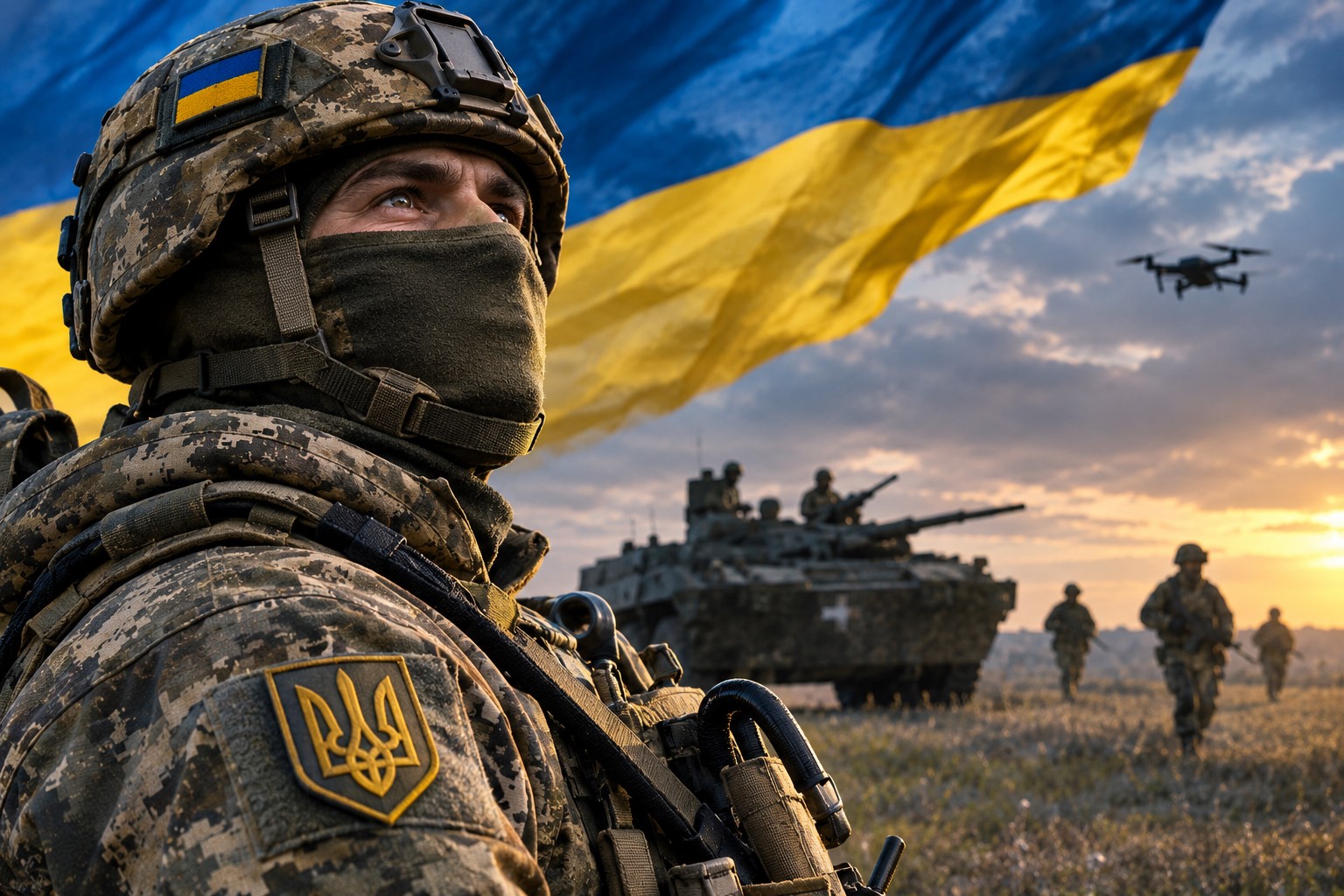
The history of reforms, losses, mistakes and the revival of Ukraine’s armed forces from 1991 to the present day
The Armed Forces of Ukraine are more than a military structure, a command system, weapons and military equipment. They represent a history of state decisions and miscalculations, political responsibility, public mobilisation, professional growth and extraordinary human courage.
In 1991, Ukraine inherited one of the largest military structures in Europe. It had substantial ground forces, aviation, air defence, naval infrastructure, a defence industry and enormous stockpiles of weapons. However, the mere presence of military equipment and hundreds of thousands of service members did not mean that the country possessed a modern, properly equipped army ready for war.
Over the following two decades, Ukraine’s armed forces were reduced, reformed and reorganised, but they were not consistently developed. State policy often failed to reflect the actual needs of national defence. Funding was insufficient, much of the equipment was ageing, combat training became less systematic, and the defence industry gradually lost production capacity and established industrial links.
In 2014, Ukraine faced the consequences of this long-term decline. Russia’s occupation of Crimea and the beginning of the war in Donbas were not merely a military crisis: they marked the moment when the state was forced to urgently rebuild its own ability to defend itself.
By 2022, the Ukrainian army had become fundamentally different from the force it had been in 2014. It had combat experience, trained commanders, a more developed command system, new units, support from international partners and a much stronger foundation of public engagement. These changes were among the factors that prevented Russia from carrying out its initial plan for the rapid seizure of Ukraine.
As of November 2026, the Armed Forces of Ukraine are a military force that has been fighting a full-scale war for years against a state with greater human, industrial and material resources. They have undergone an unprecedented transformation, while also facing serious problems that must not be concealed, even during wartime.
To understand what the Ukrainian army is today, we need to return to the beginning of its history.
1. 1991: What Kind of Army Did Independent Ukraine Inherit?
After declaring independence, Ukraine inherited a substantial part of the military infrastructure of the former Soviet Union.
Various estimates place the size of the military grouping inherited by Ukraine after the collapse of the Soviet Union at approximately 700,000–800,000 personnel. Some international sources give a figure of around 430,000 service members for the early 1990s. These figures differ depending on the methodology, the year being considered and which military structures were included in the statistics.
The following forces and facilities were located on Ukrainian territory:
- Ground Forces;
- Air Forces;
- Air Defence Forces;
- naval infrastructure;
- missile and other strategic military facilities;
- numerous military units, educational institutions, repair enterprises and storage facilities.
Ukraine also inherited substantial numbers of tanks, armoured vehicles, artillery systems, aircraft, helicopters and ammunition.
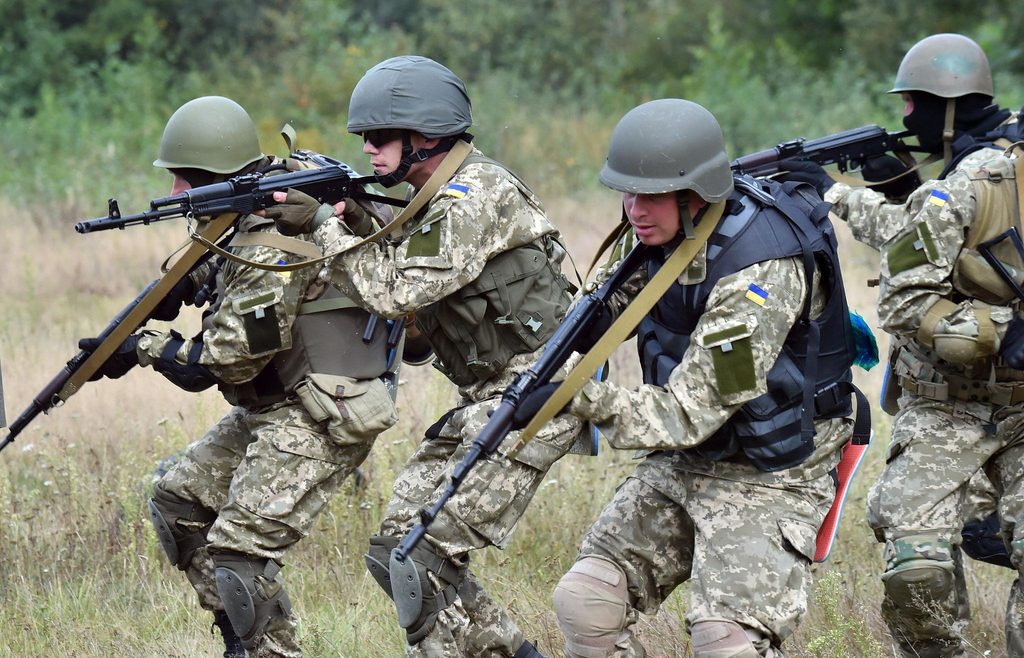
However, it is important to understand that this was not an army originally created to defend an independent Ukraine. It was part of the Soviet military system, whose structure had been designed around the strategic needs of the USSR.
Its organisation, doctrine, command system, logistics and military planning were intended for a large-scale war between military and political blocs. Ukraine did not simply need to rename this structure. It had to transform it into a national military force subordinate to its own state and capable of protecting its sovereignty.
On 6 December 1991, the Verkhovna Rada adopted the Law of Ukraine “On the Armed Forces of Ukraine”. This date became the official founding day of the national Armed Forces.
One of the most important tasks in the first years of independence was to establish a Ukrainian military command system, have service members swear allegiance to the Ukrainian people, develop an independent defence policy and determine the future model of the army.
Ukraine inherited considerable military resources, but also a complex legacy that had to be maintained, modernised and financed.
The Nuclear Arsenal: Enormous Potential That Did Not Become a Security Guarantee
Nuclear weapons represent a separate chapter in Ukraine’s history.
After the collapse of the USSR, the third-largest nuclear arsenal in the world remained on Ukrainian territory. It included strategic intercontinental ballistic missiles, silo launch facilities, strategic bombers and nuclear warheads.
However, the issue of nuclear weapons was far more complicated than simply possessing missiles. The operational command system for strategic nuclear forces remained connected to the former Soviet command structure. Ukraine had to address questions of control, technical maintenance, international commitments and enormous financial costs.
In 1994, Ukraine signed the Budapest Memorandum and subsequently completed the process of acceding to the Treaty on the Non-Proliferation of Nuclear Weapons as a non-nuclear-weapon state. By 1996, nuclear warheads had been removed from Ukraine.
Under the memorandum, Russia, the United States and the United Kingdom reaffirmed their commitments to respect Ukraine’s independence, sovereignty and existing borders, to refrain from the threat or use of force, and to avoid economic coercion.
Russia’s subsequent aggression exposed a fundamental weakness in these assurances: they did not include an automatic mechanism for providing military defence to Ukraine in the event of a breach.
This historical experience should not lead to the simplistic conclusion that Ukraine necessarily should have retained nuclear weapons. Rather, it demonstrates how dangerous the gap can be between political assurances and actual security mechanisms.
2. 1991–2013: Reductions Instead of Systematic Development
Ukraine’s first years of independence unfolded amid a deep economic crisis. The state budget was limited, industry was undergoing structural changes, and maintaining an enormous military structure required resources the country did not have.
Reducing the army was an objective necessity. Ukraine did not need to maintain a Soviet military grouping designed for global confrontation. The real question was different: were these reductions accompanied by the creation of a smaller but more modern and combat-ready army?
Unfortunately, state policy failed to provide a consistent answer.
How the Size of the Army Changed
According to estimates based on data from the International Institute for Strategic Studies and other research sources, the size of Ukraine’s armed forces declined throughout the 1990s and 2000s.
Different statistical series show the following approximate figures:
- early 1990s — hundreds of thousands of service members;
- mid-1990s — more than 400,000, with some statistical series showing over 500,000 personnel;
- early 2000s — approximately 300,000–400,000, depending on the methodology;
- 2013 — around 121,500 according to one international statistical measure.
These figures should not be treated as a direct measure of combat strength. They illustrate the scale of personnel reductions, but do not tell us how many units were fully staffed, equipped and capable of immediately carrying out combat missions.
Why the Reductions Became a Problem
In many cases, military reform effectively amounted to reducing personnel numbers, disbanding units, and selling or writing off military property.
Instead of comprehensive rearmament and the development of new capabilities, the state often attempted to maintain what remained of the old system.
The key problems included:
1. Insufficient funding.
Defence spending did not provide for the proper maintenance of the armed forces, modernisation of equipment, personnel training or the renewal of weapons.
2. Ageing military equipment.
A significant part of the arsenal remained Soviet-produced. The problem was not the country of origin itself, but the lack of sufficient modernisation, repairs, spare parts and systematic replacement.
3. Declining combat training.
Training exercises, field deployments, live-fire drills and large-scale military manoeuvres required fuel, ammunition, equipment repairs and funding. When resources were insufficient, comprehensive training became difficult.
4. Unstable defence planning.
Changes in political leadership frequently resulted in changes to priorities, programmes and models for army development.
5. Problems in the defence industry.
Ukraine had powerful industrial enterprises, but many production chains were linked to companies in Russia and other former Soviet republics. Following the collapse of the USSR, this dependence became a serious risk.
6. Corruption and ineffective management.
Problems with defence procurement, management of military property, resource allocation and the transparency of decisions negatively affected the country’s defence capabilities.
Did Ukraine Have a State Strategy for Developing the Armed Forces?
Yes. Ukraine adopted military doctrines, state programmes for military reform and defence planning documents. In 1993, the country adopted its first Military Doctrine as an independent state. New concepts and reform programmes followed in subsequent years.
The problem was not a complete absence of official documents, but the gap between declared objectives and the resources and results actually delivered.
The International Institute for Strategic Studies (IISS), in its January 2025 report Transformation Under Fire, notes that between 1991 and 2014 Ukraine often prioritised internal threats and political stability over external defence. Political instability, corruption, institutional inertia and insufficient funding contributed to the deterioration of the Armed Forces’ capabilities.
The report also describes how reforms in the 1990s largely focused on reducing personnel numbers, weapons and military units rather than building a new defence system.
This is an important conclusion: Ukraine was not simply reducing its army to adapt to new circumstances. In many cases, it was cutting its forces faster than it was creating new capabilities.
2006–2013: An Attempt to Build a Smaller Professional Army
During this period, Ukraine attempted to move towards a more compact, professional and mobile military model.
The plans included reducing personnel numbers, gradually abandoning conscription, expanding contract-based service, modernising command structures and bringing the army closer to contemporary models of armed forces.
On paper, this concept made sense. The problem was that a professional army is expensive. It requires competitive pay, high-quality training, modern weapons, proper equipment, housing, social guarantees and a stable reserve system.
Ukraine did not have sufficient resources to implement this model in full.
As a result, the size of the army decreased, but its quality, staffing levels and combat readiness did not improve proportionally.
By 2013, the Ukrainian army had significant problems with its readiness for a large-scale war. It was not entirely helpless, but its actual capabilities were far below what might have been assumed from the number of military units and equipment listed in official records.
3. The Russian Factor Before 2014: Dependence, Influence and Exploited Weaknesses
One question requires separate analysis: did Russia attempt to weaken the Ukrainian army as much as possible before its full-scale invasion?
The answer must be precise. Not every reduction in Ukraine’s military was the result of a direct Russian operation. Domestic political decisions, the economic crisis, corruption, short-sighted policies and the absence of consistent defence planning also played major roles.
At the same time, there is documented evidence of Russian influence in Ukraine’s defence sector, dependence on Russian manufacturers and political rapprochement that created strategic risks for Ukraine.
Dependence in the Defence Industry
After the collapse of the USSR, Ukraine’s defence industry remained part of the former Soviet Union’s integrated industrial complex.
Many Ukrainian enterprises produced individual components and assemblies for equipment whose final production took place in Russia. At the same time, the Ukrainian Armed Forces depended on imported components, repairs and maintenance for certain systems.
According to an IISS assessment, more than 70% of Ukrainian defence industry enterprises were significantly dependent on Russian supplies of essential components. This dependence was not merely an economic problem — it created a potential lever of influence over Ukraine’s defence capabilities.
After 2014, the severing of military and technical cooperation with Russia forced Ukraine to urgently seek alternatives, restructure production and develop its own components.
Political Influence and Decisions That Weakened Defence
Between 2010 and 2013, under President Viktor Yanukovych, Ukraine deepened its political and economic dependence on Russia. The change in foreign policy direction was accompanied by reduced attention to the Russian military threat.
In 2010, Ukraine’s non-aligned status was established by law. This did not automatically bring all military reforms to a halt, but it influenced strategic planning and foreign policy priorities.
In 2013, defence spending and the size of the army remained insufficient to effectively counter a major power.
After Russian aggression began, it became clear that Ukraine did not have a properly prepared system for responding to the scenario Russia had put into action.
What Can Be Stated with Confidence
The following points can be established:
- long-standing dependence of part of Ukraine’s defence industry on Russian components;
- political decisions that lowered the priority of external defence;
- insufficient funding and the deterioration of combat readiness;
- Russia’s policy of pressure on Ukraine and its subsequent armed aggression;
- Russia’s exploitation of weaknesses in Ukraine’s security sector during the occupation of Crimea.
However, without evidence, it is not possible to claim that every reorganisation, every military unit reduction or every weapons sale was carried out on direct orders from Moscow.
Historical responsibility for the state of the Ukrainian army before 2014 rests primarily with the Ukrainian authorities, who failed to ensure the proper development of defence capabilities. Russia, in turn, exploited the vulnerabilities that had emerged and deliberately pursued its aggressive policy.
4. 2014: Crimea and Donbas — The Army Confronts Reality
In February 2014, Russia began its occupation of Crimea. Russian troops without identifying insignia operated on the peninsula, blockaded Ukrainian military units, seized facilities and prevented Ukrainian service members from carrying out their orders.
Russia subsequently launched armed aggression in eastern Ukraine, supporting illegal armed formations and transferring weapons, personnel and military equipment.
The Ukrainian army found itself facing a threat for which the state was not properly prepared.
Why the Ukrainian Armed Forces Could Not Effectively Counter the Occupation of Crimea
The reasons were complex.
Low combat readiness.
Some military units faced problems with staffing, the technical condition of weapons, supplies and training.
Weaknesses in the command system.
The command structure was based on a centralised model in which the initiative of lower-level commanders was limited.
Political crisis.
Ukraine was undergoing a change of government following the Revolution of Dignity. State institutions were operating under unstable conditions, and decisions concerning a military response had to be made in exceptionally difficult circumstances.
Russia’s presence on the peninsula.
The Russian Black Sea Fleet had bases in Crimea under the agreements in force at the time. Russian troops used the existing infrastructure, the terrain and the element of surprise.
Problems with morale and loyalty.
Some Ukrainian service members in Crimea switched sides and joined Russia or left military service. Others remained loyal to their oath despite the blockade of their units, pressure, threats and the lack of clear conditions for evacuation.
According to figures presented in the Verkhovna Rada on 25 March 2014 by Ihor Tenyukh, the acting Minister of Defence at the time, approximately 18,800 Ukrainian service members were stationed in military units in Crimea and Sevastopol. Around 11,900 of them belonged to the Ukrainian Navy.
These figures do not mean that all of these personnel were ready to organise resistance or could operate as a single military grouping. They indicate the scale of Ukraine’s military presence on the peninsula.
The Beginning of the War in Donbas
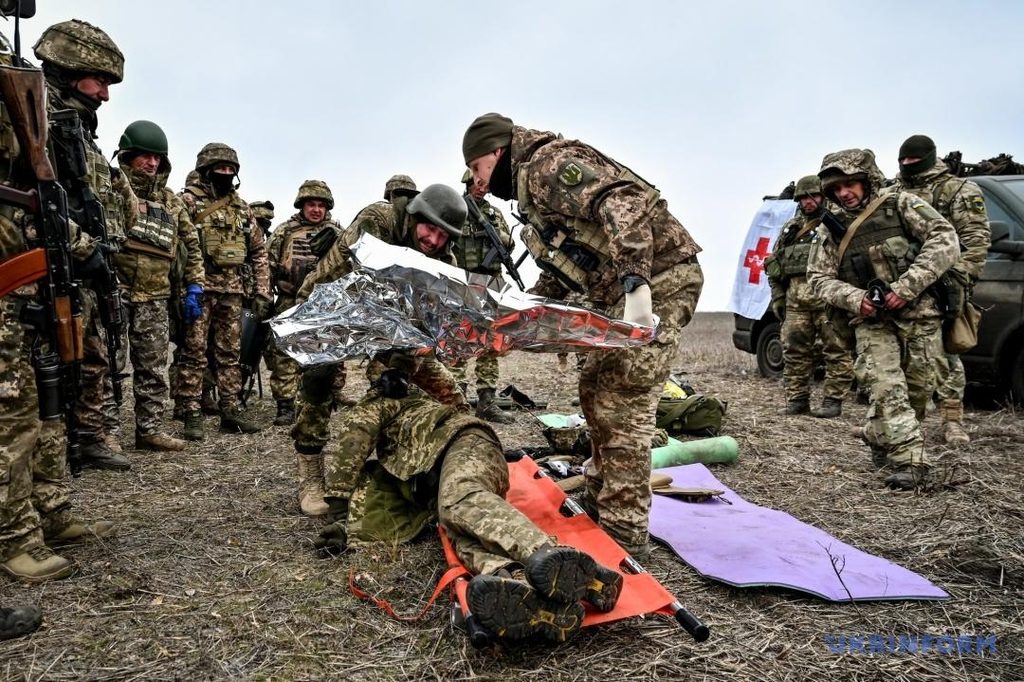
In the spring of 2014, Russia moved to the next stage of its aggression: destabilisation and the armed seizure of territories in Donetsk and Luhansk regions.
Initially, Ukrainian forces had limited capabilities for conducting a large-scale operation. The state was forced to urgently restore combat units, carry out mobilisation, repair equipment, replenish stockpiles and find the necessary resources.
During the first months of the war, volunteers, volunteer organisations and civil society played a major role.
At the same time, it is important not to confuse different structures: volunteer battalions, National Guard units, the Armed Forces, border guards and other formations belong to different components of the security and defence sector. Their contributions were important, but not all of them were part of the Armed Forces of Ukraine.
A War That Forced the Army to Change
In 2014, Ukraine began large-scale mobilisation. Military units were restored, new formations were established, training centres were deployed and the supply system was developed.
Service members gained real combat experience. Commanders learned to operate in conditions of confrontation with an adversary that had an advantage in certain types of weapons, intelligence, artillery and aviation.
The war in Donbas exposed serious problems, but it also became a source of practical experience that could not be acquired through training exercises alone.
5. 2014–2021: Recovery, Reforms and the Birth of a Different Army
After Russian aggression began, Ukraine was forced to reconsider its defence policy.
Before 2014, the army had largely been reduced and adapted to peacetime conditions. Now, the main priority became restoring the ability to conduct combat operations.
This period was not free of mistakes. Reforms progressed unevenly, and old problems did not disappear. Nevertheless, many of the changes that later influenced Ukraine’s ability to resist the full-scale invasion were made between 2014 and 2022.
5.1. Growth in Personnel and the Restoration of Combat Units
After 2014, Ukraine increased the size of its Armed Forces, restored some military units, established new brigades and strengthened its reserve system.
The capabilities of the Ground Forces, artillery, Air Assault Forces, Navy and other components were restored and expanded.
Mobilisation made it possible to bring large numbers of people into the military quickly. At the same time, it exposed the need for systematic reservist training, a professional non-commissioned officer corps and proper support for mobilised personnel.
5.2. Combat Experience
Ukrainian service members fought in battles for Sloviansk, Ilovaisk, Donetsk Airport, Debaltseve, Maryinka, Avdiivka and dozens of other settlements and positions.
This experience came at an extraordinarily high cost.
The army learned to counter Russian artillery, unmanned aerial vehicles, electronic warfare, intelligence operations, sabotage groups and regular Russian military units.
One important outcome was the emergence of a generation of service members and commanders with practical experience of modern warfare.
5.3. Command Reform
One of the key areas of change was the reform of the command system.
The Soviet model was excessively centralised. It assumed that a substantial share of decisions should come from the top, while lower-level commanders often had limited opportunities to take independent initiative.
Ukraine gradually moved towards principles closer to the NATO model of command: a clear division of responsibilities, delegation of authority, stronger staff work and greater autonomy for commanders.
This did not mean that the Armed Forces had fully adopted NATO standards. The transformation was gradual and uneven. Nevertheless, the changes had practical results: units could respond to situations more quickly, and commanders on the ground had more opportunities to make decisions.
5.4. A Professional Non-Commissioned Officer Corps
In a modern army, a sergeant is not simply a service member holding a particular rank. A sergeant is an important part of command, personnel training, discipline and the everyday functioning of a unit.
Ukraine gradually developed a professional non-commissioned officer corps, along with military education and commander training systems.
This was an important change compared with the Soviet tradition, in which the role and independence of sergeants were considerably more limited.
5.5. Cooperation with NATO and International Partners
After 2014, international military assistance became an important factor in reforming the Ukrainian army.
NATO helped Ukraine develop logistics, military education, communications, cyber defence, command systems and standardisation.
Several training missions played a particularly important role:
- the US Joint Multinational Training Group-Ukraine;
- Canada’s Operation Unifier;
- the United Kingdom’s Operation Orbital.
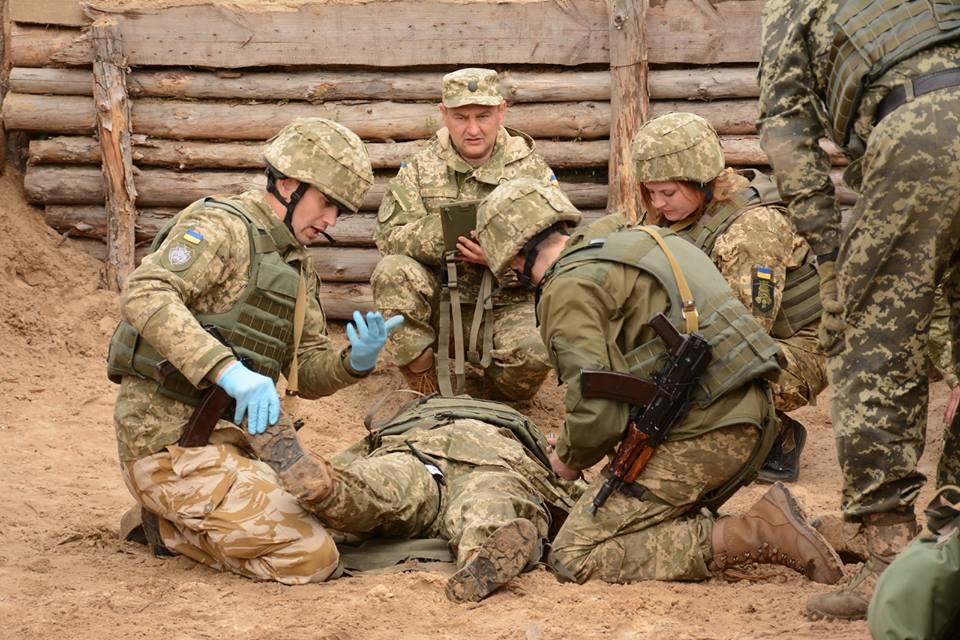
According to the Royal United Services Institute (RUSI), by January 2022 the US JMTG-U mission had trained more than 27,000 Ukrainian service members, Canada’s Operation Unifier more than 33,000, and the UK’s Operation Orbital more than 22,000.
These figures should not simply be added together as a count of unique individuals: some service members may have attended different courses or training programmes. Nevertheless, they demonstrate the scale of international training provided to Ukrainian forces.
It is also important to note that assistance was not limited to training. Partners supplied equipment, communications systems, medical equipment, transport, intelligence capabilities, anti-tank systems and other military systems.
5.6. The Defence Industry
After 2014, Ukraine began to develop its own production more actively and seek alternatives to Russian components.
Orders increased for armoured vehicles, artillery systems, missiles, communications equipment, repairs and modernisation of weapons.
According to SIPRI, Ukraine’s arms procurement budget increased from approximately USD 62 million in 2014 to around USD 836 million in 2021.
This was a significant increase, but it did not mean that all problems had been resolved. The defence industry remained vulnerable to corruption, non-transparent procurement, political influence, technological limitations and insufficient funding.
5.7. Territorial Defence
In 2021, Ukraine adopted legislative measures to develop territorial defence as a component of national resistance.
This was an important step towards a model in which the defence of the state is not limited to regular forces, but also includes a trained reserve, territorial units and broader public involvement.
By the beginning of the full-scale invasion, the system had not yet been fully deployed or tested, but it already existed as a state structure.
6. 24 February 2022: What Was the Ukrainian Army Like at the Beginning of the Full-Scale Invasion?
At the time of the full-scale invasion, the Ukrainian army was considerably stronger than it had been in 2014. However, it still lagged behind Russia in the number of troops, aircraft, missile systems, armoured vehicles and many other resources.
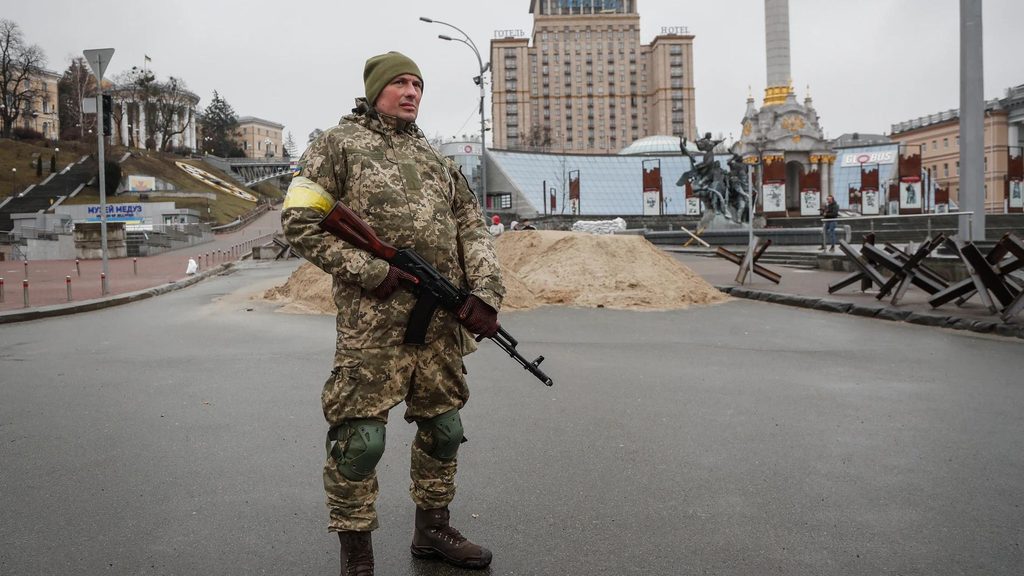
The Russian leadership expected a rapid military and political victory. Russian forces advanced from the north, east and south, attempting to seize Kyiv, break Ukraine’s state governance and force the country to surrender.
The Ukrainian army was not prepared for the full scale and every direction of the attack. However, it had one critically important advantage that had not existed in 2014: eight years of real combat experience.
What Had Changed Compared with 2014?
1. Combat experience.
The military already included people who had taken part in combat operations in Donbas. They understood the tactics of Russian units, the specifics of artillery warfare, and the work of intelligence and unmanned aerial vehicles.
2. Junior commanders.
A generation of commanders had gradually emerged who could operate in difficult conditions and take responsibility without waiting for every instruction from above.
3. The mobilisation system.
Ukraine had experience of the 2014–2015 mobilisation waves, a military reserve and a significant number of people who had already served.
4. Territorial defence.
During the first days of the invasion, territorial defence units became an important element in protecting cities, districts and critical infrastructure.
5. International assistance.
Ukraine already had experience of cooperation with partners and was receiving weapons, training and technical support.
6. Public mobilisation.
Volunteer organisations, charitable foundations, businesses, local communities and millions of citizens became involved in supporting the military.
The First Months of the Full-Scale War
Ukrainian troops thwarted Russia’s attempt to capture Kyiv quickly. Russian forces failed to achieve their initial objectives in northern Ukraine and were forced to retreat from Kyiv, Chernihiv and Sumy regions.
At the same time, the Ukrainian army suffered heavy losses. Russia seized substantial territories in the south and east, including Mariupol and parts of Zaporizhzhia and Kherson regions.
The defence of Mariupol, the Battle of Kyiv and fighting in Kharkiv region, Mykolaiv region, Donbas and other directions became symbols of resistance.
Later, Ukraine conducted successful counteroffensive operations, including the liberation of a substantial part of Kharkiv region in autumn 2022 and the right-bank part of Kherson region.
These events demonstrated that the Ukrainian army was capable not only of defending itself, but also of planning and conducting complex military operations.
Why Russia Underestimated Ukraine
The Russian leadership apparently relied on false assessments of the political resilience of the Ukrainian state, the willingness of society to resist and the combat capabilities of the Armed Forces of Ukraine.
However, Ukrainian resistance was not a random miracle. It was the result of years of adaptation after 2014, combat experience, the work of commanders, the resilience of service members, public support and international assistance.
Research by the Swedish Centre for Eastern European Studies (SCEEUS) emphasises that Ukrainian resilience in 2022 did not emerge from nothing. After 2014, Ukraine deliberately strengthened its army and state institutions, developing logistics, communications, cyber defence and command systems.
7. 2022–2026: An Army Transforming on the Battlefield
The full-scale war became the greatest challenge faced by the Armed Forces of Ukraine throughout the country’s history of independence.
The military has had to do several things simultaneously:
- conduct intensive combat operations along a large front;
- mobilise and train new service members;
- rebuild units after losses;
- integrate different types of Western and Ukrainian weapons;
- develop domestic production;
- adapt to the widespread use of drones;
- counter Russian aviation, missiles, artillery and electronic warfare systems;
- provide rotations, medical treatment and recovery for service members.
This is no longer simply an army implementing a pre-war reform programme. It is a military system changing under the influence of daily combat experience.
7.1. Technological Transformation
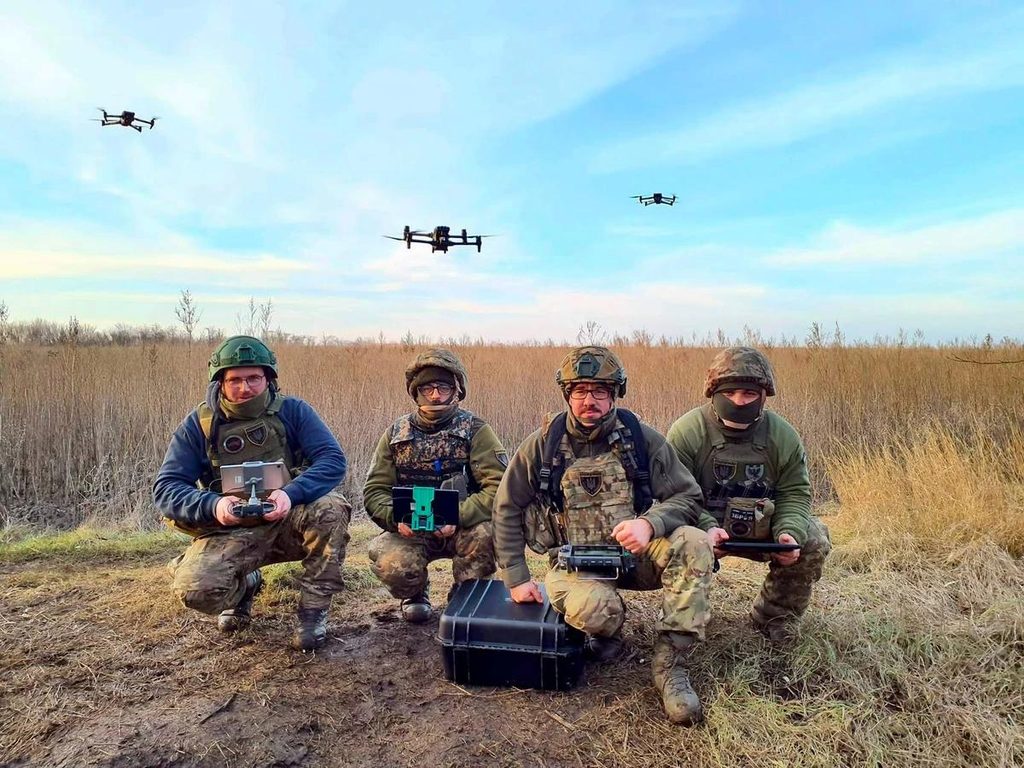
One of the most visible changes has been the widespread use of unmanned systems.
Ukraine has developed:
- reconnaissance drones;
- FPV drones;
- strike drone systems;
- long-range strike drones;
- maritime unmanned systems;
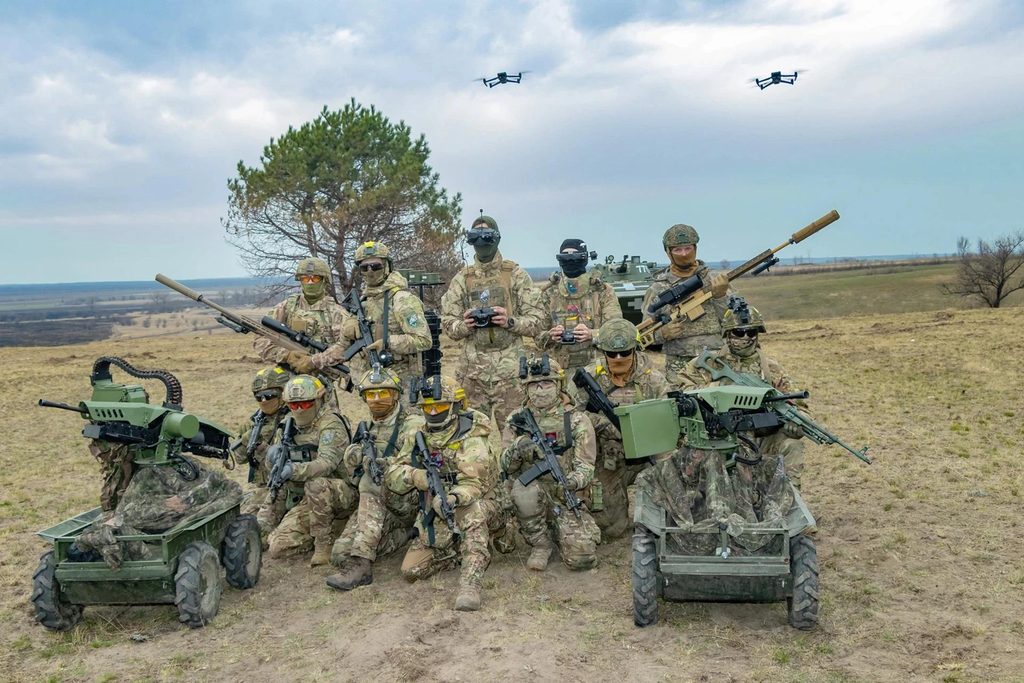
- ground robotic systems;
- electronic warfare equipment;
- drone detection and counter-drone systems.
Drones have become one of the key tools of the modern battlefield. They have changed reconnaissance, artillery targeting, the destruction of equipment, logistics and the nature of defensive operations.
However, technological superiority does not come from simply having drones. It requires production capacity, trained operators, secure communications, software, countermeasures against enemy electronic warfare and constant system upgrades.
7.2. Domestic Weapons Production
According to information published by the Ministry of Defence of Ukraine on 3 January 2026, more than 50% of the weapons used by Ukraine’s Defence Forces are of Ukrainian origin.
This category includes unmanned systems, ground robotic systems, artillery, ammunition, armoured vehicles, missile weapons, naval drones and electronic warfare equipment.
The Ministry of Defence also reported that in 2025, 76% of centralised procurement of weapons and military equipment went to Ukrainian manufacturers. By comparison, this figure stood at 46% in 2024.
This is an important achievement, but it must be interpreted correctly. The share of domestic production in procurement does not mean that Ukraine can already meet all the needs of its armed forces independently. International support remains essential for many critical systems, including air defence, certain types of ammunition, aviation capabilities and high-tech components.
7.3. The Corps-Based Command Structure
In 2025, Ukraine began transitioning to a corps-based military command structure.
According to the Ministry of Defence’s statement of 3 January 2026, the new structure of the Armed Forces and related formations included 18 corps:
- 13 Ground Forces corps;
- 2 Air Assault Forces corps;
- 2 National Guard corps;
- 1 Marine Corps.
The Ministry reported that the transition to the new command system had been completed in October 2025, although the full staffing and training of the corps were still ongoing.
The purpose of the reform is to make the command of large military formations more systematic, improve brigade coordination, strengthen reserve formation and improve operational planning.
At the same time, changing the organisational structure alone does not automatically guarantee greater combat effectiveness. Properly trained staffs, sufficient numbers of officers, communications, intelligence, logistics and a clear division of responsibilities are all essential.
7.4. Digitalisation of the Army
The Ukrainian army is actively introducing digital tools.
Key areas include:
- digital records and document management;
- resource management systems;
- electronic reports;
- digital planning tools;
- logistics automation;
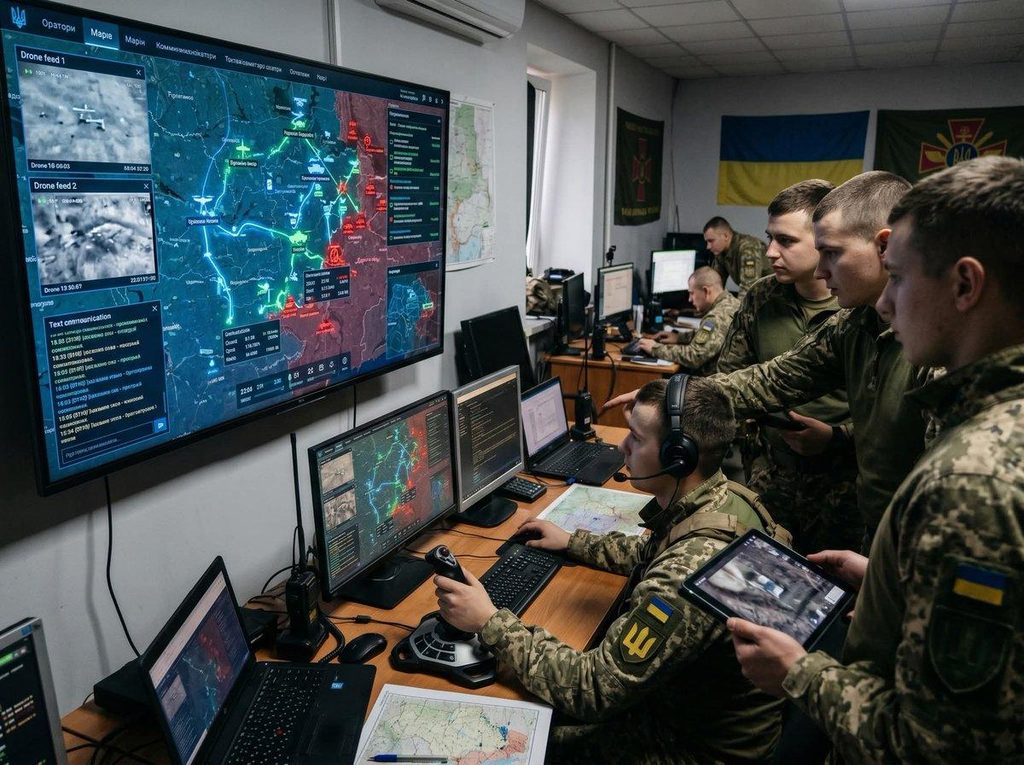
- situational awareness systems;
- integration of data from different sources.
The Ministry of Defence reported that in 2025 the Army+ application was used for preparing reports in 70% of military units, while the total number of reports signed through the application exceeded 1.2 million.
Digitalisation cannot replace discipline, training or professional management, but it can reduce bureaucracy and speed up processes.
7.5. International Support
After 2022, international military assistance reached an unprecedented scale.
Ukraine received:
- artillery systems and ammunition;
- tanks and armoured vehicles;
- anti-tank systems;
- air and missile defence systems;
- communications and intelligence equipment;
- unmanned systems;
- aviation platforms;
- training and technical maintenance.
It is important to understand that NATO, as an organisation, coordinates support, but a significant share of the weapons is supplied by individual member states and partner countries.
Assistance from partners does not replace Ukraine’s own efforts. It strengthens them and helps offset some of Russia’s resource advantage.
8. What Is the Ukrainian Army Like as of November 2026?
Today, the Armed Forces of Ukraine are a large, combat-experienced and technologically adaptive military structure with experience in conducting a prolonged high-intensity war.
They are no longer the army that existed in 1991 or 2014. However, it would also be incorrect to claim that the transformation into a fully modernised Western-style military has been completed.
The modern Ukrainian Armed Forces combine Soviet-era legacy, Ukrainian developments, Western weapons systems, new technologies and experience gained directly on the battlefield.
Strengths
Combat experience.
Ukrainian service members have experience in defensive and offensive operations and in operating under conditions involving the massive use of artillery, drones, aviation, missiles and electronic warfare.
Adaptability.
The Armed Forces demonstrate the ability to change tactics quickly, develop new solutions and integrate technologies.
Domestic production.
Ukraine has significantly expanded the production of drones, electronic warfare equipment, missile systems, ammunition and other weapons.
Public support.
The volunteer movement, charitable foundations, civil society organisations, businesses and local communities remain an important part of the defence system.
International cooperation.
Training, weapons, technical assistance and coordination with partners strengthen Ukraine’s capabilities.
Problems That Must Not Be Concealed
A balanced assessment must address not only achievements, but also difficulties.
In March 2026, the US Congressional Research Service (CRS) published an updated overview entitled Ukrainian Military Performance and Outlook. It identified a number of serious problems affecting the Armed Forces’ ability to sustain a prolonged war.
1. Human resources.
Casualties, exhaustion among service members, mobilisation problems, unauthorised absence from military units and difficulties retaining experienced personnel place considerable strain on the system.
Precise data on Ukrainian military casualties are not fully public. Therefore, estimates published by various analytical centres should not be presented as officially confirmed statistics.
2. Training new recruits.
The army must replenish losses while also ensuring high-quality training. This is a difficult balance: the front needs personnel immediately, but a service member who has not received sufficient training faces a higher risk of being killed or wounded.
The CRS notes that basic training was extended to one and a half months. However, a significant part of new recruits’ training takes place within their military units. The quality of this training can vary considerably from one unit to another.
3. Infantry shortages and rotation.
High-intensity warfare requires more than equipment. It also requires people capable of holding positions, conducting assault operations and replacing exhausted units.
Insufficient personnel make rotations, recovery and reserve training more difficult.
4. Command and staff work.
The CRS draws attention to problems with the training of staff-level officers, coordination and excessive centralisation of certain decisions.
The transition to a corps-based system is intended to help address some of these problems, but the outcome will depend on how effectively the new structure is staffed and trained.
5. Dependence on partners.
Ukraine has developed its own production, but it remains dependent on external supplies for a number of critical systems and components.
Air defence systems, certain types of ammunition, aviation capabilities and high-tech components remain particularly important.
6. Exhaustion and the social dimension of war.
A prolonged war causes physical and psychological exhaustion. Service members need rest, medical treatment, rehabilitation, proper supplies and confidence that the state will not abandon them after their service ends.
Questions of fairness in mobilisation, conditions of service, leave, medical care, social guarantees and commanders’ accountability directly affect trust in the army and the state.
Therefore, developing the Armed Forces is not simply a matter of purchasing weapons. It also requires investment in human capital, professional management, military education, the healthcare system and mechanisms for protecting service members’ rights.
9. The Ukrainian Army and Society: A War Fought by More Than the Military Alone
One of the defining features of Ukrainian resistance has been the large-scale involvement of society in defending the state.
From the first months of the war in 2014, and especially after 24 February 2022, millions of Ukrainians became involved in supporting the military.
This took many forms:
- purchasing vehicles, drones, communications equipment and supplies;
- providing service members with protective gear, clothing and medical equipment;
- repairing military equipment;
- producing camouflage nets and other equipment;
- organising evacuations and medical assistance;
- raising funds for weapons;
- providing information, psychological and legal support;
- helping the families of service members and veterans.
The volunteer movement became an important element of the country’s resilience. It helped meet needs to which the state system could not always respond quickly enough.
But there is a fundamental boundary: volunteering must not replace the responsibility of the state.
Providing for the army, ensuring proper training and medical care, protecting service members’ rights, planning rotations and procuring the necessary weapons are state responsibilities.
Volunteers can strengthen the system, but they must not become its substitute.
Special respect is due to Ukrainian service members who have been serving since 2014, those who joined the military after the full-scale invasion, medics, rescuers, volunteers, military chaplains, logistics specialists, repair crews, communications specialists, drone operators and everyone who works every day to keep the military functioning.
The heroism of Ukrainian defenders is not limited to dramatic moments on the battlefield. It also means years of service, exhaustion, the loss of comrades, injuries, returning to duty, responsibility for others and the willingness to continue fighting for the country.
10. What Has the History of the Armed Forces Taught Us? Key Lessons
The history of the Ukrainian army since 1991 offers several important lessons.
First: a large army on paper does not mean combat readiness.
The number of service members, tanks or aircraft alone does not guarantee the ability to defend a state. Training, command, logistics, ammunition, maintenance, intelligence and the actual condition of military units are all essential.
Second: reducing the army without creating new capabilities weakens the state.
Ukraine had both the right and the need to reform the Soviet military structure. However, reductions should not have outpaced modernisation and the development of the defence system.
Third: foreign policy cannot replace national defence.
No diplomatic assurances, international documents or political agreements can fully replace a combat-ready army and genuine security mechanisms.
Fourth: an army must develop continuously, not only after a war begins.
Ukraine began making large-scale changes to its Armed Forces after 2014, when the threat had already become a reality. These changes helped save the state in 2022, but they came at an extraordinarily high cost.
Fifth: people are the military’s most important resource.
Equipment matters, but people operate it. Without trained service members, professional commanders, high-quality medical care, rotations and trust between society and the military, it is impossible to maintain defence capabilities in a prolonged war.
Sixth: defence is the responsibility of the entire state.
It involves not only the Armed Forces, but also the defence industry, the economy, energy, transport, healthcare, education, cybersecurity, civil protection and international cooperation.
CONCLUSION: AN ARMY THAT HAS PAID A HIGH PRICE FOR UKRAINE’S RIGHT TO BE INDEPENDENT
Over 35 years of independence, the Armed Forces of Ukraine have evolved from an inherited Soviet military structure into an army that has become one of the key factors in preserving Ukrainian statehood.
This journey has not been straightforward. It has included mistakes, political short-sightedness, insufficient funding, corruption, unsuccessful reforms, lost opportunities and years when the country’s defence capabilities did not match the threats it faced.
In 2014, Ukraine witnessed the consequences of these decisions. By 2022, it had a different army — one with combat experience, trained commanders, mobilisation potential, new approaches to command and the support of society.
Today, Ukrainian service members are confronting the army of a state with significantly greater human and material resources. They do so amid continuous losses, exhaustion, shortages of certain types of weapons and a difficult international situation.
And yet they continue to defend their country.
Their courage must never become a reason to conceal problems. On the contrary, respect for the military means speaking honestly about what needs to change in order to reduce casualties, ensure proper training, protect people and build a strong army for the future.
The Ukrainian army is not simply a story of victories and defeats. It is the story of people who, at the most difficult moments, refused to allow their state to be destroyed.
It is the story of those who hold their positions, return to duty after being wounded, save their comrades, work behind the front lines, train, repair, treat, supply and support.
The Armed Forces of Ukraine are not an abstract institution. They are Ukrainians who defend, every day, the right of millions of other Ukrainians to live in their own independent country.
That is precisely why building a strong, professional, technologically advanced and properly equipped army must remain one of the state’s top priorities — not only during the war, but after it ends as well.
Sources and Further Reading
- International Institute for Strategic Studies (IISS). Transformation Under Fire – An Analysis of Ukraine’s Security Sector Since 1991, January 2025. An analytical review of the transformation of Ukraine’s security sector from independence to the full-scale war.
https://www.iiss.org/globalassets/media-library—content–migration/files/research-papers/2025/01/ukraine-security-transformation/iiss_transformation-under-fire_an-analysis-of-ukraines-security-sector-since-1991_170125_.pdf - Congressional Research Service (CRS). Ukrainian Military Performance and Outlook, updated 2 March 2026. An analysis of the Armed Forces’ condition, personnel challenges, training, weapons, defence industry and international assistance.
https://www.everycrsreport.com/reports/IF12150.html - Congressional Research Service (CRS). Ukrainian Armed Forces, updated 26 January 2022. An overview of Ukraine’s reforms, personnel numbers, funding and military capabilities ahead of the full-scale invasion.
https://www.everycrsreport.com/reports/IF11862.html - Ministry of Defence of Ukraine. Weapons, corps-based structure, enhanced protection, digitalization, and more: the Ministry of Defence’s key highlights of 2025, 3 January 2026. Official information on the corps-based structure, domestic weapons production and digitalisation.
https://mod.gov.ua/en/news/weapons-corps-based-structure-enhanced-protection-digitalization-and-more-the-ministry-of-defence-s-key-highlights-of-2025 - NATO. NATO’s Support for Ukraine. History and areas of support for Ukraine, including assistance provided since 2014.
https://www.nato.int/en/what-we-do/partnerships-and-cooperation/natos-support-for-ukraine - Royal United Services Institute (RUSI). Military Assistance to Ukraine: Rediscovering the Virtue of Courage. Information on international training missions and the preparation of Ukrainian service members before 2022.
https://www.rusi.org/explore-our-research/publications/commentary/military-assistance-ukraine-rediscovering-virtue-courage - Stockholm Centre for Eastern European Studies (SCEEUS). Explaining Ukrainian Resilience, 5 April 2023. An analysis of the factors behind Ukraine’s resilience and the reforms implemented after 2014.
https://sceeus.se/en/publications/explaining-ukrainian-resilience/ - Stockholm International Peace Research Institute (SIPRI). The Transformation of Ukraine’s Arms Industry Amid War with Russia, 2025. An analysis of Ukraine’s defence industry and changes in procurement after 2014.
https://www.sipri.org/commentary/topical-backgrounder/2025/transformation-ukraines-arms-industry-amid-war-russia - Verkhovna Rada of Ukraine. Transcript of the plenary session of 25 March 2014: statement by the Acting Minister of Defence on the number of Ukrainian service members in Crimea.
https://www.rada.gov.ua/en/news/News/News%202/90347.html - Armed Forces of Ukraine. The Formation and Development of the Armed Forces of Ukraine Since 1991.
https://www.zsu.gov.ua/en/armed-forces-of-ukraine-formation-and-development/history-of-the-armed-forces-of-ukraine-since-1991 - U.S. Department of Defense / Defense Threat Reduction Agency. With Courage and Persistence. Historical material on Ukraine’s nuclear legacy and the formation of national military command after 1991.
https://www.dtra.mil/Portals/125/Documents/History/With_Courage_and_Persistence.pdf - European Council on Foreign Relations (ECFR). Defend. Resist. Repeat: Ukraine’s Lessons for European Defence. An analysis of changes in the Ukrainian army, command, logistics and territorial defence before 2022.
https://ecfr.eu/publication/defend-resist-repeat-ukraines-lessons-for-european-defence/